
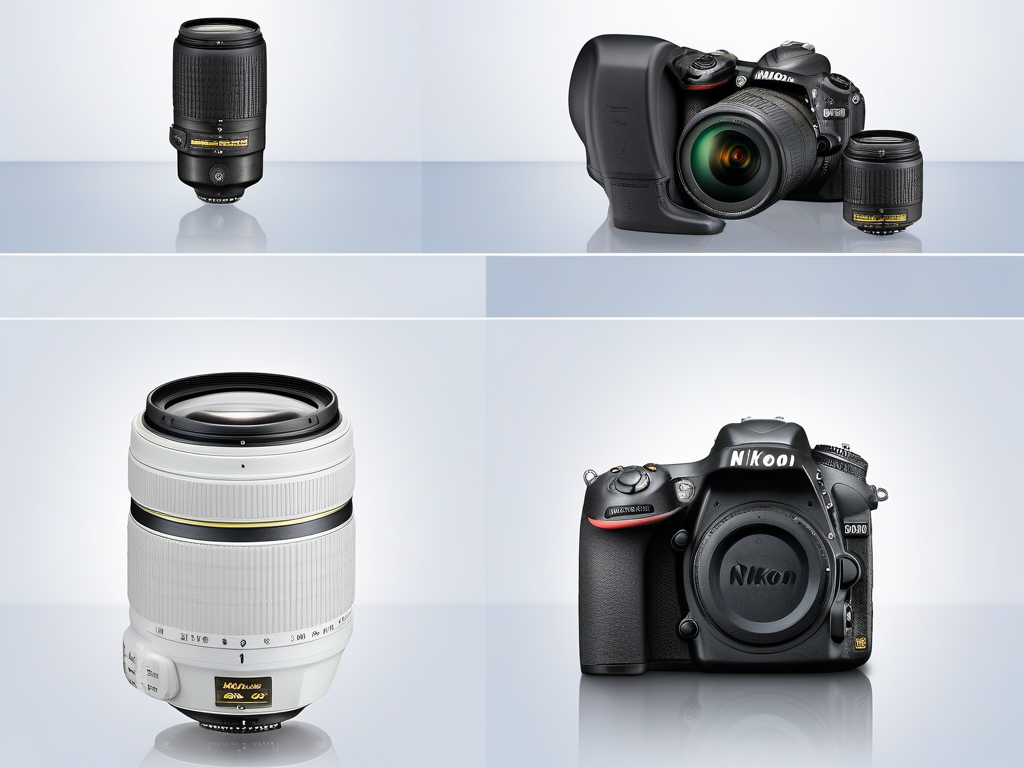
In summary
- The D7200 features a 24MP APS-C sensor without a low-pass filter, a 51-point Multi-CAM 3500 autofocus system, and dual SD card slots: a semi-pro setup that can be found used today for between 350 and 480 euros.
- The camera body is weather-sealed and built on a magnesium alloy chassis, with a 100% optical viewfinder and an EN-EL15 battery delivering approximately 1100 real-world shutter count.
- The shutter is rated for 150,000 shutter count: a D7200 with 40,000-60,000 certified shutter count still has two-thirds of its life ahead.
- It remains valid in 2026 for those seeking a robust camera body, an affordable F-mount lens lineup, and no rush to switch to mirrorless, but do not expect flagship-level video or continuous AF.
The Nikon D7200 was released in 2015, and our workshop continues to receive several units every month, almost always in excellent condition. It is one of those cameras that owners keep for years and only sell to switch to full frame, not because they are tired of it. This already says a lot about why it remains the most sought-after Nikon APS-C semi-pro camera on the used market.
In this article, I explain what keeps the D7200 relevant in 2026, who it makes sense for and who it doesn't, what to check before buying it used, and which alternatives to consider if you are aiming straight for mirrorless. No nostalgia: just what this camera body does well and what you cannot expect from it.
What makes the Nikon D7200 a true APS-C semi-pro
Pick up a D7200 after a D3500 and you understand the difference in three seconds, before you even take a shutter count. The weight is distributed differently, there are two dials instead of one, and the camera body doesn't creak when you grip it firmly. Nikon didn't call this tier "semi-pro" for marketing: the D7200 is built on a mechanical and control base that clearly separates it from the company's consumer DSLRs.
Magnesium alloy body and weather sealing
The top and rear sections of the D7200 are made of magnesium alloy, not polycarbonate like on the D3x00 and D5x00. This translates to torsional rigidity that you feel when mounting a 70-200 f/2.8 and the body does not flex on the mount. Weather sealing covers joints, doors, and dials with gaskets: it does not make the camera waterproof, but it allows you to work in light rain or dusty environments without anxiety.
Be careful not to confuse "weather-sealed" with "indestructible". The seals protect against incidental moisture, not submersion. In ten years at the counter, I have seen D7200s with 80,000 shutter counts still in perfect condition, and D5500s that fell just once and cracked the plastic on the mount. The difference in build quality matters in the long run.
Dual SD slots, 100% viewfinder and dual dials
Here are the features that justify this classification. These are items that professional photographers do not consider optional:
- Dual SD card slots: you can set up real-time backup or separate RAW and JPEG. At a wedding, it's the difference between losing a file and sleeping soundly.
- 100% optical viewfinder: you frame exactly what you record. Consumer models stop at 95%, and that 5% discrepancy is what you end up cropping out in post.
- Dual command dials: adjust aperture and shutter speed without taking your eye off the viewfinder or diving into menus. In manual mode, it's a whole different level of operational speed.
- Top LCD display: read key parameters with the camera lowered, useful on a tripod or in bright light.
Add a dedicated AF-ON button for back-button focus and a full button layout for ISO, bracketing, and shooting modes. These are details that on an entry-level model are buried in the menus, whereas here you have a physical command for each. This, more than the sensor, defines the tier: the D7200 is built to be used quickly, in the dark, with gloves on, without looking at the menus.
Nikon D7200: essential technical specifications
| Feature | Value |
|---|---|
| Sensor | APS-C CMOS 24.2 MP without AA filter |
| Autofocus | Multi-CAM 3500 II, 51 points (15 cross-type) |
| Burst rate | 6 fps (7 fps in 1.3x crop mode) |
| Viewfinder | Optical pentaprism, 100% coverage |
| Memory card slots | Dual SD (SDHC/SDXC) |
| Shutter (estimated lifespan) | 150,000 shutter count |
| Battery | EN-EL15, approx. 1100 shutter count CIPA |
| Weather sealing | Yes, magnesium alloy body |
| Video | Full HD 1080p 60fps (no 4K) |
The 24MP sensor without an AA filter: what it really means
The 24.2-megapixel APS-C CMOS sensor in the D7200 comes from the same family found in the D5500 and D3300, but here Nikon has removed the low-pass (anti-aliasing) filter. This is a precise technical choice: higher perceived sharpness with the same lens, with a compromise that in practice matters less than marketing suggests.
Increased sharpness and moiré risk in practice
The AA filter serves to slightly blur the finest details to prevent moiré, those colored patterns that appear on finely woven fabrics or metal grids. Removing it means the sensor records all the detail the lens delivers, without softening it. With a good 35mm or 50mm prime, the difference on the RAW is visible on screen at 100%.
The flip side of the coin, moiré, is rare in real-world photography. You’ll encounter it if you frequently shoot:
- regularly woven synthetic fabrics (jackets, shirts with thin stripes) in still life and portrait;
- architecture with grates, mosquito nets, or finely meshed facades;
- repetitive industrial details framed at a certain distance.
For landscape, street, skin-tone portrait, and reportage work, you will rarely see it. And when it does occur, it can be corrected in a minute in post using the anti-moiré brush in Lightroom or Capture One. The gain in micro-detail, on a body you frequently pair with prime lenses, is well worth the risk.
Dynamic range and high ISO performance
Here, the D7200 ages well. The underlying Sony sensor offers a dynamic range of around 14 stops at base ISO (100), among the best ever seen on APS-C DSLRs. In practice, this means a slightly underexposed RAW can be recovered in the shadows by 2-3 stops without noise exploding: useful in backlighting and in landscapes where the sky is much brighter than the foreground.
At high ISO settings, the performance is honest for an APS-C camera of its era:
| ISO | Practical performance |
|---|---|
| 100-800 | Clean files, full detail, large format printable |
| 1600-3200 | Visible but fine noise, excellent after denoising |
| 6400 | Safety limit for professional work, noticeable grain |
| above 6400 | Emergency use only, compromised detail |
Values above 25,600 are extended ISOs (HI-1, HI-2): brochure numbers you will never use for delivery. Consider ISO 3200-6400 the real operational ceiling and always shoot in RAW: that is where this sensor delivers what an APS-C from ten years ago did not yet know how to give. For those who shoot during the day or control the light, the image quality of the D7200 remains beyond question.
51-point Multi-CAM 3500 II Autofocus: still competitive?
On subjects crossing the frame horizontally, the D7200's AF still does its job. The 51 points of the Multi-CAM 3500 II module, including 15 cross-type points concentrated in the center, lock onto and track a subject with a reliability that many entry-level DSLRs lacked. The point is to understand where that module shines and where a 2016 camera body shows its age.
Moving subjects and 6 fps burst mode
For amateur sports, events, and animals at medium distances, the D7200 performs well. The burst rate is 6 fps in DX format, and the AF-C module with 3D tracking follows a predictable subject — a cyclist, a dog running towards you — without constantly losing it. The real limitation is not the focus lock, but the buffer.
| Parameter | Actual value |
|---|---|
| DX burst rate | 6 fps |
| 14-bit RAW buffer | ~18 shutter count before slowdown |
| Fine JPEG buffer | 100+ continuous shutter count |
| Cross-type AF points | 15 (the most reliable) |
In practice: if you shoot RAW at a match, after three seconds of full-speed burst, the camera stops to write to the card. For 90% of amateur uses, this is not a problem, but it is not a body for professional action photographers.
Where a modern mirrorless beats you
Honesty is required here. The D7200's phase-detection AF works only through the optical viewfinder, within a central area that leaves the frame edges uncovered. No Eye-AF, no subject recognition, and in live view it switches to contrast detection — slow, tripod territory.
- Coverage: the 51 points cover the central area; a mirrorless reaches almost to the edge.
- Eye: no Eye-AF. For moving portraits, focus and recompose.
- Video: AF in live view is not usable for serious shooting.
If these features are what you need, check out a Nikon Z50 for 600 euros, featuring Eye-AF and AF across the entire frame, or a Nikon Z30 for 450 euros if you are focused on vlogging. We have written a dedicated guide on this topic: how to choose your first used mirrorless camera. However, if you photograph predictable subjects, the Multi-CAM 3500 II still holds its own.
How long it really lasts: shutter, battery, and certified shutter count
A D7200 with 40,000 shutter count is not a tired machine: it still has two-thirds of its life ahead. Nikon rates the shutter for 150,000 cycles, a semi-pro body threshold that clearly separates it from entry-level models rated at 100,000. On a well-maintained used example, the real limit is often not the shutter, but the battery and the rubberized grips on the controls.
The EN-EL15 — the same battery family Nikon has used from the D7000 to the full-frame Z series — delivers approximately 1,100 certified shutter counts per charge with the optical viewfinder, and even more if you work in burst mode. This is DSLR-level battery life, not mirrorless: the sensor does not stay on to power an EVF. An original EN-EL15 with a few hundred cycles behind it loses 15-20% of its capacity, nothing dramatic. However, be wary of cheap compatibles: they heat up and lie about the remaining percentage.
Reading the shutter count before buying
The shutter count is written in every JPEG or RAW file the camera produces, in the EXIF metadata. Just take a photo and upload it to an online EXIF reader, or read it with software like ExifTool. A serious seller will declare it without you having to ask. Here is how to interpret the number:
- Under 30,000 shutter count: camera body like new, pay the full price without hesitation.
- 30,000-80,000 shutter count: normal use, this is the range where you find the best value for money.
- 80,000-130,000 shutter count: still within its useful life, but negotiate the price and check the rest carefully.
- Over 130,000 shutter count: close to the stated limit. Do not buy without a mental budget to replace the shutter.
A single data point tells you little. A body with 90,000 certified shutter count but in like new condition is worth more than one with 25,000 and several signs of use. The shutter count is a clue, not a verdict.
What we check in our lab
Every D7200 that comes to us goes through our workbench before being listed for sale. We read and certify the shutter count, so the number you see is verified, not just verbally declared. Then we take test shots at high ISO to check the sensor, looking for hot pixels and signs of aggressive cleaning on the filter.
We test all 51 AF points on subjects with varying contrast, verify that the weather sealing has not been compromised by careless opening of the camera body, and test both SD slots for writing. We replace tired batteries with original ones and honestly tell you the shutter count of the camera. On all used equipment you get a 2-year warranty: if the shutter fails, the problem is ours, not yours.
The F-mount lens lineup: the real hidden advantage
The D7200 is not cheap because it is old, but because there are thirty years of Nikon F-mount lenses on the used market. This is the point that those who compare only camera bodies miss: the real savings are not in the 400-euro body, but in the lenses you mount on it without breaking the bank. A photographic system is measured by the available glass, not by the sensor.
Affordable DX lenses to get started
If you are starting with a D7200, there are three DX lenses that cover almost everything at a ridiculous cost when bought used. These are lenses designed for the APS-C format, making them compact and light, and they are abundant on the used market because many people have sold them when switching to mirrorless.
- AF-S DX 35mm f/1.8G — the first lens to grab. A 35mm that on DX format delivers an angle equivalent to about 52mm, the classic "normal". f/1.8 aperture for soft backgrounds and indoor shots without raising ISOs too high.
- AF-S DX 18-105mm f/3.5-5.6G VR — the do-it-all zoom. Stabilized, covers from wide-angle to short telephoto, excellent as a single travel lens. Often found in kits with used bodies for just a few dozen euros more.
- AF-S DX 55-200mm f/4-5.6 VR — the budget telephoto for amateur sports, tight portraits and distant details. Not fast, but in daylight it does its job.
This combo, used, costs less than many new mirrorless zoom kits. And it gives you three sharp focal lengths instead of a single mediocre 18-50.
Compatibility with FX lenses for full-frame
This is where the real hidden advantage lies. The D7200 mounts FX lenses without any issues, those designed for full frame. This means that if you buy an AF-S 50mm f/1.8G or an 85mm f/1.8G today, that glass remains valid even on the day you switch to a D750 or a Z with an FTZ adapter.
The practical reasoning is simple: camera bodies depreciate, while good lenses hold their value much better. Investing in two or three used FX lenses while shooting with the D7200 means building a lens kit that outlasts your camera body. It is the smartest way to spend when your budget is limited and you are not in a rush to switch to mirrorless.
Who the D7200 is for and who it isn't
The D7200 is one of those camera bodies that clearly divides opinion: for half of photographers, it’s a bargain; for the other half, it’s the wrong camera body bought for the wrong reasons. The difference doesn’t lie in the budget, but in what you need it for. Let’s look at the two profiles directly, without beating around the bush.
It's worth it if you're looking for durability and an affordable lens
If you shoot nature, events, or street and need a body that can withstand rain, dust, and some impact, the D7200 performs where many entry-level mirrorless cameras fall short. The weather-sealed body and 100% optical viewfinder provide operational reliability that you often pay extra for in newer competitors.
The clearest case is for those who already have Nikon F-mount lenses in the drawer. A 35mm f/1.8 DX or a 70-300 AF-P mount without adapters, with no compromises on autofocus, and without spending an extra euro. If you still need to build your kit, used F-mount lenses remain the most affordable option overall for the same optical quality.
- Wildlife and hunting photography: optical viewfinder with no lag, EN-EL15 battery delivering around 1100 real shutter count, 1.5x crop factor that extends telephoto lenses.
- Events and ceremonies: dual SD card slots for immediate backup, weather sealing, 24MP files that hold up to cropping in post.
- Existing Nikon lens owners: zero transition costs, full compatibility with the AF-S and AF-P lens lineup.
A mirrorless is better if you rely on video and eye AF
If you shoot video or expect eye-detection autofocus that tracks the subject, the D7200 is not the right camera. Video is limited to Full HD without serious tracking, and the DSLR AF, while solid, does not process faces like modern mirrorless cameras do. In these cases, it is advisable to switch to a different system, and the used market offers concrete alternatives at a similar price.
| Model | Price | Key Feature |
|---|---|---|
| Nikon Z50 | 600 € | Eye-AF and 4K while staying within the Nikon ecosystem |
| Nikon Z30 | 450 € | Compact, video-first design for vlogging and content creation |
| Sony A6400 | 650 € | Among the best eye-tracking performance in its class |
| Fujifilm X-T2 | 550 € | Dial-based ergonomics and excellent JPEG color rendering |
If you haven't decided which system to invest in, read our comparison on how to choose between Canon, Nikon, and Sony: thinking about the ecosystem first prevents you from switching camera bodies within a year.
Used alternatives to the D7200 in 2026
The D7200 has no direct rivals among DSLRs: Nikon has discontinued the DX DSLR line, and today the real alternatives are mirrorless APS-C. Three things change immediately: no optical viewfinder, on-sensor phase-detection autofocus, and no direct compatibility with your AF-S DX lens park without an adapter or repurchase. Let's see what makes sense to evaluate at a similar budget.
Sticking with Nikon: Z50 and Z30 mirrorless
If you want to stay in the Nikon world, the Nikon Z50 at 600 euros is the natural step up: same 24MP base sensor, but with modern hybrid AF, faster burst rate, and true 4K video. The Nikon Z30 at 450 euros is the vlog-oriented cut, without a viewfinder, designed for those who film more than they photograph.
The key is the optics. Your AF-S DX lenses work on the Z system only with the FTZ adapter, and autofocus on older screw-drive lenses remains sluggish. In practice, once you switch to the Z system, you will eventually end up buying native Z DX lenses. Consider the Z50 if your goal is video or eye AF, not if you are just looking for something "more modern" on paper: for still photography, the D7200 still performs excellently.
Switching systems: Fujifilm X-T2 and Sony APS-C
If you are willing to start from scratch with your lens lineup, this is where you will find the most interesting value. The Fujifilm X-T2 at 550 euros offers dedicated physical dials, an electronic viewfinder, and the Fuji color rendering that many choose to avoid post-production almost entirely.
On the Sony side, the Sony A6100 at 600 euros offers Eye-AF among the best in its category, while the Sony A6400 at 650 euros adds a flip screen for video and partial weather sealing.
- Sticking with F-mount, want ruggedness and an optical viewfinder → keep the D7200.
- Want Nikon but modern and video-capable → Z50 (€600) or Z30 (€450).
- Looking for color and analog dials → Fujifilm X-T2 (€550).
- AF priority for moving subjects → Sony A6100 (€600) or A6400 (€650).
A shop-floor warning: switching systems means selling or adapting your lenses, and the final bill is rarely just a 200-euro difference. The same logic applies when comparing a mature DSLR with its mirrorless successor, as we explained in Canon 5D Mark IV used in 2026. If you already own three or four good Nikkor lenses, the economic advantage of sticking with the D7200 often outweighs the newer technical specs.
D7200 vs used alternatives at a similar price
| Model | Type | Key Strength | Main Limitation | Indicative Used Price |
|---|---|---|---|---|
| Nikon D7200 | DSLR APS-C | Robustness, affordable F-mount lens options | No 4K, slow live view AF | 350-480 € |
| Nikon Z50 | Mirrorless APS-C | Eye-AF, compactness, 4K video | Limited Z DX lens lineup | approx. 600 € |
| Fujifilm X-T2 | Mirrorless APS-C | Ergonomics, color rendition, XF lenses | Complete system change | approx. 550 € |
| Sony A6100 | Mirrorless APS-C | Excellent eye AF, 4K video | Ergonomics and menus | approx. 600 € |
What to pay for it used and how to assess its condition
In 2026, a D7200 in good condition costs less than a mid-range prime lens. It's the right time to buy, but the price varies by over 100 euros depending on what's in the box and its shutter count. Let's look at the real price ranges and what to check before spending your money.
Realistic price ranges in 2026
The used market has stabilized. These are the price ranges we see coming through the counter, for functional bodies with a declared shutter count.
| Configuration | Price | What justifies the difference |
|---|---|---|
| Body only, over 60,000 shutter count | 350-390 € | Shutter used halfway, often without box |
| Body only, under 30,000 shutter count | 400-440 € | Two batteries, intact rubber parts, low shutter count |
| Kit with 18-105 VR or 18-140 VR | 440-480 € | All-purpose lens included, ready to use |
Above €480, it doesn't make sense: at that price, you enter the territory of more recent camera bodies. The €100 difference is paid for the shutter count and the accessories, not for perfect aesthetics. A body with several signs of use but 20,000 shutter count is worth more than a flawless one with 80,000.
The checklist before finalizing the purchase
Before you pay, ten minutes of checks save you from surprises. This is what we do in our lab on every D7200 before it goes on display:
- Sensor: Take a shot at f/16 against a light wall. Fixed dark spots are dust or, worse, dirt under the filter.
- Autofocus: Test all 51 points on high-contrast subjects. Verify there is no systematic front/back focus.
- Shutter count: Read it from the file metadata (apps like photoME). An honest seller tells you without being asked.
- Weather sealing: Check the rubber seals on doors and dials. If they are hardened or detached, the sealing is no longer guaranteed.
- Accessories: Original EN-EL15 battery (compatibles last less), charger, cap, strap. A second battery is a real plus.
If you need the D7200 for an upgrade and want to monetize your old camera body, consider a trade-in: it often covers a significant portion of the cost. We have written a dedicated guide on how to sell your used gear without selling it for too little.
Frequently asked questions
Is the Nikon D7200 still a good camera in 2026?
Yes, for those who want a robust and weather-sealed APS-C camera body with a very affordable used F-mount lens lineup. The 24MP sensor without an AA filter and the 51-point AF remain valid for portrait, landscape, wildlife, and event photography. The limitations are video (Full HD only) and autofocus in live view, where a modern mirrorless performs better.
How many shutter count does the D7200 shutter last?
Nikon states an estimated shutter life of 150,000 shutter count. A used D7200 with 40,000-60,000 shutter count still has most of its life ahead. Before buying, it is always advisable to verify the actual shutter count, which we certify on every camera body.
What is the difference between the Nikon D7200 and the D7500?
The D7500 features a newer 20MP sensor with better high ISO performance and 4K video, but it lacks the dual SD card slots. The D7200 retains the dual slots and 24MP resolution. On the used market, the D7200 costs less and remains the preferred choice for those who prioritize dual slots and resolution over video.
Is the D7200 suitable for wildlife photography and amateur sports?
Yes. The 6 fps burst rate (7 in 1.3x crop), the 51-point AF with tracking, and the weather sealing make it suitable for wildlife and amateur sports. For very fast and unpredictable subjects, a recent mirrorless with Animal Eye-AF offers an extra margin, but for most uses, the D7200 is sufficient.
Is the D7200 worth it, or should you go straight to the Nikon Z mirrorless?
It depends on what you have. If you already own F-mount lenses or are looking for affordable used glass, the D7200 remains the most cost-effective choice. If you are starting from scratch and are interested in 4K video and face-detection autofocus, a used Nikon Z50 or Z30 makes more sense in the long run, despite the higher price.
How much does a used Nikon D7200 in excellent condition cost?
In 2026, a D7200 body only in excellent condition is typically found between 350 and 480 euros, depending on the shutter count and included accessories. In a kit with an 18-105, the price increases by approximately 100-130 euros. Be wary of prices that are too low without verification of the certified shutter count and the sensor condition.
Can I use full frame Nikon FX lenses on the D7200?
Yes, FX lenses with F mount are fully compatible and utilize the central portion of the image circle, applying the 1.5x crop factor. It is a smart strategy: invest in used FX glass that remains valid even if you switch to a Nikon full-frame camera body in the future.
Looking for a used and certified Nikon D7200?
If you have questions about a purchase or need advice for your specific case, contact us. We offer free advice because we are photographers first, and because a customer who makes a poor purchase will not return to photography.
Three ways to get in touch:
- Contact form — response within 24 business hours
- WhatsApp at 342 362 3454 (messages only)
- Phone: 071 291 6347 (Mon-Fri 9-13/15-18, Sat 9-13)
And if you want to see what we have in stock right away, explore the used gear available today: every camera is certified, comes with a 2-year warranty, and ships within 24-48 hours.
Article written by Matteo for the ReflexMania Team. Last updated: June 2026. Prices and availability as of the date of publication.