
In short
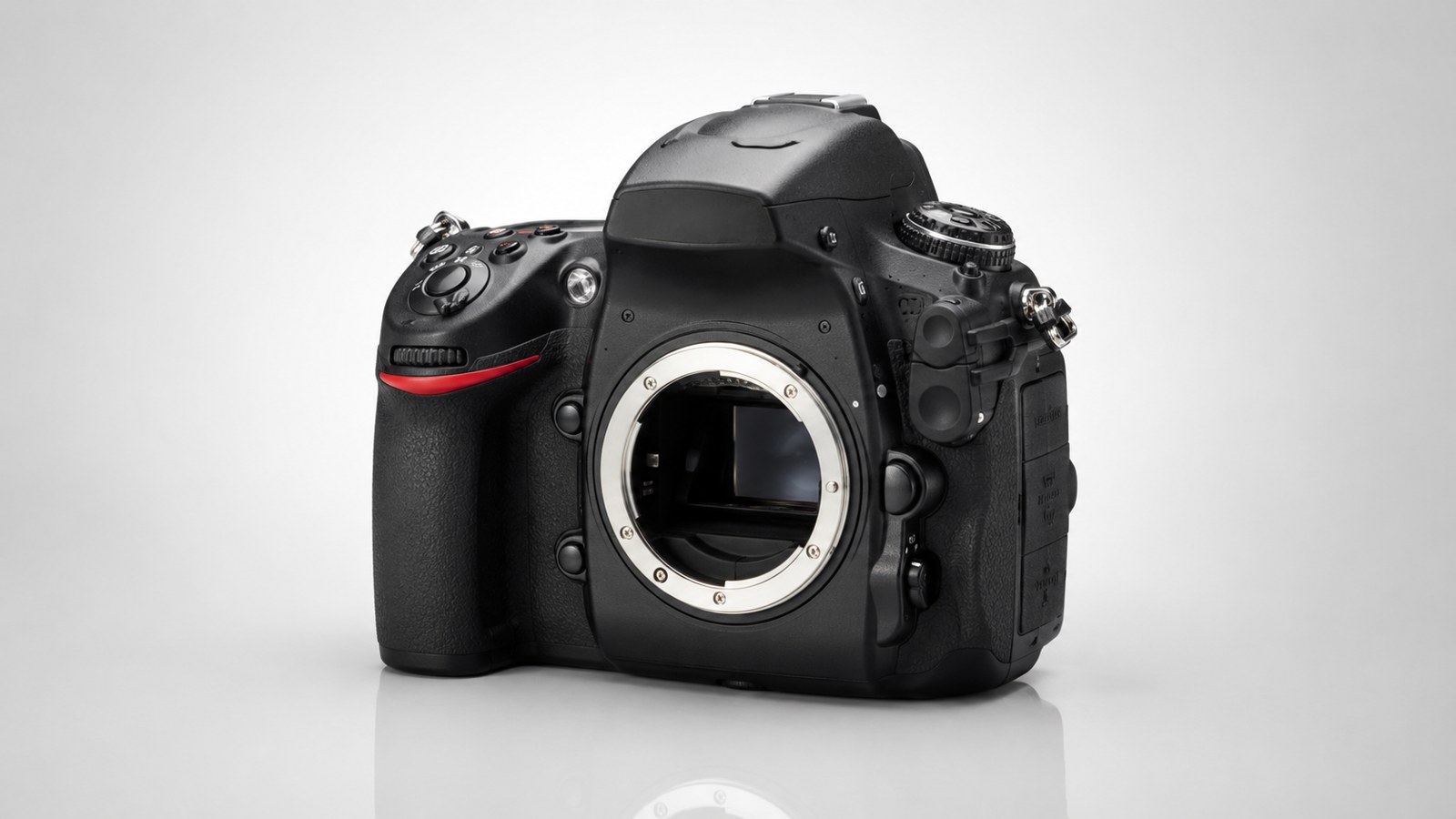
- The Nikon D700 features the 12MP FX sensor from the professional D3 in a magnesium alloy weather-sealed body: today you can find it used for between 250 and 400 euros.
- 12 megapixels are sufficient for prints up to 40x50 cm and produce lightweight files, but they do not withstand aggressive cropping or high-resolution demands.
- No video, shutter rated for 150,000 shutter count, CompactFlash cards, and approximately 1 kg in weight: it is a pure camera, not a hybrid.
- For 150-200 euros more, a Sony A7 Mark II or a Canon EOS RP offer more megapixels, an electronic viewfinder, and video: the D700 is only worth it if you are looking for DSLR ergonomics and clean high ISOs.
Every now and then, someone comes to the counter who has been reading about the Nikon D700 on forums for years and finally wants to get their hands on it. They pick it up, feel the weight and build quality, and immediately understand why this 2008 camera is still a name that circulates. The D700 was the first full-frame Nikon to bring the professional sensor of the D3 into a more manageable and less expensive camera body.
One thing is the legend, another is buying it in 2026 with real money. In this article, I explain what still makes the D700 a valid choice, where it shows its age, how much you should pay for it used, and what to check before signing. And I tell you honestly for whom it makes sense and for whom, instead, it is better to look elsewhere today.
Why the Nikon D700 became legendary
In 2008, full frame was a 5,000-euro privilege. The Nikon D700 broke that rule: it took the heart of the D3 flagship and put it in a camera body that a professional could afford as a second body and a serious enthusiast as a first. It was not a "quasi-pro" camera. It was the same camera, in a smaller shell.
The D3 sensor at half price
The key point is this: the 12-megapixel FX sensor in the D700 is identical to that of the D3, the flagship reportage camera that cost more than double. Same color rendering, same light handling, same files. Those who couldn't afford the D3 got 90% of the result at a fraction of the price.
In 2008, this was revolutionary for a practical reason. Full frame meant lenses performing at their true focal length, softer bokeh, and high-ISO cleanliness that APS-C sensors of the time could only dream of. The D700 brought all of this to wedding photographers, portrait artists, and reporters who previously had to choose between quality and economic sustainability.
The 12 megapixels, which may seem few today, were a precise choice back then: large photosites, less noise, manageable files. It wasn't a budget limitation; it was engineering tailored for difficult light.
Professional build and DSLR ergonomics
The other half of the myth lies in the body. The D700 is built to work, not to sit in a display case. Here is what made it a field camera:
- Magnesium alloy body: robust, designed for years of intensive daily use.
- Weather sealing: seals against dust and moisture, allowing you to shoot in light rain without worry.
- Shutter count of 150,000 certified shutter count: a value typical of a professional camera body, double that of many consumer DSLRs of the era.
- 51-point Multi-CAM 3500FX autofocus: the same AF module as the D3, fast and reliable even in difficult conditions.
Put these elements together and you understand why the D700 has remained in bags for over fifteen years. The DSLR ergonomics — bright optical viewfinder, physical controls under your fingertips, solid grip — are not nostalgia: they are a way of working that many photographers still prefer today. The legend was not born from marketing, but from the fact that this camera did its job well and kept doing it year after year.
The specs that still matter in 2026
Twelve megapixels on a full-frame sensor may seem few until you open up the aperture to ISO 3200 and inspect the files at 100%. That is where the Nikon D700 demonstrates why it still holds up today. It is not a matter of numbers on the spec sheet, but of how those numbers work together under difficult conditions.
High ISO: 12MP that breathe
The D700's FX sensor operates natively between ISO 200 and 6400, with an extension up to 25600. Those 12 megapixels distributed across a full frame area mean large photosites, which gather more light per pixel and generate less noise at the same sensitivity.
It’s physics, not marketing. A modern 45-megapixel camera samples the same sensor in much smaller portions, and at high ISOs that density advantage comes at the cost of noise. The D700 at ISO 3200 produces files that seemed like magic in 2008 and remain fully usable for print and web in 2026. ISO 6400 stays honest; the extension to 25600 is a safety net, not a sensitivity to build an important shot on.
Autofocus, burst mode and viewfinder
The autofocus module is the same as the professional D3: 51 points, 15 of which are cross-type, with tracking that keeps up with moving subjects even in low light. It is not the edge-to-edge coverage of a recent mirrorless, but in the central area of the frame it remains precise and fast.
The burst rate starts at 5 fps and increases to 8 fps when mounting the MB-D10 battery grip with the appropriate battery. The pentaprism optical viewfinder covers 95% of the frame with 0.72x magnification: you see the real scene, with no lag and no battery drain.
| Specification | Value |
|---|---|
| Sensor | FX full frame, 12.1 MP |
| Native ISO | 200-6400 (extended 100-25600) |
| Autofocus | 51 points, 15 cross-type |
| Burst rate | 5 fps (8 fps with MB-D10) |
| Viewfinder | Optical pentaprism, 95% coverage, 0.72x |
These are the same technical levers you find, updated, in a more recent DSLR: if you are interested in understanding how much this formula has evolved, we discuss it in the comparison between used Nikon D780 vs new. However, the D700 remains a camera built around a single idea: shooting well in conditions where others struggle.
Nikon D700 in numbers
| Feature | Value |
|---|---|
| Sensor | FX full frame CMOS, 12.1 megapixels |
| Release year | 2008 |
| ISO sensitivity | 200-6400 native (extended 100-25600) |
| Autofocus | 51 points Multi-CAM 3500FX |
| Burst rate | 5 fps (8 fps with MB-D10 grip) |
| Declared shutter count | 150,000 shutter count |
| Video | Not available |
| Body weight | approx. 1,000 g |
Limitations to know before buying
The D700 is an honest camera, but you need to buy it knowing what it doesn't do. In 2008, video on DSLRs was a brand-new feature, and Nikon chose not to include it. If you're looking for an all-in-one camera that takes certified shutter counts and films, you won't find it here, and it's not a flaw that can be fixed with a firmware update: the hardware is simply missing.
No video and only 12 megapixels
The D700 does not record video, period. If you need even just an occasional birthday clip, this camera is not for you. On the resolution front, the 12 megapixels of the FX sensor are more than enough: you can comfortably print up to 40x50 cm without seeing a single pixel, and the files remain lightweight to manage on hard drives and in post.
The problem arises when you demand more. With 12MP, you cannot crop aggressively: if you crop half the frame to "get closer" to a distant subject, you are left with approximately 6MP, and large prints begin to suffer. The same applies to those working with files intended for enormous reproductions or high-resolution catalogs. For those uses, the 24MP or more of recent full-frame cameras are required.
Weight, CompactFlash cards and connectivity
The D700 weighs around 1 kg with just the camera body, and easily exceeds 1.5 kg when paired with the MB-D10 battery grip. In hand, it delivers a sense of solidity that many photographers appreciate, but it is noticeable after a day of carrying it around your neck. It is not a camera to slip into a pocket or bring on a light travel trip.
Then there are the details born in 2008 that weigh on you today:
- CompactFlash cards: increasingly rare and more expensive than SD cards, and they require the right readers. Check if you have them or budget for them.
- No wifi or bluetooth: transfer is via cable or by removing the card. No direct transfer to your smartphone.
- USB 2.0: offloading files from the card with a modern reader is still faster.
- Slow live view: useful only on a tripod for precise focusing, unusable handheld like on a mirrorless.
None of these limitations make it a bad camera: they make it a pure camera, designed to look through the viewfinder and take shots. If that's what you're looking for, the compromises are gladly accepted. If you're looking for a connected and lightweight hybrid, look elsewhere.
How much does a used D700 cost and what to check
In 2026, a Nikon D700 in excellent condition ranges between 250 and 400 euros. This is a fair price for a magnesium alloy full-frame body, but the range is not arbitrary: it depends almost entirely on the shutter count and how the camera has been treated.
The honest price range today
The value of a D700 is built like this, in order of importance:
- 250-280 euro: honest but well-used examples, worn rubber, high shutter count, often without warranty.
- 300-350 euro: camera body in good order, reasonable shutter count, possibly with MB-D10 battery grip.
- 380-400 euro: cameras with low shutter count, excellent aesthetics, complete and certified.
Beware of prices that are too low. A D700 for 180 euros is not a bargain: nine times out of ten, it has a shutter count nearing the end of its life or issues that the seller does not disclose. The shutter is rated for 150,000 certified shutter counts, but replacing it costs between 150 and 250 euros. On a camera bought cheaply, the repair costs more than the camera body.
Shutter count matters more than aesthetics
A scratched body with 60,000 certified shutter count is worth more than a pristine one with 200,000. The D700 saves the shutter count in the EXIF data of every file: just upload a JPEG to a shutter count reading site and read the actual value, not the one stated verbally.
The difference is concrete. A camera with 80,000 shutter count still has half its useful life ahead. One with 200,000 has exceeded the declared threshold: it may last a long time, but you are buying on borrowed time. At the same price, always choose the one with fewer shutter count.
Besides the shutter count, check these points before paying:
- Sensor: take a shot of a clear sky at f/16 and look for fixed dark spots (dust or fungus).
- Mirror and pentaprism: look through the viewfinder; it must be clean and free of haze.
- Rubber parts: those on the back and grip tend to peel off. They are replaceable but indicate wear.
- Dents: a crushed corner often means a drop, and a drop may have misaligned the autofocus.
If these checks seem like too much, that's understandable: this is why the easiest full-frame to verify exists. The used Nikon D610 is newer and comes with fewer mechanical pitfalls, if you prefer to start with peace of mind.
What we do in our workshop
A D700 bought from a private seller is a black box. You don't know the actual shutter count, you don't know if the mirror has play, and you don't know if the shutter is nearing the end of its life. The seller tells you it's "barely used," but on a 2008 camera, that phrase means nothing. We start from the opposite assumption: until we have opened and tested it, we do not sell it.
Every D700 that comes in goes through our workshop bench before it makes it to the display. This is not a superficial check: it is the same procedure we apply to a pro camera body that has just arrived. On a DSLR with fifteen years of life, this is the only way to know what you are buying.
Here is what we check on every unit:
- Certified shutter count. We read the actual data from the EXIF file and declare it in writing. On a shutter rated for 150,000 cycles, knowing whether you are at 40,000 or 120,000 changes the value of the camera.
- Autofocus test. We test the 51-point module on real subjects, not just the central focus point. An AF that drifts in the periphery is a defect you never see with the naked eye.
- FX sensor inspection. Test shots at closed aperture to detect dust, scratches, or dead pixels. If necessary, we clean the sensor before sale.
- Mirror and shutter. We check mirror play and curtain synchronization: these are the first things to fail on a heavily used body.
- Seals and wear. Rubber seals, display, dials, CompactFlash slot, and the condition of the magnesium alloy weather sealing. We report every sign of use, without hiding it in the photos.
What we find ends up in the product sheet, defects included. If a D700 has 130,000 certified shutter count, we write it down and adjust the price accordingly. We prefer selling you an honest camera for less than a polished one that comes back after a month.
We apply a 2-year warranty to all used equipment. This is not a formality: it means that if the shutter fails or the AF loses precision within that period, the problem is ours, not yours. For a body of this age, it is the difference between a reasoned purchase and a blind bet made with a stranger.
D700 or modern full frame: what really changes?
On the bench, you face a clear choice: a 2008 DSLR body built like a tank for 250-400 euros, or a younger mirrorless with a denser sensor and electronic viewfinder for an additional 150-200 euros. It is not a matter of "better" in absolute terms, but of what you shoot and how you feel holding the camera.
Sony A7 Mark II and Canon EOS RP: what’s the difference
These are the two full-frame models closest to the D700 in our current inventory, just slightly above in terms of budget. They fundamentally change the experience, not just on paper.
The Sony A7 Mark II (€520-550) features 24 megapixels and 5-axis in-body image stabilization: practically, this stabilizes even your old adapted lenses, something the D700 never does. The Canon EOS RP (€550-600, 8 units in stock) weighs approximately 485 grams, compared to the Nikon's over one kilogram, and adds 4K video and a vari-angle screen.
| D700 | A7 II | EOS RP | |
|---|---|---|---|
| Megapixels | 12 | 24 | 26 |
| Viewfinder | Optical | Electronic | Electronic |
| In-body stabilization | No | 5-axis | No |
| Video | None | Full HD | 4K |
| Body weight | ~1 kg | ~600 g | ~485 g |
What you lose by switching to mirrorless: the ergonomics of a professional DSLR, the full grip, the physical controls under your fingertips, and above all, the high-ISO performance of that 12-megapixel sensor, which remains clean and organic in a way that denser sensors struggle to replicate today. If your terrain is difficult light, the D700 remains competitive. We have also written about this trade-off when discussing the used Sony A7 III, a step up in terms of budget.
If you want to stick with Nikon DSLRs
If the F mount and optical viewfinder are non-negotiable, the natural evolution is the Nikon D610 (24 megapixels, higher resolution with the same philosophy) or the D780, which adds modern live view autofocus and 4K video without giving up the DSLR body. They cost more than the D700, but they remain compatible with your lens park.
Used D700 vs alternatives at the same price
| Model | Type | Megapixels | Video | Indicative used price |
|---|---|---|---|---|
| Nikon D700 | Full frame DSLR | 12 MP | No | 250-400 EUR |
| Sony A7 Mark II | Full frame mirrorless | 24 MP | Full HD | approx. 520-550 EUR |
| Canon EOS RP | Full frame mirrorless | 26 MP | 4K | approx. 550-600 EUR |
| Nikon D610 | Full frame DSLR | 24 MP | Full HD | Variable used price |
Who the D700 makes sense for today, and who it doesn't
The D700 is not a camera for everyone, and that’s fine. After reviewing the specs, limitations, and alternatives, one question remains: do you fit the right profile, or are you buying the wrong body for how you actually shoot? There’s no rhetoric here, just a practical filter based on what people bring to our counter.
It makes sense if...
The D700 performs best when the rest of your kit is already consistent with it. Those who choose it with satisfaction usually fall into these categories:
- You already own Nikon F lenses. A 50mm f/1.8 AF-S or a 24-70 f/2.8 mounted on the FX sensor delivers full-frame performance without crop. Reusing optics you already own significantly reduces the real cost of the camera.
- You prefer the optical viewfinder. You see the scene with your eyes, not on a screen. For those coming from film or simply hating EVF lag, the pentaprism optical coverage is a sufficient reason on its own.
- You shoot reportage and events in difficult light. Church weddings, concerts, evening ceremonies: here, 12 clean megapixels at high ISOs are worth more than 24 noisy ones. Lighter files, Nikon color, less time in post.
- You have a limited budget. For 250-400 euros, you get a magnesium alloy full-frame camera body with weather sealing. No new mirrorless camera at that price offers the same build quality package.
Choose something else if...
If you identify with these points, the D700 will frustrate you, and you will spend your money better elsewhere:
- You need video. The D700 does not record a single second of footage. There is no room for negotiation on this: if you shoot even occasional clips, it is out of the question.
- You crop heavily. Wildlife and sports photographers who crop the frame significantly will exhaust the 12 megapixels quickly. You need more starting resolution.
- You are looking for lightness and an electronic viewfinder. About 1 kg of camera body plus F-mount lenses is not a weight for trekking. If you want exposure preview, focus peaking, and a light backpack, look at mirrorless.
- You are starting from scratch without F-mount lenses. This changes the entire calculation. Having to build the kit from scratch, the F-mount DSLR ecosystem costs you and ties you to a system that is being scaled down: consider rather an APS-C semi-pro body as described in the article on the used Nikon D7200, or directly a modern full-frame mirrorless.
In short: the D700 is a smart investment if it completes a system you already have, a debatable compromise if it is your starting point.
Frequently asked questions
Is the Nikon D700 still a good camera in 2026?
Yes, for specific uses. The 12MP full frame sensor handles high ISOs very well and the build is professional. It is suitable for reportage and events in difficult light, if you already have Nikon F lenses and do not need video.
How many shutter count does the D700 shutter last?
Nikon states a shutter count of 150,000, but many units comfortably exceed this threshold. Before buying, ask to see the actual shutter count: a camera at 80,000 still has plenty of life left.
How much does a used Nikon D700 cost today?
In 2026, a used D700 in good condition ranges from 250 to 400 euros, depending on the shutter count and aesthetics. Much lower prices often hide end-of-life shutters or heavily worn camera bodies.
Are 12 megapixels too few for photography today?
It depends on the use. For prints up to 40x50 cm, social media, and advanced amateur use, they are more than sufficient and produce lightweight files. They become a limitation if you crop heavily or sell on stock photo agencies that require high resolution.
Does the D700 record video?
No, it is a purely photographic camera, without video modes. If you also need to film, look at a Canon EOS RP or a Sony A7 Mark II, or a Nikon D780 among the DSLRs.
Is the Nikon D700 better than a used full-frame mirrorless?
The D700 offers DSLR ergonomics, an optical viewfinder, and excellent high ISO performance. A Sony A7 Mark II or a Canon EOS RP at the same price offers more megapixels, an electronic viewfinder, video capabilities, and lighter bodies. Choose based on the lenses you have and what you photograph.
Can I use old Nikon lenses on the D700?
Yes, the D700 uses the F mount and is compatible with most Nikkor autofocus lenses, including many older optics. This is one of the main reasons it is a good choice for those who already have an F-mount kit.
Looking for a serviced and guaranteed D700?
If you have doubts about a purchase or need advice for your specific case, contact us. We offer free advice because we are photographers first, and because a customer who makes a poor purchase does not return to photography.
Three ways to get in touch:
- Contact form — response within 24 business hours
- WhatsApp at 342 362 3454 (messages only)
- Phone: 071 291 6347 (Mon-Fri 9-13/15-18, Sat 9-13)
If you want to see what we have in stock right away, explore the used gear available today: every camera is certified, comes with a 2-year warranty, and ships within 24-48 hours.
Article written by Matteo for the ReflexMania Team. Last updated: July 2026. Prices and availability as of the date of publication.