
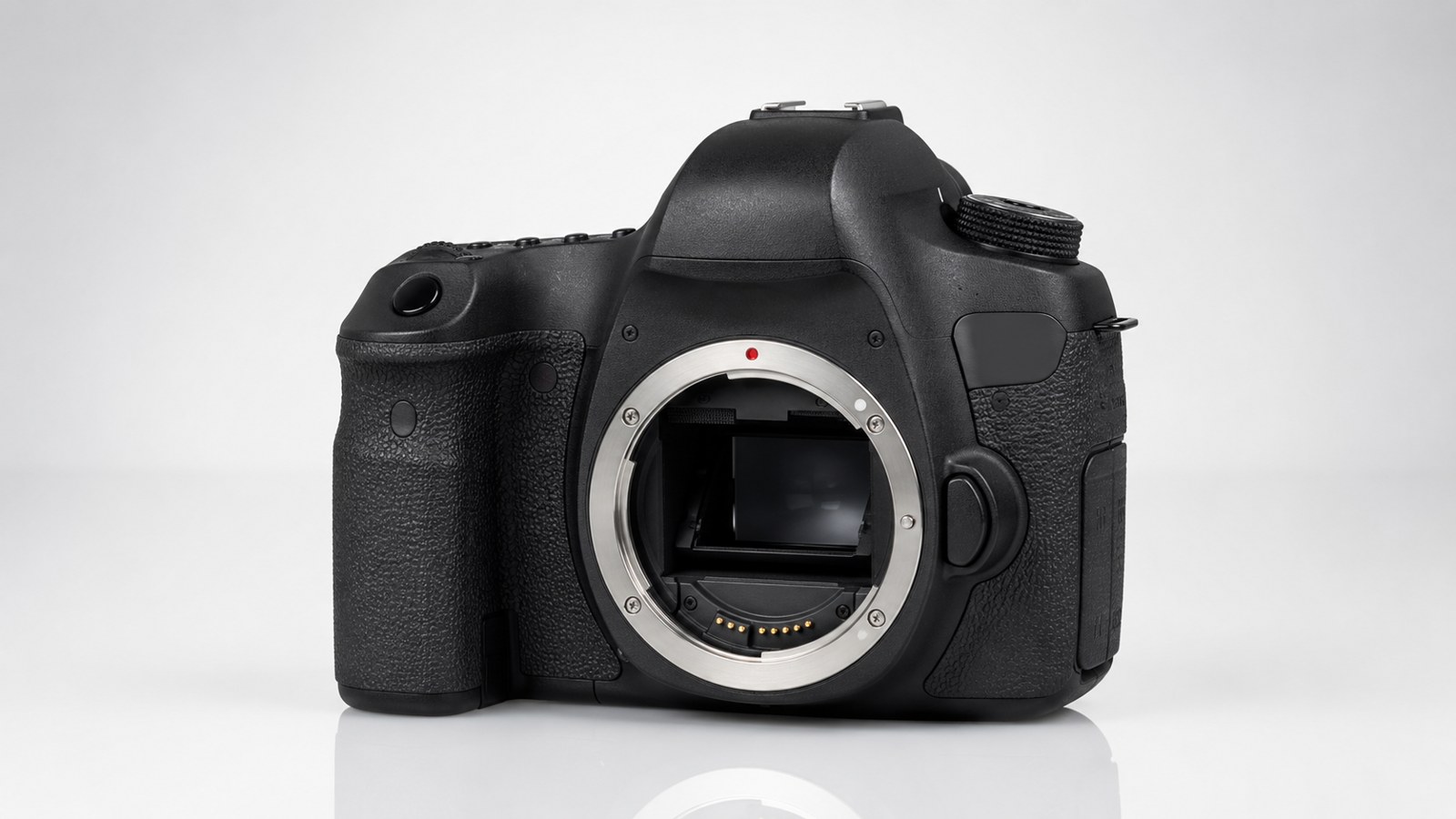
In short
- The used Canon 6D ranges from 350 to 500 euros: it is the most affordable full-frame DSLR on the used market in 2026.
- 20.2 MP sensor, native ISO up to 25,600, shutter tested for 100,000 shutter count: the core still holds up well.
- The two real limitations are the 11-point autofocus (only one cross-type) and the lack of a dual SD slot: it is not an action camera.
- With the used EF lens lineup at falling prices, a 6D + 50mm f/1.8 kit under 500 euros opens the door to full frame.
Every week, someone comes to the counter with the same question: what is the most affordable full-frame camera I can buy without regret? The answer, in 2026, remains almost always the same: a used Canon 6D. It was released in 2012, but the full-frame sensor it features still delivers performance that entry-level APS-C lenses and sensors cannot replicate, particularly regarding low-light performance and bokeh.
In this article, I explain why the 6D is still the most affordable entry point into full-frame format, what to truly expect from the sensor, the two limitations you need to know before buying, and what we check in our lab before putting one up for sale. No brochure hype: I’ll tell you about it the way I would to a friend who is about to spend their money.
Why the Canon 6D is the most affordable full-frame camera of 2026
Today, a used Canon 6D passes through our counter between 350 and 500 euros, camera body. No other full-frame DSLR in honest conditions drops this low. It is the least expensive way that exists in 2026 to put a 24×36 mm sensor behind an optical viewfinder.
How much does a used 6D cost today and why
The price isn't low by accident. Full-frame DSLRs have lost value quickly since all manufacturers shifted their focus to mirrorless. Canon is pushing the RF system, those selling their 6D are doing so to finance an R6 or an R8, and the used supply has grown faster than demand. The result is a price drop that rewards those buying now.
To help you navigate, here is where the 6D stands among other Canon full-frame DSLRs in the current used market:
- Canon 6D — 350-500 €: 20.2 MP sensor, the most affordable entry point to full frame.
- Canon 5D Mark III — 550-750 €: 61-point autofocus and dual card slots, a different class of usage.
- Nikon D610 — 450-600 €: direct competitor, typically 100 euros more expensive than the 6D.
If you want to understand why the 5D Mark III costs more and who benefits from that extra investment, we discussed it in this article dedicated to the used 5D Mark III.
Full frame entry-level: compared to what
The 6D is called "full frame entry-level," a definition that causes confusion. It does not mean a basic camera or a cropped sensor. The sensor is full size, 24×36 mm, the same dimensions as a 5D Mark IV or an R6. Entry-level here means only one thing: it is the entry point of the Canon full frame range, more affordable than the 5D series in terms of autofocus system, burst rate, and build quality.
The distinction matters because the component that determines image quality — the sensor — is not compromised. You pay less for what surrounds it: the AF module, the number of slots, and the speed. For a photographer shooting portraits, landscapes, travel, or still life, that compromise weighs little. For those chasing sports and birds in flight, it weighs a lot, as we see clearly in the sections that follow.
The 20-megapixel sensor: what full frame really delivers
Twenty megapixels in 2026 may seem few, but the number is the least interesting part. The full-frame sensor of the 6D measures approximately 36×24 mm: it is almost 2.5 times larger than an APS-C. That extra surface area is what matters, because each photosite gathers more light. With 20.2 MP, the individual pixels remain wide, and wide pixels mean less noise and greater exposure latitude.
In practice: 20 megapixels are sufficient for a sharp 50×70 cm print and for any web or social media use. The race to 45-60 MP is for those doing studio still life or aggressive cropping, not for those shooting portraits, reportage, or landscapes.
High ISO and shooting in low light
The 6D covers native ISO 100-25.600, expandable to 50-102.400. Ignore the extended values: they are marketing. In practice, the file stays clean up to 3200, and at 6400 the noise is manageable in post with a pass of reduction. From 12.800 upwards, the grain becomes evident and the dynamic range drops.
The advantage over APS-C becomes apparent in low light. In the same scene, where a Canon EOS 80D at ISO 6400 crushes the shadows, the 6D at the same ISO retains a more readable file: roughly one stop of real headroom. Concerts, churches, evening interiors without flash — this is where the full frame justifies the cost.
Blurriness and color rendering
Given the same lens and aperture, a larger sensor delivers a more pronounced bokeh and better subject separation from the background. It’s not magic: it’s equivalent focal length. A 50mm f/1.8 on the 6D truly behaves as a 50mm, whereas on APS-C it performs like an 80mm but with the depth of field of a 50mm.
| 50mm f/1.8 | Full frame (6D) | APS-C |
|---|---|---|
| Field of view | from 50mm | from ~80mm |
| Background separation | softer | more restrained |
| Typical use | environmental portrait | tight medium shot |
The 6D produces neutral color files, with warm skin tones and no aggressive color casts: excellent material to work with in RAW, where you can easily recover two stops in the shadows before seeing banding.
The two real limitations of the 6D: autofocus and single slot
The Canon 6D is not a slow camera at its core, but it has two areas where its age is clearly visible. These are not hidden defects: they are design choices from 2012, when the 6D was Canon's entry-level full-frame model. Understanding whether these factors matter to you will determine if this DSLR is right for you or not.
11-point autofocus: when it's enough and when it isn't
The 6D features 11 AF points, only one of which is a cross-type point: the central one. However, that central point is exceptional: it focuses down to -3 EV, meaning it works in near darkness, and was the best of its generation. The issue is coverage. The other 10 points are linear and clustered around the center, leaving the edges of the frame unattended.
In practice, this clearly separates the use cases:
- Great for portrait, landscape, still life, slow street, posed weddings. Anything where you compose at your own pace and use the center point, perhaps with the focus-and-recompose technique.
- Not great for sports, birds in flight, running children, or any fast-moving subject at the edges of the frame. Tracking is slow and the limited lateral coverage forces you to chase the subject with the center point.
If you photograph stationary people and objects, you will never miss the 11 points. If you photograph action, this is not the right camera, and no discount on the price changes that fact.
Single SD slot and limited burst rate
The 6D has a single SD slot. No simultaneous writing to two cards, no automatic backup of the shutter count. For a wedding photographer, this is a concrete risk: if the card gets corrupted during the event, there is no second copy and the work is lost. Those who work on unrepeatable events usually demand a dual slot, and the 6D does not provide it.
For the hobbyist, the landscape photographer, or the studio portrait photographer, it is a non-issue. You download your photos at home in the evening and use reliable brand-name cards: the real risk is close to zero.
The same applies to the burst rate: 4.5 fps. Sufficient for a deliberate shot, insufficient for building action sequences. It is the number consistent with everything else: the 6D is a camera for thoughtful shooting, not for rapid fire. Those who buy it for what it does well remain satisfied; those who push it beyond its intended use end up disappointed.
Built-in WiFi and GPS: the 6D was ahead of its time
When the Canon 6D was released, it was the first Canon DSLR with WiFi and GPS integrated into the camera body. In 2013, it seemed like a detail for enthusiasts. In 2026, with a smartphone in everyone's pocket, these are two features you actually use, often more than you might imagine when buying the camera.
The GPS writes the coordinates directly into the EXIF metadata of every shutter count. If you take travel or landscape photos, you end up with a geolocated archive without doing anything: open Lightroom or Google Photos and see the map with every point where you took a shot. Anyone who has tried to manually reconstruct where they took a photo three years ago understands the value.
WiFi does three concrete things, all via the Canon Camera Connect app on your smartphone:
- Image transfer: send JPEGs from the camera to your phone without a cable or card reader. Convenient for posting a photo on social media at the end of the day, directly from the full frame instead of the phone's camera.
- Remote shooting: use your smartphone as a remote control with live view. See the framing on the phone screen, tap to focus and shoot. Useful for self-portraits, group photos where you are also included, or macro where touching the camera would ruin the stability on the tripod.
- Remote exposure control: adjust shutter speed, aperture, and ISO from the app without touching the body. Precious in astrophotography or long exposures, where every vibration on the tripod is visible in the shot.
To be honest: the WiFi on the 6D is slow by today's standards. Transferring a 25 MB RAW file is not instant, and the first-generation Canon app is not a masterpiece of fluidity. However, it works well for remote shooting and JPEG transfers, which is where it truly shines.
A practical lab detail: active GPS drains the battery even when the camera is off, as it continues searching for satellites. If you leave the 6D in your bag for days with GPS on, you'll find it dead. It can be disabled from the menu with a single touch, and the LP-E6 battery returns to its usual life of over 1,000 certified shutter counts per charge. Simple management, no defect.
No competing full-frame DSLR in the same price range on the used market offers built-in GPS. It is a quiet advantage that the 6D has carried for over ten years.
The real advantage: the used EF lens lineup
The 6D body is only half the story. The other half is the Canon EF mount, the most widespread in the world for DSLRs, with thirty years of lenses in circulation. And in 2026, those lenses cost less than ever, because the market is dumping them.
Buying a 6D is not just about buying a camera body: it means entering a system where you can find full-frame lenses at prices that simply do not exist yet for mirrorless. This is the concrete reason why, today, a DSLR still makes sense.
Where to start: 50mm f/1.8 and 24-105
You don't need to break the bank to get the most out of full frame. Two lenses will cover 90% of what you'll shoot in the first few months:
- Canon EF 50mm f/1.8 STM — used between 80 and 110 euros. On the full frame sensor of the 6D, it is a true 50mm, bright lens, ideal for portraits and low light. Unbeatable value for money.
- Canon EF 24-105mm f/4 L IS — used between 250 and 350 euros. Stabilized all-purpose zoom, L-series build, the lens the 6D was sold with in kit. Covers landscape, travel, and reportage.
With the 6D at €400 and the 50mm at €100, you're under €500 with a full-frame camera ready to shoot. It's hard to find a cheaper entry point into the full-frame format.
Why EF lenses are so cheap right now
The dynamic is simple. Canon has been pushing the RF mirrorless system for years, and those switching to an R6 or R8 sell off their EF kit. The supply of used lenses is high, demand is falling, and prices are dropping.
If you're sticking with DSLRs, this is the opportunity, not the problem. A 70-200 f/4 L that cost 600 euros used five years ago can now be found for under 450. Lenses haven't improved or worsened: only the market's perception has changed.
The same logic applies to the Nikon side, where the entry-level full-frame DSLR remains quite underrated: we discussed this in the article about the used Nikon D610. However, this window of opportunity will not stay open forever: once the stock of EF lenses dwindles, prices will rise again. Those looking for full frame on a budget are well advised to look now.
6D or used full frame mirrorless? The honest comparison
The real question in 2026 is not "6D yes or no", but "with 500-600 euros, do I buy the cheapest full-frame DSLR or a first-generation full-frame mirrorless?". These are different paths, both legitimate. It depends on how you shoot, not on which is "better" in absolute terms.
Canon EOS RP: the full frame mirrorless for just a little more
We keep the Canon EOS RP in our catalog between 550 and 600 euros. It is the step immediately above the 6D and for many it is the most honest comparison: same brand, 26 MP full frame sensor, RF mount. The difference is felt in the way of working, not in the quality of the files.
| Canon 6D | Canon EOS RP | |
|---|---|---|
| Viewfinder | Optical (DSLR) | Electronic, exposure preview |
| Mount | EF (discontinued) | RF + EF adapter |
| Video | Full HD | 4K (with crop) |
| Body weight | ~770 g | ~485 g |
If you prefer the optical viewfinder, battery life, and already own EF lenses, stick with the 6D and spend less. If you want to see the exposure before taking the shot, shoot decent video, and carry less weight in your bag, make the jump to the EOS RP. There is no right answer: there is yours.
Sony A7 Mark II and Canon EOS R as alternatives
If in-body stabilization is your priority, the Sony A7 Mark II at 500-550 euros is the only one in this trio with 5-axis IBIS: it stabilizes any lens mounted, including adapted manual focus lenses. This is why many still choose it today. If instead you want the most modern Canon system without compromises, the Canon EOS R at 800 euros raises the bar for viewfinder, autofocus, and build quality, but it moves out of the 6D price range.
The most mature used full-frame mirrorless system in this price range remains Sony: if you are considering that ecosystem, we have written a dedicated article on the used Sony A7 III, the next step up for those with a few hundred euros more. The 6D remains the most affordable option to enter the full-frame world; mirrorless cameras offer additional features, but rarely deliver better files under the same lighting conditions.
Buying a used 6D: what to check (and what we do)
A 6D with 40,000 shutter count and one with 180,000 can have the same price on a private listing. You won't see the difference in photos; you'll discover it after a year. That's why, on a full-frame DSLR that is ten years old, verification matters more than the starting price.
The 5 checks to perform before paying
If you buy from a private seller, these are the points you should not compromise on. Bring an SD card and ask to take some shots.
- Shutter count. The 6D's shutter is rated for 100,000 cycles. It is not a hard limit, but above 120,000 you should budget for a replacement (€200-250). The actual figure is read from the image metadata, not stated verbally.
- Sensor spots. Shoot at f/16 against a uniform white wall. Fixed gray shadows that persist between frames indicate dust or, worse, oil from the mirror. Dust can be cleaned; oil requires professional intervention.
- Shutter condition. Listen to the shutter: it must be crisp and consistent with every actuation. Double sounds or black exposures are a sign of a failing shutter curtain.
- LCD and viewfinder. Check for dead pixels on the monitor and mold or fungus in the pentaprism (web-like spots visible when looking inside towards a light source).
- WiFi, GPS and rubber seals. Test the connection to your smartphone and the GPS lock. Peeling rubber seals are normal on used gear and can be replaced for a few euros, but they indicate a heavily used camera.
What we check in the lab before selling it
On a camera sold by a private seller, you perform these checks yourself, hoping not to make a mistake. Here, they are standard practice before the 6D goes on display.
Every body goes through our bench: we read the certified shutter count and declare it in the listing, clean the sensor, test autofocus on all 11 points, and verify WiFi, GPS, and shutter integrity. If something fails, we don't sell it: we repair it or scrap it.
We provide a 2-year warranty on all used equipment. For a full-frame camera of this age, this is not just a commercial detail: it is the difference between a bargain and a 400-euro gamble.
Frequently Asked Questions
How much does a used Canon 6D cost in 2026?
A used Canon 6D in good condition is priced between 350 and 500 euros, depending on the shutter count and the included accessories. It is the most affordable full-frame DSLR currently available on the used market, below the 5D Mark III and the Nikon D610.
Is the Canon 6D still worth it in 2026?
Yes, for portrait, landscape, travel, and still life photography. The 20 MP full-frame sensor handles ISO 3200-6400 well in real-world conditions. It is not suitable for sports or action photography due to its 11-point autofocus.
How many shutter count does a Canon 6D last?
The shutter is tested by Canon for 100,000 shutter count, but in practice many units comfortably exceed that number. A used camera with 30,000-50,000 shutter count still has plenty of life ahead; overall condition matters more than the count alone.
Does the Canon 6D shoot 4K video?
No, the 6D records in Full HD 1080p at 30fps. If 4K video is a priority, it is better to look at a used full frame mirrorless camera such as the Canon EOS RP or the Sony A7 Mark II.
Is the Canon 6D better than a used full-frame mirrorless?
It depends. The 6D wins on price, affordable EF lenses, DSLR ergonomics, and the optical viewfinder. A mirrorless camera like the EOS RP offers an electronic viewfinder, 4K video, less weight, and a more modern system, but costs 100-150 euros more and RF lenses are more expensive.
Which lenses to mount on a Canon 6D?
All Canon EF full-frame lenses. To start without spending much, a 50mm f/1.8 STM immediately leverages the sensor for blurred portraits; a 24-105mm f/4 covers travel and all-around use. Used EF lenses cost little because the market is shifting toward mirrorless.
What to check before buying a used Canon 6D?
Actual shutter count, presence of spots on the sensor (photos taken at closed aperture on a light surface), shutter condition, operation of LCD, WiFi and GPS, and wear of rubber parts and viewfinder. With us, every 6D goes through the lab with a certified shutter count and a 2-year warranty.
Looking for a used, serviced and guaranteed Canon 6D?
If you have questions about a purchase or need advice for your specific case, contact us. We offer free advice because we are photographers first, and because a customer who makes a poor purchase will not return to photography.
Three ways to get in touch:
- Contact form — response within 24 business hours
- WhatsApp at 342 362 3454 (messages only)
- Phone: 071 291 6347 (Mon-Fri 9-13/15-18, Sat 9-13)
And if you want to see what we have in stock right away, explore the used gear available today: every camera is certified, comes with a 2-year warranty, and ships within 24-48 hours.
Article written by Matteo for the ReflexMania Team. Last updated: July 2026. Prices and availability refer to the time of publication.