
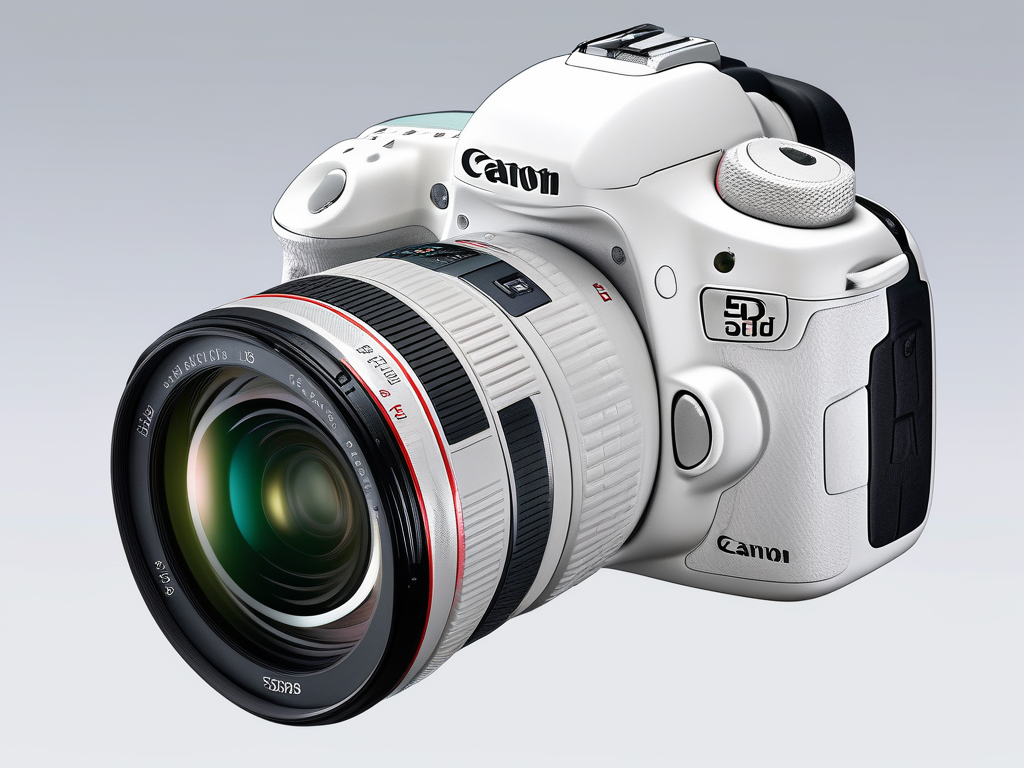
In short
- The 5D Mark III was released in 2012, but its 22 MP full-frame sensor still handles ISO 6400 without shame.
- Realistic used price in 2026: 550-750 euros for a body with 80,000-150,000 shutter count, certified shutter for 150,000.
- Known weaknesses: non-touch and non-tilting screen, dated 1080p H.264 video, no in-sensor stabilization.
- Buy only from sellers who certify shutter count and service the camera body: 30% of 5D III units on the market have AF or mirror issues.
The first Canon 5D Mark III I ever held was from 2013, bought new in-store for €3,300 along with a 24-105 f/4 L. Today, we resell that same camera body for around €650 with a 2-year warranty, and it continues to shoot weddings, portraits, and reportage without a hitch. We see several pass through our workshop every month: some with 50,000 shutter counts, others over 200,000, and almost always they still meet factory specifications.
In this article, I tell you what to really look for in a used 5D Mark III in 2026, what are the acceptable shutter counts, how much it honestly costs, and when it makes sense to prefer it over a budget mirrorless like the Canon EOS RP or its bigger sibling, the 5D Mark IV. No nostalgia: just what still works and what doesn't.
Why the 5D Mark III is still a sensible camera in 2026
A 600-euro full-frame that shoots clean at ISO 6400, withstands rain, and mounts any EF lens from the last thirty years. In 2026, this equation exists only in the used market, and the 5D Mark III is the clearest example. Released in 2012 with a list price of 3,500 euros, it is now worth a sixth of its original price, yet the sensor has not lost a single pixel of quality in the meantime.
The point is not nostalgia. It is that the technological leap between 2012 and today, in terms of image quality at low and medium ISO, is much smaller than marketing would have you believe. A new mirrorless camera costing €1,800 does things the 5D III cannot — eye-AF, 4K video, in-body stabilization — but if your work is portrait, wedding, landscape, or static reportage, the 22 MP file from the Mark III will get you the same result.
The 22 MP sensor that ages well
The 22.3 MP full-frame CMOS is the highlight of this camera. It is not the latest sensor, but it has features that keep it relevant:
- Dynamic range: approximately 11.7 stops at base ISO, sufficient to recover shadows in landscapes without evident noise.
- High ISO: files usable without reservations up to ISO 6400, manageable with modern denoise up to 12800.
- File size: RAW 25-28 MB, JPEG 7-9 MB. They work smoothly even on not-so-recent computers.
- Resolution: 5760×3840 pixels, enough for 50×70 cm prints at 300 dpi without interpolation.
Anyone coming from an APS-C immediately notices two things: the tonal depth in mid-tone skin tones and the structured, almost cinematic noise at high ISOs. This is not a "clean test" sensor: it is a sensor that produces files with character.
Solid build and reliability of a serious camera
The magnesium alloy body and weather sealing are things you can feel in your hands. It weighs 950 grams battery in, it is dense, and the dials have the right click. The shutter is certified by Canon for 150,000 shutter count, but in our lab we regularly see units pass 250,000 shutter count and still function perfectly.
The two memory slots — one CompactFlash and one SD — are a professional detail that the 5D Mark IV has retained, while mirrorless cameras in the same price range often eliminate. You can configure real-time backup or separate RAW and JPEG files onto different cards. For those working on weddings or events, this is a concrete safety net, not just a brochure feature.
Realistic price of the used 5D Mark III in 2026
In 2026, a 5D Mark III in excellent condition costs between 550 and 750 euros for the camera body only. Below 500 euros, you are either finding an example with serious issues or buying from a private seller who has no idea what they are selling. Above 800 euros, it only makes sense if the kit includes an L lens that alone justifies the difference.
Prices have stabilized over the last two years. The brutal devaluation already occurred between 2018 and 2022, when the full-frame mirrorless Canon EOS R pushed down the price of DSLRs. Today the curve is flat: a 5D III bought for 650 euros will probably be resold for 550-580 euros in two years.
Price ranges by condition and shutter count
Here is what you can realistically expect, based on what we see coming through the counter every month:
| Price Range | Shutter Count | Condition | What You Get |
|---|---|---|---|
| 550-650 € | 100,000-150,000 | Several signs of use, worn rubber seals | Functional camera body, due for servicing soon |
| 650-750 € | 50,000-80,000 | Excellent condition, minimal signs of use | Camera body with plenty of life left, the most sensible choice |
| 800-950 € | Under 30,000 | Like new or kit with L-series lens | Premium example or complete package |
The price range we recommend is the mid-tier: €650–750 for a body with fewer than 80,000 certified shutter count. The shutter is rated for 150,000 cycles, so you are buying a camera that still has half its lifespan ahead. The lower price range only makes sense if you know you are about to face a major service (sensor, mirror, seals) and accept the additional cost.
How much you are saving compared to alternatives
The interesting comparison is not with DSLRs of the same era, but with entry-level full-frame mirrorless cameras available today at similar prices. Two examples from our catalog:
- The Canon EOS RP at 600 euros: 2019 full-frame mirrorless, 26 MP, native RF mount. Lighter, tilting touch screen, 4K video (cropped). However, autofocus is less performant in sports/action, and the used RF lens park is still expensive.
- The Sony A7 Mark II at 550-600 euros: full-frame mirrorless with in-body stabilization (5 stops), 24 MP, ergonomics less comfortable than the Canon, but IBIS that changes the game with manual lenses.
For the same budget, the 5D Mark III remains the most "pure photography" choice: better AF tracking, optical viewfinder, ergonomics designed for hours of use, and a real 6 fps burst rate. If, however, you want video, a flexible screen, or integrated stabilization, the mirrorless wins. For a generational comparison between Canon DSLRs, also see our analysis of the used 5D Mark IV in 2026: at €1,100-1,300 it is a different world, but you will immediately know if the III is enough for you.
How many shutter counts are too many on a 5D Mark III
The shutter count is the first thing we check when a 5D Mark III comes into the workshop, but it is not what determines whether the camera is worth it or not. A 5D III with 180,000 shutter counts in excellent condition is worth more than one with 60,000 shutter counts that has been dragged to the beach for two summers without ever being cleaned. That said, having some reference thresholds helps to gauge the price and understand how much life is left in the camera.
The 150,000 threshold and what happens after
Canon states that the shutter of the 5D Mark III is tested for 150,000 cycles. This is a laboratory figure, not an expiration date. In practice, we have seen bodies exceed 300,000 shutter count without failure, and others break at 90,000 due to rapid-fire use at weddings and sporting events. The 5D III has a robust shutter, but it remains a mechanical part subject to statistical wear.
Here is how we assess shutter count ranges in our store:
- Under 50,000: camera body like new, pay the difference only if you value guaranteed longevity.
- 50,000-150,000: the ideal price/durability range, shutter count well within parameters.
- 150,000-250,000: still fully usable, but the price must drop and the shutter count needs monitoring.
- Over 250,000: buy only at a very low price, accounting for future replacement.
When the shutter fails, the classic symptom is a black band at the bottom of the frame or a shutter count that no longer increments. Replacing the shutter assembly costs approximately 250 euros at a Canon service center. On a camera body paid for at 600 euros, it is not a drama; on one paid for at 400, it starts to be.
How to verify the actual shutter count before buying
The 5D Mark III does not display the shutter count in the user menu. You need to read it with external software by connecting the camera body to a PC: EOSInfo for Windows or ShutterCount for Mac are the two reference tools, the former being free and the latter paid. In ten seconds, you have the exact certified shutter count from the Canon firmware, which cannot be manipulated.
If a private seller does not declare the shutter count or refuses to have it verified at the time of purchase, walk away. There is no legitimate reason to hide that number. The same applies to those who write "low shutter count" without providing figures: low compared to what? Our advice when selling equipment also applies in reverse when buying, and it is explained here: how to sell used photographic equipment. Transparency on the data = trust in the negotiation.
Known issues and what we check in the lab
No DSLR produced in 100,000 units is free from recurring defects, and the 5D Mark III is no exception. Fourteen years of field use have clearly mapped its failure points, and this is an advantage: we know exactly where to look before putting it on display.
Error 70 and stuck mirror
The two failures we see most often both appear after 100,000 shutter count, sometimes earlier if the camera body has operated in hot and humid environments.
The Error 70 is a communication block between the shutter and the processor. Typical symptom: the camera shuts down in the middle of a burst, the display shows "Err 70" and the only way to restart is to remove and reinsert the battery. If it appears two or three times in a month, the problem is structural and the camera needs to be opened. Realistic repair cost in 2026: 180-250 euros, including shutter assembly replacement.
The stuck mirror is the most well-known defect in this series. The rubber sheet that dampens the reflex mirror's bounce detaches due to adhesive aging. Result: the mirror remains down, autofocus fails to lock, and in some cases the sheet ends up on the AF contacts, causing phantom focus errors. Repair: €150-200 if the sheet has only detached, up to €300 if it has damaged the AF module.
Other minor defects we keep an eye on:
- Rear Quick Control dial that becomes intermittent after intensive use
- Grip rubber peeling off in the thumb and pinky areas
- LCD display with dead pixels on the edges on units exceeding 200,000 certified shutter count
- CompactFlash slot with bent pins from clumsy insertions
What we do at the workshop before sale
Every 5D Mark III that enters the shop goes through the bench before being put up for sale. It’s not marketing; it’s the reason we can offer a 2-year warranty on a camera body that is 14 years old.
The standard procedure is as follows:
- Actual shutter count read from internal EXIF via dedicated software, not the value declared by the previous seller
- Sensor cleaning with a wet swab and 100% check on a white background at f/16
- AF micro-adjustment calibration on the 61 points, using a Spyder target at three distances
- Shutter test at all speeds from 30s to 1/8000, flash sync verification at 1/200
- Weather sealing inspection on the battery door, card slots, and mount
- Dual slot verification CF + SD with simultaneous writing from 32 GB
- Viewfinder cleaning and focus screen check
If even one of these points fails, the camera body goes back to the workshop for intervention or is removed from the catalog. This is the filter that separates certified used equipment from "working as seen in photos".
What can you do today with a 5D Mark III
The 5D Mark III in 2026 is a workhorse, not a showpiece. Its 22 MP full-frame sensor produces files that hold up against any modern entry-level mirrorless up to ISO 6400. Below that threshold, you don't notice it has fourteen years on its shoulders; you notice it's a professional body built when Canon didn't skimp on materials.
Portrait, wedding, reportage
Here, the 5D Mark III still does its job without asking for apologies. The 61-point autofocus inherited from the 1D X remains one of the most reliable DSLR AF systems ever produced by Canon. At a church wedding with mixed lighting, the AF Servo locks onto the groom's face as he walks toward the altar and doesn't let go. Few entry-level mirrorless systems today perform better in difficult lighting conditions.
The 6 fps burst rate is not from a sports camera, but for a wedding reportage or an editorial assignment, it is exactly what is needed. The buffer holds up well even in RAW: typically 18 shutter count before slowing down with a decent CompactFlash.
22 MP files are the sweet spot for those who print. You can print 50x70 without interpolation and with room to crop. For a portrait photographer delivering prints to clients, 22 MP are more manageable than the 45 MP of an R5, both in terms of file size and workflow.
Areas where the 5D Mark III is still the right choice in 2026:
- Weddings and ceremonies: Reliable AF in churches, serious weather sealing, dual CF+SD slots for immediate backup.
- Studio portrait: Low ISO, clean files, Canon color that skin has always loved.
- Reportage and street: Robust body that withstands rain and dust, discreet and silent AF in Live View mode.
- Fine art printing: 22 MP is the sweet spot between detail and manageable file size.
Where it shows its age
Video is the weak point. It records 1080p in H.264, with ALL-I options (large files but smooth editing) or more compressed IPB. The quality remains modest compared to any current mirrorless that shoots 4K. If video is even 20% of your work, the 5D Mark III is not the right camera.
The sensor lacks stabilization and the screen is not a tilting touch display. This means that for handheld video you are forced to use IS lenses, and for creative framing at ground level or overhead you have to guess. The body weighs 950 grams, which becomes over 1.3 kg with the BG-E11 battery grip. For a light trip or a multi-day trek, this weight is noticeable, especially if you mount a 24-70 f/2.8 in front.
When to choose the 5D Mark IV or a mirrorless
The 5D Mark III is not the only sensible choice under 1000 euros in 2026. There are three scenarios where you should look elsewhere: you want decent 4K video, you work heavily in live view, or you are bothered by carrying a 950-gram camera body. In these cases, let's be honest.
5D Mark IV: you pay 400 euros more, what really changes
Used Mark IV units today go for around 1000-1200 euros for examples with acceptable shutter counts. That is 400-500 euros more than the Mark III. You get four concrete things:
- Dual Pixel AF: live view autofocus becomes fast and reliable, comparable to an entry-level mirrorless. On the Mark III in live view, you are stuck with pure contrast detection, which is extremely slow.
- 30 MP instead of 22: headroom for cropping and large prints. For web use, it makes no difference.
- Touch screen: tap-to-focus, faster menu navigation. It remains non-articulating.
- 4K Video: but in Motion JPEG, with huge files and significant sensor crop. Technically it's there, but practically it's inconvenient.
It makes sense to pay the difference if you shoot portraits in live view (weddings, still life), if you print above 50x70, or if you want a camera body that will last another 8-10 years with more readily available firmware and spare parts. For everything else, the Mark III does the same job.
Switching to mirrorless: Canon EOS RP or Sony A7 II
Under 650 euros today, you can find two used full-frame mirrorless cameras that directly challenge the 5D III in terms of pure value for money. The Canon EOS RP at 600 euros is the natural choice for those coming from Canon: it weighs 485 grams (half the weight of the 5D III), features modern eye-detection AF and an electronic viewfinder. Your EF lenses mount via the Canon EF-EOS R adapter, which costs 100 euros used and does not degrade image quality.
The Sony A7 Mark II at 550-600 euros features in-body stabilization (5 stops), which neither the 5D III nor the EOS RP offers. While its menu ergonomics are older, the Sony 24 MP sensor performs excellently up to ISO 12800.
The prices paid: with the EOS RP you lose two SD slots and battery life (250 shutter count per charge against 950 of the 5D III). With the A7 II you change the entire lens park or use a Sigma MC-11 adapter that works but not with all EF lenses. If you are not sure which direction to take, read how to choose the first used mirrorless before deciding.
EF Lenses: The Real Reason to Buy a 5D Mark III
The camera body is only half the story. The real reason why it still makes sense to buy a 5D Mark III in 2026 is the EF lens lineup: thirty years of Canon production, millions of units on the used market, and prices that have plummeted after everyone switched to mirrorless RF. The same lenses that were out of budget ten years ago can now be brought home for the price of an entry-level mirrorless zoom.
It is not a feeling. It is the direct consequence of Canon focusing exclusively on the RF lineup since 2018: those who switched to an R5 or R6 sold their EF lenses, and the used supply has driven prices down.
L lenses that are now affordable on the used market
Three lenses cover 90% of real-world scenarios, and you can get them all for less than what a single L-series zoom cost ten years ago.
- Canon EF 24-105 f/4 L IS USM: 400 euros in excellent condition. A versatile full-frame zoom, stabilized, built to last. It's the lens you mount and forget.
- Canon EF 50 f/1.4 USM: 200 euros. It's not an L lens, but on full-frame it performs like few others at that price. For portraits and low light, it's the piece to grab immediately.
- Canon EF 70-200 f/4 L USM: 450 euros for the non-IS version, 600-650 for the IS. A professional telezoom, lightweight, sharp even wide open. For events, amateur sports, and distant portraits.
Total kit price: €1,050 with the 70-200 non-IS, €1,250 with the stabilized version. Add the camera body at €650 and you have a complete professional full-frame system for under €2,000. The exact same kit in mirrorless RF (R6 + 24-105 RF + 50 RF + 70-200 RF f/4) starts at €5,500 used.
Future compatibility: EF-RF adapter if you switch to mirrorless
This is the point many overlook. Investing in EF lenses is not a dead end. Canon produces the EF-EOS R adapter, which costs 100 euros new and less than 70 used, making every EF lens fully functional on any RF mirrorless: R8, R6 Mark II, R5, R5 Mark II, R1. Full autofocus, complete electronic communication, and stabilization that works in tandem with the camera body's IBIS.
It means that if you switch to a mirrorless in two years, the three lenses in the kit come with you. You only sell the camera body. L EF lenses do not lose value because the adapter keeps them relevant across the entire current and future Canon range. In our workshop, we always test AF performance with the adapter before delivering an EF lens to a customer who already owns an RF body.
Checklist before buying a used 5D Mark III
One in every two 5D Mark III bodies we see coming into our lab has at least one issue that the seller had not disclosed. It is not always serious, but if you buy from a private seller without performing the right checks, the risk of bringing home a body worth 600 euros that requires another 300 euros in repairs is real. This is the checklist we use when evaluating a body for trade-in.
Mandatory questions for the seller
Before even seeing the camera, write to the seller and ask these four things. If they avoid answering, walk away.
- Certified shutter count: not "approx. 80,000", but the exact value read by software such as EOSInfo or ShutterCount. A 5D Mark III does not display the counter in the menus, so an external tool is required. A serious seller knows how to do this or will send you the screenshot.
- Service history and maintenance: Has it ever been in for service? Mirror replaced? Shutter changed? A camera with a recent Canon service record is worth 80-100 euros more.
- Original box and accessories: original LC-E6 battery charger, LP-E6 battery (not a Chinese compatible one), strap, neck strap, cables. Without the original battery, expect to spend 60 euros on a new one.
- Remaining warranty: if you buy from a dealer, how many months are left? From a private seller, the warranty is 12 months by law, but in practice, getting anything back is complicated.
Physical tests to run in 5 minutes
If you meet the seller in person, bring a CF card and an SD card, a charged battery, and a lens you know well. Five minutes are enough to uncover 90% of the issues.
- Shutter count at all speeds: from 30 seconds to 1/8000. Listen to the shutter sound: it must be uniform, without metallic clicks or double clicks. Anomalies at 1/4000 or 1/8000 indicate tired curtains.
- Autofocus on high-contrast subject: use the central point in AI Servo on a moving subject. Then test all 61 points one by one in One Shot. If any point systematically misses focus, the AF module has known issues on this model.
- Sensor inspection: take a shot at f/22 framing a uniformly illuminated white wall, ISO 100. Open the file on your phone with brightness at maximum: dust and scratches will immediately stand out. Dust can be cleaned, scratches cannot.
- Functional dual slot: insert both CF and SD, set "record to both" and take a shot. If the camera does not write to one of them, the slot is faulty.
If even a single point on the checklist leaves you with doubts, take your time. The used 5D Mark III market is not in shortage: the next opportunity will arise within the week.
Frequently Asked Questions
How many shutter count can a Canon 5D Mark III handle before it breaks?
Canon certifies the shutter for 150,000 shutter count, but in practice we have seen units exceed 300,000 without issues. When the shutter fails, replacement costs approximately 250 euros at a Canon center or a reputable repair shop.
Is the 5D Mark III still valid for wedding photography in 2026?
Yes, it is still a perfectly professional camera for weddings. 61-point AF, 6 fps burst rate, dual CF+SD slots for immediate backup, and 22 MP files that print up to 50x70 without issues. The only real limitation is the lack of IBIS and the now outdated 1080p video if you also need to shoot video.
Which is better: 5D Mark III or used Canon EOS RP at the same price?
It depends on usage. If you are coming from a DSLR and already have EF lenses, the 5D III offers superior robustness and zero adapters. If you are starting from scratch and want something lightweight with an EVF and eye-detection AF, the EOS RP is more modern but has a weaker battery and less solid build.
How do I know the shutter count of a 5D Mark III?
Using software such as EOSInfo (Windows) or ShutterCount (Mac) connected via USB. On a used camera purchased from a reputable store, the shutter count must be declared on the tag. If the seller does not declare it, consider that something is not right.
Can I use 5D Mark III lenses on a Canon mirrorless camera?
Yes, using the Canon EF-EOS R adapter, which costs approximately 100 euros and maintains autofocus and stabilization of the original lenses. All EF and EF-S lenses work perfectly on Canon RF mirrorless cameras, including professional models.
How much does a 5D Mark III weigh compared to a full-frame mirrorless?
The 5D Mark III weighs 950 grams for the body alone, compared to 485 grams for a Canon EOS RP or 600 grams for a Sony A7 II. If you do trekking or long trips, the half-kilogram difference is noticeable. For studio or wedding work, it makes no difference.
What are the typical defects of the 5D Mark III after many shutter counts?
The most common issues we see in the lab are Error 70 (misaligned mirror or shutter), hardened weather-sealing gaskets, and LCD screens with a few defective pixels. All of these are fixable in the lab, with costs ranging from 100 to 300 euros.
Looking for a refurbished Canon 5D Mark III with warranty?
If you have doubts about a purchase or need advice for your specific case, contact us. We offer free advice because we are photographers first, sellers second, and because a customer who buys the wrong gear stops shooting.
Three ways to get in touch:
- Contact form — response within 24 business hours
- WhatsApp at 342 362 3454 (messages only)
- Phone: 071 291 6347 (Mon-Fri 9-13/15-18, Sat 9-13)
And if you want to see what we have in stock right away, explore the used gear available today: every camera is certified, comes with a 2-year warranty, and ships within 24-48 hours.
Article written by Matteo for the ReflexMania Team. Last updated: May 2026. Prices and availability refer to the time of publication.