
In short
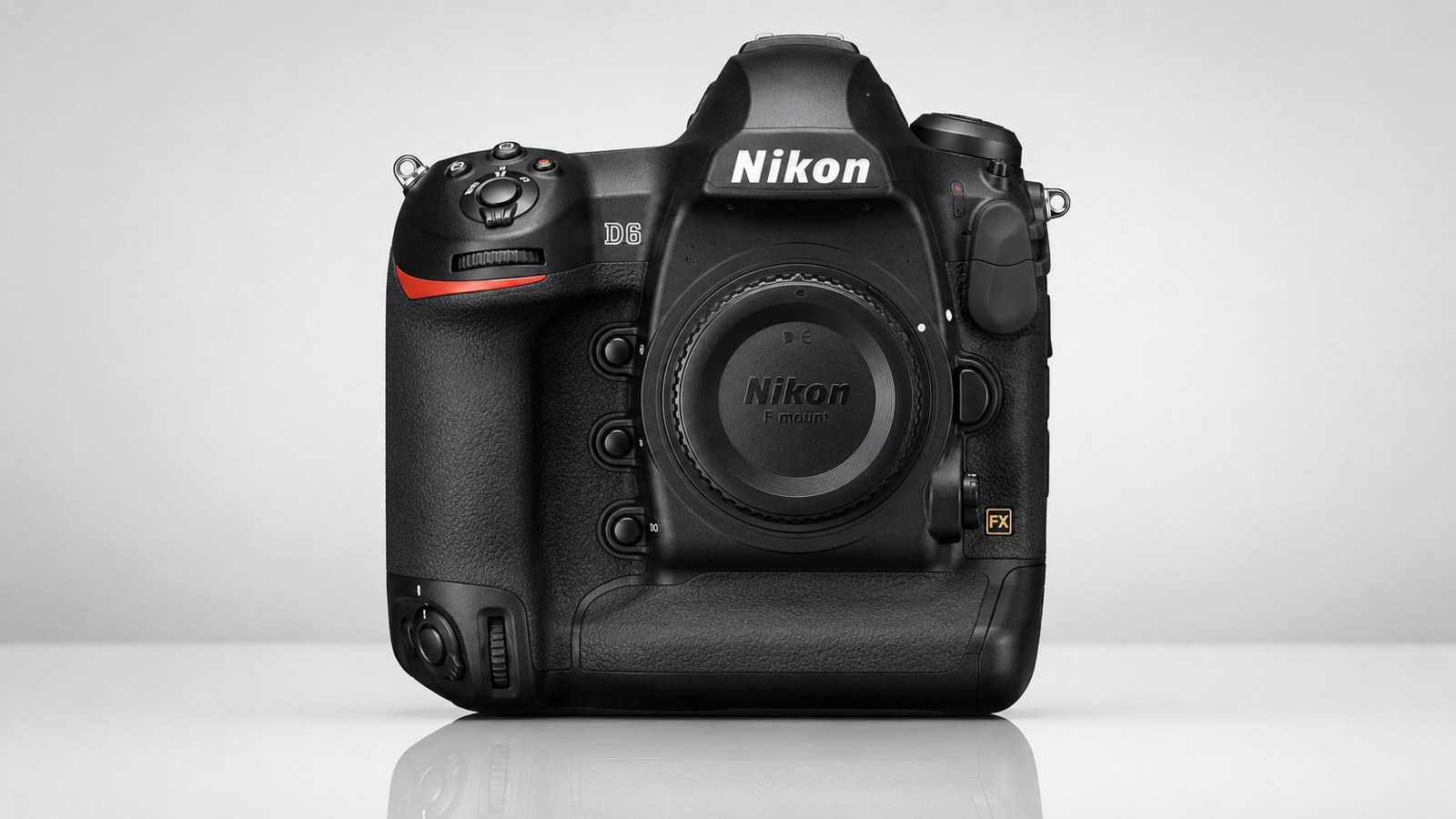
- The Nikon D6 was released in 2020 for sports photojournalism: 20.8MP, 14 fps with AF, 105 cross-type points. It is not a resolution-focused camera; it is an action camera.
- On the used market today, a D6 in good condition ranges from €3,000 to €4,200, compared to the ~€6,500 list price for new units: the value drop is significant, but it remains a major investment.
- Used units often come from agencies and professionals: shutter counts of 200,000–400,000 are normal, but they must be verified alongside the condition of the shutter and mirror.
- For 90% of intermediate photographers, a used D850 or D500 covers the same needs for a third of the cost: the D6 only makes sense for those shooting sports/agency work at a professional level.
Every now and then, someone walks into the shop asking for a Nikon D6. Almost always, they don't need it, and part of my job is to tell them so before they spend three thousand euros. The D6 is Nikon's last flagship DSLR, a camera built for a very specific trade: staying on the sidelines or in war zones and never missing a shutter count. It is a splendid, overpowered tool for the vast majority of us.
In this article, I explain what the D6 really is, why you find it on the used market, what it costs today, and which checks to perform before buying it. Above all, I honestly tell you who it suits and who it doesn't, because in the Nikon catalog there are alternatives that do an overlapping job for a third of the price. If after reading you still want a D6, at least you will know what you are buying.
What is the Nikon D6 and what profession it was born for
The Nikon D6, released in 2020, features 20.8 megapixels. On paper, it has fewer pixels than the 45.7MP D850, which can confuse first-time viewers. The truth is that resolution has never been the point: the D6 is Nikon's last flagship DSLR, designed for sports photojournalism, where the priority is capturing the right shot at the right moment, not printing a two-meter poster.
It is a camera built for action and harsh conditions. On the sidelines in the rain, in dark arenas, in the desert, in war. Those who bought it new were not looking for detail: they were looking for a camera that would never let them down, shot after shot, for hundreds of thousands of shutter count.
The specs that really matter
The key figures of the D6 tell a precise story: speed and durability come first.
- 20.8MP full frame sensor: moderate resolution, lightweight files, excellent high ISO performance.
- 14 fps with continuous AF/AE: burst mode that tracks the subject without losing focus or exposure.
- ISO 100-102400, expandable: huge headroom for dark interiors and night shots.
- Dual CFexpress/XQD slots: fast cards to clear the buffer and immediate file backup.
- Extreme weather sealing: magnesium alloy body designed to work in wet and dusty conditions.
None of these items mention megapixels. Every choice is tailored to the workflow of someone delivering photos to an agency while the event is still underway.
Autofocus is the real engine
If there is one reason the D6 exists, it is its autofocus system. The AF module features 105 points, and the difference compared to more affordable camera bodies is that they are all cross-type: they read contrast horizontally and vertically simultaneously, allowing them to lock onto difficult subjects with greater reliability.
Sensitivity reaches -4.5 EV, meaning it focuses in low-light conditions where the human eye struggles to distinguish shapes. Add subject tracking for moving subjects and you understand why a sports photographer would choose it: a striker sprinting toward the goal stays in focus throughout the burst. This is the heart of the D6. Everything else — body, battery, cards — is built around this ability to never lose the subject.
Why a D6 ends up on the used market
A D6 doesn't break from age: it changes its role. Almost every unit that reaches our used inventory has had a specific professional life, and the reason for its sale tells you a lot about its actual condition. Understanding this cycle is the fastest way to read a listing without being intimidated by the numbers.
Migrating to the Z9 and Z8 mirrorless
Most of the D6 units on the used market today stem from a single market shift. Between 2022 and 2023, Nikon introduced the Z9 and then the Z8, prompting sports agencies and photojournalists who had D6 camera bodies in double coverage to switch to mirrorless in bulk.
The result is an unusually wide range of shutter counts for such a niche camera body. This is not a rare occurrence: dozens of units have been retired by the same type of user, often within the same period. This explains two things:
- Prices remain compressed compared to what a flagship DSLR would cost if it were still in full production.
- Availability is cyclical: when an agency renews its fleet of camera bodies, several units come out at once, then the flow stops for months.
Those looking for a D6 are not buying an object abandoned due to technical obsolescence, but a tool that has simply moved to a different workflow platform.
What it means to buy a professional's gear
This is where the most common fear kicks in: a high shutter count. On a D6, seeing 200,000 or 300,000 shutter count is normal, not alarming. It is a machine designed for those numbers, and the previous owner used it for work, not for collection.
The real point isn't the shutter count, but how it was treated. A camera body from an agency often has a better maintenance history than an amateur DSLR kept in a drawer:
- Periodic maintenance at authorized service centers, not DIY.
- Regular sensor cleaning, as downtime costs work.
- Intensive but continuous use, which stresses the equipment less than long stops and restarts.
Signs of use are present: worn rubber grips, brass showing on the edges, polished threads. These are cosmetic scars, not functional defects. The serious work is distinguishing cosmetic wear from real mechanical degradation — shutter, mirror, AF alignment — and that is exactly what needs to be verified before signing. A high shutter count on a well-maintained camera beats a low shutter count on a mistreated one.
How much does a used Nikon D6 cost today
On the used market, a Nikon D6 in good condition currently ranges between €3,000 and €4,200. The new retail price, when available, remains around €6,500. The value drop is significant, but this is still a major investment, not a bargain-bin find.
Price ranges and what differs between them
The price of a used D6 depends almost entirely on two variables: shutter count and cosmetic-mechanical condition. The 20.8MP sensor and 105-point AF are the same on all units, so you are not paying for resolution: you are paying for the remaining life of the camera body.
| Price Range | Typical Condition |
|---|---|
| 3.000 – 3.400 € | High shutter count (often over 300,000), several signs of use, ex-agency. Functional but requires thorough inspection. |
| 3.500 – 3.900 € | Excellent condition, average shutter count (150,000 – 250,000), intact camera body. |
| 4.000 – 4.200 € | Like new, low shutter count, complete kit. Rare: the D6 is meant to be used, not kept on display. |
Pay attention to one detail: a low shutter count alone does not justify the full price if the camera body has been exposed to rain, sand, and travel. On a sports flagship, the actual condition matters as much as the shutter count.
The depreciation of a flagship
Flagships lose value faster than high-quality enthusiast full-frame bodies, which is counterintuitive. The reason is the market: the buyer of a D6 is a sports or agency professional, not an enthusiast. It is a narrow audience, and when pros migrate to mirrorless models like the Nikon Z9 and Z8, demand for the flagship DSLR dries up quickly.
A used D850 or D780 attracts many more buyers and retains its value better in proportion. The D6, on the other hand, suffers from being the last DSLR in a category that the manufacturer itself has stopped developing. This is not a flaw of the camera: it is the physics of a segment that has moved elsewhere.
Shutter count, shutter and condition: what to check before buying
On a D6, the shutter count is not the first thing I look at. First, I check who used it and how. A sports flagship lives on bursts: a high counter is normal, while a low counter on a unit coming from an agency should raise more suspicion than reassurance.
Shutter count must be read in the right context
The D6's shutter is certified by Nikon for approximately 400,000 cycles. This is a tested durability figure, not an insurmountable wall: many units exceed it, while some fail earlier. The point is that 250,000 shutter count on a D6 does not equate to 250,000 on an entry-level model. Here, the shutter assembly is oversized to withstand bursts of 14 fps repeated over years.
How to read the shutter count in practice:
- Under 100,000 shutter count: lightly used example, often from a pro who quickly moved to Z9/Z8. Excellent, but verify it hasn't been sitting in a drawer for years (seals dry out).
- 100,000–300,000: healthy professional use. This is the most common range on the used market and, if the mechanics are in good shape, it remains a bargain.
- Over 300,000: close to the rated limit. It still has life left, but the price must drop and you should budget for a potential shutter replacement.
The same logic applies to every high-end DSLR: if you want to understand how much the shutter count impacts the value, I discussed it in detail in how much is a used Nikon D850 worth.
Mechanics, sensor and memory slots
The shutter count alone doesn't tell the whole story. On a camera body that has racked up thousands of certified shutter counts, I check the spots where wear is actually visible:
- Mirror and mechanics: check for any play or abnormal noise in the movement. A mirror that slams shut dry or irregularly is a serious red flag.
- 20.8MP sensor: take a shot at f/16 on a light surface to look for dead pixels, hot pixels, and stubborn dust. Some specks can be cleaned, a fixed defect cannot.
- Dual CFexpress/XQD slots: test both with a good card. Bent contacts or loose slots are an expensive defect to ignore.
- Seals and weather sealing: doors and dials must close firmly. On a camera built to work in the rain, sealing is half the warranty.
If any of these points don't convince you, negotiate the price or walk away: repairs on a D6 are never cheap.
D6 vs. Nikon Alternatives: D850 and D500
The truth we tell at the counter to anyone walking in convinced they need a D6: nine times out of ten, they don't. The D6 is built around a single requirement — burst speed and field reliability for those who deliver photos to agencies within the hour. If that's not your profession, you're paying 3,000-4,000 euros for capabilities you would never use. Nikon, on the same DSLR body, offers two alternatives that cover most use cases at a third of the cost.
D850: resolution and versatility at one-third of the price
Used Nikon D850 units currently trade in the range of €1,400–1,700 in excellent condition. It is the most versatile full-frame body Nikon has produced in its DSLR lineup: a 45MP sensor, 7 fps that increases to 9 with the battery grip, and a 153-point autofocus system derived from the D5. In practice, you can shoot landscape, portrait, weddings, still life, and reportage with the same camera, and print large thanks to the resolution. If you don't need extreme burst rates and want cropping headroom and detail, the D850 is a better fit than the D6.
D500: the APS-C burst for sports and wildlife
You can find a used D500 for around 900-1,200 euros. It is APS-C, shoots at 10 fps, and features the same 153-point AF module as the D5. The 1.5x crop factor works in your favor with telephoto lenses: a 300mm performs like a 450mm equivalent, a concrete advantage for wildlife and sideline sports without buying lenses costing thousands of euros. It is the true alternative for those seeking speed and top-tier AF without spending as much as on a D6. We have written about this in detail in the guide to the used Nikon D500.
| Model | Sensor | Burst Rate | Used |
|---|---|---|---|
| D6 | FF 20.8MP | 14 fps | 3.000-4.200 € |
| D850 | FF 45MP | 7 (9) fps | 1.400-1.700 € |
| D500 | APS-C 20.9MP | 10 fps | 900-1.200 € |
The D6 remains the right choice only if you shoot sports or news at a professional level and the constant burst rate with AF that locks on in any light is what makes your living. For everyone else, the D850 or D500 is the most sensible answer.
Who the D6 is really for (and who it isn't)
The D6 is a camera you buy for one reason only: to capture action in difficult conditions without ever wondering if your gear will hold up. If that doesn't sound like you, you are almost certainly about to spend €3,500 to use 20% of what you paid for.
The profile for which the D6 makes sense
The D6 is for those who work, not just for enthusiasts. The right photographer is the one standing on the sidelines on Sunday with a 300mm or 400mm Nikkor F in hand, taking 2,000 shots per match and delivering them to the newsroom the same evening. For him, three things matter:
- AF that never loses the subject, even under stadium lights or in backlight.
- Total reliability: weather-sealed body, dual CFexpress slots, shutter that withstands thousands of shutter count in burst mode without failing.
- Battery life: the EN-EL18 battery lasts through an entire event without a swap.
If you shoot competitive sports, news, or professional-level events and already own valuable Nikkor F lenses, the used D6 is a coherent choice. Outside of this, it is overkill.
If you're not that photographer, what to buy instead
For the intermediate photographer looking for an excellent camera body without paying flagship prices, the used market offers much more sensible alternatives depending on budget and system:
| Model | Price | For whom |
|---|---|---|
| Nikon Z30 | €450 | For those entering the Z system for content creation, travel, and vlogging. A lightweight and direct APS-C option. |
| Nikon Z50 Mark II | €741 | For APS-C enthusiasts seeking modern AF and a viewfinder, while staying on the Z mount. |
| Canon EOS R | €760 | For those wanting a full-frame mirrorless for portrait and landscape without chasing high burst rates. |
| Sony A7r Mark II | €800 | For those seeking resolution: 42MP full-frame for printing and generous cropping. |
These are different machines from the D6 in philosophy, but they cover the needs of 90% of people who are looking at it by mistake. If your doubt is between two full-frame mirrorless cameras for general use, the comparison in Sony A7 III vs A7 IV: is the jump worth it on the used market helps: same reasoning, applied to the enthusiast tier.
How we check a D6 in the ReflexMania lab
A flagship with 300,000 shutter count is not a problem in itself: the D6's shutter is rated for 400,000 cycles. The problem is buying it without knowing whether those 300,000 shutter count were logged by a careful pro or by a freelancer who tossed it in a wet bag under the rain for two consecutive World Cups. Our job at the counter is to remove this uncertainty before the camera reaches you.
Every D6 that comes in goes through the same protocol, no shortcuts. We don't trust what the seller tells us: we read the camera.
- Reading the actual counter: we extract the shutter count from the metadata using dedicated software, not from the display. This is the first piece of data we write on the certificate.
- Shutter and mirror test: extended burst at 14 fps to verify that the rate is constant and that the mirror mechanism has no play or abnormal noises after hundreds of thousands of cycles.
- Sensor inspection: check with raking light and shots on a uniform background to identify dust, scratches, or defective pixels. If needed, wet cleaning in the lab.
- Autofocus: verification of the 105 cross-type points on a contrast target, check of back/front focus and calibration if necessary. On an action camera, AF is everything.
- CFexpress slots and connections: write test on the two slots, test of the ports, joystick, and vertical controls, which on these bodies work as much as the horizontal ones.
- Sealing and structure: check of seals, rubber parts, and alloy frame, where agency cameras accumulate the most serious wear.
What we find is documented in writing. The certified shutter count, the shutter condition, and any work performed become part of the sheet that accompanies the camera body. No generic "excellent condition": just numbers and facts.
On every D6 we sell, as with all our used equipment, we apply a 2-year warranty. On a camera body that costs €3,000–4,000 and may already have a significant shutter count behind it, the warranty is not a commercial detail: it is the difference between a sensible investment and a gamble on a private listing. If something fails during normal use, whether the shutter or the electronics, the camera goes back to our workshop and we fix it.
Frequently asked questions
How much does a used Nikon D6 cost in 2026?
In good condition, it trades between €3,000 and €4,200 depending on shutter count and condition, compared to a new retail price of around €6,500. Ex-agency units with high shutter counts fall in the lower price range.
How many shutter count can the D6 shutter handle?
The shutter is certified by Nikon for approximately 400,000 cycles, compared to the 150,000-200,000 of an amateur DSLR. Therefore, a certified shutter count of 250,000 on a D6 is not as concerning as it may seem, provided the mechanics are sound.
Is the Nikon D6 worth it compared to the D850?
Only if you shoot sports or photojournalism at a professional level and need 14 fps and total reliability. For everyone else, the D850, with its 45MP and a price of about one-third, is the most sensible choice.
Is it worth getting a D6 or should you switch to a Nikon Z mirrorless?
If you are starting from scratch and do not already own Nikkor F lenses, a Z mirrorless makes more sense in the long run. The D6 is suitable for those who have an F-mount lens collection and want the mechanical reliability of a flagship DSLR.
Why are there so many used D6 cameras for sale?
Many Nikon professionals have switched to the Z9 and Z8 mirrorless cameras since 2022, putting their D6s on the market. It is a good time for supply, but they remain intensively used cameras that need to be checked carefully.
What warranty does ReflexMania offer on a used D6?
As with all our used equipment, we offer a 2-year warranty. Every camera body goes through our in-house lab for certified shutter count, shutter and autofocus testing, and sensor inspection before being put up for sale.
Looking for a Nikon D6 or a smarter alternative? Let's talk
If you have doubts about a purchase or need advice for your specific case, contact us. We offer free advice because we are photographers first, and because a customer who makes a poor purchase will not return to photography.
Three ways to get in touch:
- Contact form — response within 24 business hours
- WhatsApp at 342 362 3454 (messages only)
- Phone: 071 291 6347 (Mon-Fri 9-13/15-18, Sat 9-13)
And if you want to see what we have in stock right away, explore the used gear available today: every camera body is certified, comes with a 2-year warranty, and ships within 24-48 hours.
Article written by Matteo for the ReflexMania Team. Last updated: July 2026. Prices and availability as of the date of publication.