
In short
- The 7D Mark II features a 20.2 MP APS-C sensor, 65-point all-cross AF system, and 10 fps burst rate: specs that in 2014 were flagship sports camera territory.
- 1.6x crop factor: a 100-400mm lens becomes a 160-640mm equivalent, a real advantage for wildlife and long telephoto lenses.
- Above ISO 6400, noise is pronounced: for concerts or dim interiors, it is better to look at full-frame options like the used Canon 5D Mark IV.
- Fair prices for body only in 2026: between 450 and 700 euros depending on shutter count and condition, with a declared shutter life of 200,000 certified shutter count.
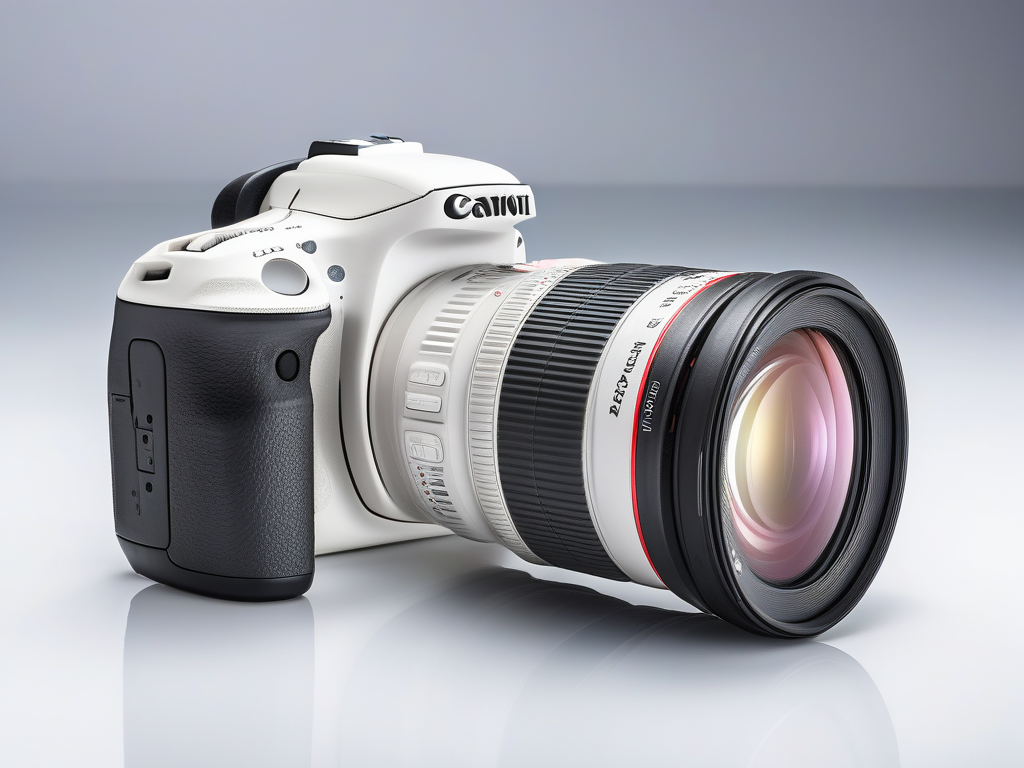
When it launched in 2014, the Canon 7D Mark II was Canon's serious answer for those wanting an APS-C camera built like a professional tool: magnesium alloy body, dual DIGIC 6 processors, and 65-point AF conceptually inherited from the 5D Mark III. For twelve years, it has been the reference camera for sports, wildlife, and motorsport photographers who couldn't afford a 1D X but needed genuine burst rates, autofocus, and weather sealing.
At the counter, I often get the same question: does it still make sense to buy a 7D Mark II in 2026, with so many mirrorless options available? The short answer is yes, but for a very specific niche. In this article, I explain who it is still the right choice for, what to check before buying it used, and when it’s better to look elsewhere.
Who was the Canon 7D Mark II and what did it represent
The 7D Mark II is the most sporty APS-C DSLR Canon has ever built. Introduced at Photokina in September 2014, it hit the market with a precise mission: to give action photographers a fast, robust body with professional DSLR autofocus, without forcing them to switch to full frame and the costs of long L-series lenses. For five years, it remained in the catalog as Canon's APS-C action reference, until the arrival of the 90D in 2019, which inherited its audience without truly replacing it in spirit.
The body is made of magnesium alloy with declared tropicalization at levels comparable to the 5D Mark III. Shutter count tested at 200,000, dual CF + SD card slots, optical viewfinder with 100% coverage. These are specs that seem standard today, but in the 2014 APS-C segment, they were a rarity. Canon explicitly positioned it as the "APS-C alternative to the 1D X" for those shooting sports, wildlife, and action.
The leap from the original 7D: what really changes
Between the 2009 7D and the 2014 Mark II, there is a five-year gap and a clear generational shift in two key areas: autofocus and burst rate. The original 7D featured 19 cross-type AF points and 8 fps; the Mark II upgrades to 65 all cross-type points with sensitivity down to -3 EV, and increases to 10 fps with a redesigned AI Servo tracking system derived from the 1D X module. For those photographing raptors in flight or amateur football, the improvement is tangible, not cosmetic.
Other concrete changes:
- Sensor: from 18 to 20.2 MP, dual DIGIC 6 processor (one for image, one for metering).
- ISO: extended native up to 16,000 compared to the 6,400 of the first body, with a real gain of about one clean stop.
- Metering: new 150,000-pixel RGB+IR sensor, same lineage as the 1D X, with direct effects on AF tracking lock.
- Built-in GPS: useful for travelers, although it drains the battery if left on.
Positioning in the Canon APS-C range
In the Canon APS-C DSLR hierarchy, the 7D Mark II has always stood apart. Below it, the three-digit series (70D, 80D, 90D) is designed for generalist enthusiasts: lighter camera bodies, viewfinders with lower coverage, slower shutter speeds, and AF less specialized for action. The 80D topped out at 7 fps with 45 AF points; the 90D reaches 10 fps but with an AF system derived from the consumer series, not the 1D X.
In practical terms: anyone looking for a Canon APS-C camera body for portraits, travel, or family use has always found it sensible to buy an 80D or 90D. Those who shoot sports, wildlife, or aviation on Canon EF-S, however, still find the 7D Mark II to be the reference option, even in today's used market.
The specs that truly matter for sports and wildlife
In 2014, Canon took the AF module from the 1D X and put it into an APS-C camera body. This is the honest summary of the 7D Mark II: a camera designed for those who chase fast-moving subjects, with a focus system that still holds its own against mid-range mirrorless models today. Let's look at the three numbers that justify a purchase today.
65-point all-cross AF system
The module is called iTR AF and covers a large portion of the frame with 65 points, all sensitive both horizontally and vertically. This means that autofocus locks onto the subject with the same precision on vertical lines (such as a goalpost) and horizontal lines (the horizon of a playing field).
In AI Servo mode, you can configure six tracking presets: a crucial choice, as a footballer changing direction and a gliding eagle require different parameters. The presets act on three settings: tracking sensitivity, subject acceleration/deceleration, and automatic switching of the active AF point.
Real-world use cases from the counter:
- Team sports: preset 2 (continue tracking ignoring obstacles) keeps the main player in focus even if they move behind an opponent.
- Birdwatching and wildlife: preset 1 with a 9-point AF zone, as the subject tends to fill a specific portion of the frame.
- Track and field: single AF spot to frame the runner's chest at the finish line.
10 fps burst and buffer
Ten frames per second in 2014 was territory for the Canon 1D X. The 7D Mark II delivers this with a stated buffer of 31 RAW or 1090 JPEG large fine. In practice, using a CompactFlash UDMA 7 card with at least 100 MB/s, you can expect roughly 3 seconds of continuous shooting in RAW before the shutter count slows down.
Three seconds may not seem like much, but for sports action, they yield thirty usable shutter counts: the penalty kick, the slam dunk, the heron taking off. For extended flight wildlife, it is better to set RAW+JPEG reduced, so the buffer clears more rapidly on the second SD card.
20.2 MP sensor and 1.6x crop factor
The APS-C sensor has a 1.6x crop factor compared to full frame. Translated into useful focal lengths for those who shoot from a distance:
| Mounted lens | Full frame equivalent | Typical use |
|---|---|---|
| 70-200mm f/2.8 | 112-320mm | Soccer from the sideline |
| 100-400mm | 160-640mm | Wildlife, aviation |
| 500mm prime | 800mm | Specialized birdwatching |
Concrete advantage: the same shot that would require an 8,000 euro 600mm lens on full frame can be achieved on the 7D Mark II with a 1,500 euro 400mm. The pixel density of the APS-C sensor also helps during post-production cropping, leaving sufficient margin for prints up to 30x45 cm without losing detail.
Who it still makes sense for in 2026
The 7D Mark II in 2026 is not a universal choice; it is a well-defined niche choice. There are three photographer profiles for which this camera body, at 500-600 euros used, still performs work that newer mirrorless cameras struggle to match at the same budget. We are not talking about nostalgia: we are talking about ergonomics, lens lineup, and crop factor that become concrete advantages in the field.
Wildlife and birdwatching photographer
The 1.6x crop factor is the number one reason this camera holds up. A Canon EF 100-400mm f/4.5-5.6L IS II mounted on the 7D Mark II gives you a field of view equivalent to a 160-640mm on full frame. For those photographing raptors, herons, or roe deer at the edge of the woods, those extra 240mm equivalent make a significant difference: they translate into subjects that fill the frame without needing to crop in post.
Add 10 fps of burst rate and a buffer that holds 31 RAW files before slowing down: you will almost always catch the bird in flight. For wildlife, the 7D Mark II + 100-400 II used combination is still one of the most cost-effective setups on the market under 1,500 euros total.
Amateur sports and motorsport
The 65-point AF system, all cross-type with a central dual cross-type sensor sensitive down to f/2.8, has few rivals in the APS-C DSLR segment. On the track, on a bike path during a time trial, or on the sidelines of an amateur football match, the iTR tracking system reliably recognizes and follows the subject.
Three things an amateur sports photographer appreciates:
- Weather sealing: magnesium alloy body with seals, withstands heavy rain and paddock dust.
- 200,000-cycle shutter: twice the average of consumer APS-C models, crucial for those shooting long bursts every weekend.
- Dual CF + SD slots: real-time backup or overflow, a safety feature that 2026 entry-level mirrorless cameras still don't offer at this price.
Backup body for those who already have an EF lens collection
If you already own a Canon 5D Mark III, 5D Mark IV or 6D Mark II, the 7D Mark II is the smart second body. Mount the long telephoto on it, keep the wide-angle on the full frame, and on a wedding day or sports reportage you can change framing without changing the lens. I wrote in detail about this specific comparison here about the used 5D Mark IV: spoiler, the two cameras complement each other very well.
The advantage of an APS-C backup is also economic: spend 500-600 euros for a camera body that works with all your already-paid EF lenses, LP-E6N batteries shared with most recent Canon bodies, same menu, same shortcuts. Zero learning curve.
The honest limitations you need to know before buying it
The 7D Mark II is a 2014 camera, and in eleven years the world has moved on. It still holds its own against many entry-level mirrorless cameras in terms of AF and burst rate, but it shows its age in other areas. If you are considering it for general use, you need to know where it falls short before pulling out your wallet.
Dynamic range and high ISO
The 20.2 MP APS-C sensor is a relic of an era when Canon was still chasing Sony and Nikon on the front of dynamic range. In practice, this means that recovering shadows from an underexposed RAW file produces more aggressive chromatic noise than you would see on a Sony A6400 or a Nikon Z50 II. We are talking about approximately 1 stop less of usable latitude compared to the latest generation of APS-C sensors.
When it comes to high ISO settings, this is the honest threshold for practical use:
- ISO 100-1600: clean, files fully usable even for large prints.
- ISO 3200: noise present but manageable with a bit of denoise in post.
- ISO 6400: practical limit, beyond this you need to accept visible grain or use AI denoise like DxO PureRAW.
- ISO 12800 and above: files to discard or use only for documentation.
For wildlife in full daylight or daytime sports, it’s no problem. For concerts, evening weddings, or indoor reportage, a used full-frame like the Canon 5D Mark IV or a modern mirrorless gives you 2 stops more headroom.
Video: heavy limitations in 2026
Here, the 7D Mark II has no excuses. It records only in Full HD up to 60p, no 4K, no log profile, no high-quality clean HDMI. The video autofocus uses first-generation Dual Pixel CMOS AF: it works, but compared to the continuous tracking of a Canon EOS R10, it feels like a step backward. If you shoot even a few clips for Instagram or YouTube, we consider it a pure stills camera today. Do not buy it expecting to produce serious video.
No tilting display, no touch
The rear screen is fixed and non-touch. For those coming from a recent mirrorless, it’s a clear step down. Here’s what changes in practice:
- Low or overhead shots: you have to lie down or guess, no comfortable live view.
- AF point selection: only via joystick and dial, never with your finger.
- Menus: navigation entirely via buttons, slow until you learn it by heart.
For street reportage or situations where fast setup is essential, a fixed screen is a real limitation. For those who shoot with the camera to their eye 95% of the time — wildlife ambushes, sports sidelines — you won't even notice it.
What to check before buying it used
The 7D Mark II is a robust camera, but after ten years on the market, you see everything: bodies treated like treasures by weekend landscape photographers and bodies that have endured two seasons of amateur football in the rain. The difference is made in ten minutes of targeted checks, not at first glance.
Shutter count
Canon rates the shutter life of the 7D Mark II at 200,000 cycles, not 100,000 as on many entry-level DSLRs: a figure that marketing rightly highlighted at the time. This means a body with 80,000 shutter count still has more than half its lifespan ahead, and paying 600 euros for an example with that mileage is entirely reasonable.
The shutter count cannot be read from the camera's menu. You must use external software such as EOSInfo or ShutterCount, or request a screenshot from the seller. Be wary of anyone who cannot answer or stalls: it means they have never checked, or worse.
- Under 30,000 shutter count: camera body like new, you pay the top of the range.
- 30,000-80,000 shutter count: honest use, justified mid-range price.
- 80,000-150,000 shutter count: still usable, but must cost less and the shutter needs testing.
- Over 150,000 shutter count: negotiable only at a very low price, knowing you might have to replace the shutter.
Tropicalization and signs of heavy use
The 7D Mark II was sold as weather-sealed, and many owners have indeed used it that way. Check the rubber covers over the side connectors: if they are swollen, peeling, or missing, the internal seals likely no longer hold. Inspect the base of the battery compartment: slight greenish oxidation on the contacts tells a story of prolonged humidity.
The pentaprism and the bayonet mount deserve a frontal inspection: deep scratches on the metal ring indicate frequent lens changes, often on the go in difficult conditions. It is not a defect in itself, but it is consistent with heavy use that should also be reflected in the price.
Sensor, AF and strap
Five minutes of practical testing eliminate 90% of problematic camera bodies:
- Shoot at f/16 against a uniform white wall, ISO 100. Open the file on a laptop and look for dark spots: they are dust or, worse, fungus on the sensor.
- Frame a high-contrast subject at 5 meters, single-point central AF, repeat ten times. The 7D Mark II must lock focus instantly. Hesitations or repeated pumping indicate issues with the AF module.
- Hold the burst at 10 fps for two seconds. The shutter must sound constant, without irregular metallic stutters.
- Check that the mode dial rotates with a crisp click in every position, without skipping.
If you decide that the 7D Mark II is not right for you after these checks, consider that your current gear might be worth more than you think: read our guide on how to sell used photographic equipment to understand what to expect from the market.
What it costs today and what is reasonable to pay
In 2026, the 7D Mark II is in an interesting phase: it has dropped enough to be accessible, but not so much that it becomes a disposable toy. If someone offers it to you for 300 euros, they often have something to hide; if they ask for 900, they are dreaming of 2018 prices. The healthy range is in between, and it depends on three variables: certified shutter count, presence of the BG-E16 grip, and included lenses.
Realistic price ranges in 2026
These are the figures we see coming through the counter and on reputable channels. Keep in mind that the shutter is rated for 200,000 certified shutter counts, not the 100,000 of consumer models, so a camera with 80,000 clicks still has plenty of headroom.
| Configuration | Shutter count | Honest range |
|---|---|---|
| Body only, excellent condition | under 20,000 | 620 — 700 € |
| Body only, moderate use | 30,000 — 80,000 | 500 — 620 € |
| Body only, high but healthy shutter count | 80,000 — 150,000 | 450 — 520 € |
| Kit with original BG-E16 grip | moderate | +80 — 120 € on body |
| Kit with 18-135mm STM | moderate | +150 — 220 € on body |
| Kit with 70-300mm IS II or similar | moderate | +200 — 280 € on body |
The original Canon grip is truly worth those 100 euros: it doubles battery life, improves ergonomics with heavy telephoto lenses, and features full vertical controls. We leave the 30-euro Chinese clones to those who want to save money at all costs: oxidizing connectors and loose plastics.
When a low price is a red flag
Under 400 euros for a declared working camera body always raises a red flag. The possible reasons, in order of frequency:
- Shutter count at or beyond the limit: 180,000+ shutter count, nearing failure. Replacement costs €250-300 plus labor.
- Sensor with oil spots or scratches: deep cleaning costs money, but a scratch doesn't.
- Worn buttons or dials: the rear wheel skipping shutter count is the most common defect on heavily used units.
- Dubious provenance: units without a box, without the original invoice, seller who refuses in-person meetings. Every year, cameras arrive at our lab for verification because they were reported stolen.
- Undeclared repairs: non-original LCD screen replacement, damaged screws, traces of amateur opening.
The practical rule: if the price is 25% below the fair range, ask for the certified shutter count and demand photographic proof of the service menu. Anyone with a healthy camera has no problem showing it.
Serious alternatives: when to look elsewhere
The 7D Mark II remains a solid choice for sports and wildlife, but for other applications, there are more sensible options available today. If you are new to the Canon EF system or if your primary use case does not involve fast action, it is worth considering mirrorless or full-frame alternatives. The used market in 2026 offers camera bodies that were out of reach price-wise ten years ago but now fit similar budgets.
If you want to get into APS-C mirrorless
The Sony A6400, around 600-700 euros used, brings home AF with Eye Detection that the 7D Mark II never had, real 4K video and an electronic viewfinder with exposure preview. 11 fps burst, 24 MP sensor, weight 403 grams versus 910 for the 7D Mark II.
The Fujifilm X-T2, priced between 500 and 650 euros, is the choice for those seeking DSLR-like ergonomics with dedicated physical dials. It features an X-Trans 24 MP sensor, 8 fps burst rate, 4K video, and Fujifilm color profiles that many find more pleasing than Canon's out-of-camera JPEGs.
Honest limitation of both: for long telephoto lenses, the native lens lineup costs more than used EF lenses. If you already own a Canon 100-400, switching is an expensive exercise.
If you want to step up to full frame
With a budget slightly above the 7D Mark II in excellent condition, today you get a used Canon EOS RP for 600-750 euros: 26 MP full frame sensor, RF mount, 485 grams weight. The dynamic range at low ISO is on another level compared to the 7D Mark II, and at 6400 ISO the noise is manageable without compromises.
The Sony A7 II, holding steady at 550-700 euros used, features 5-axis in-body stabilization that works with any adapted lens. Slower in AF compared to subsequent generations, but the file quality is true full frame.
If you're still unsure whether to stick with Canon, go mirrorless, or switch to Sony, read our comparison on Canon, Nikon, or Sony: which system to choose first: it will save you from making lens mistakes that cost thousands of euros.
If you are starting from scratch with the Canon RF system
The new Canon EOS R100 is around 500 euros with the 18-45. It is true entry-level: no in-body stabilization, good AF but not at the level of higher-end models, 4K video with crop. It only makes sense if you need the new RF system with a factory warranty and accept the compromises.
A rule we repeat at the counter: do not buy a 7D Mark II in 2026 unless you have a specific use case that justifies it. For everything else, the alternatives above age better.
What we do in our lab before putting it up for sale
A used 7D Mark II that arrives at our store does not go on display the next day. It goes to Andrea's bench, our technician, and stays there for an average of three to four days of actual work. Only after that does it receive the certification badge and go online with certified shutter count, real photos of the specific camera body, and a 2-year warranty. This applies to a 2014 7D Mark II just as it does to a mirrorless from last year.
Full check: sensor, AF, shutter
The protocol we apply to every Canon APS-C DSLR is always the same. It hardly changes between a 7D Mark II and an 80D, because we know the weak points of these camera bodies by heart after ten years at the bench.
- Certified shutter count via EXIF reading with dedicated software, not an estimate.
- Shutter test at all speeds, from 30 seconds to 1/8000, to detect sluggish curtains.
- Sensor inspection at 100% with raking light: dust, scratches, and hot pixels mapped one by one.
- Sensor cleaning with swab and dedicated liquid, never compressed air in a can.
- 65-point AF test: every point must lock onto a standard low-contrast target.
- Back/front focus verification with three reference lenses, AF micro-adjustment if needed.
- Real 10 fps burst test, full buffer, simultaneous writing to CF and SD.
- Dual card slots: read and write on both, check for bent pins.
- Pentaprism and LCD screen: no haze, no dead pixels, real viewfinder coverage.
- Dials, joystick, buttons: every control tested individually, including those nobody uses.
- LP-E6N battery health: cycle count and residual capacity, replaced if below 80%.
- Weather sealing gaskets: intact or replaced, because the 7D II is bought to be used in the rain.
If something fails, there are two options: in-house repair if it’s worth it, or the camera body is returned to the supplier. We do not sell cameras that “should work”.
2-year warranty even on 10-year-old camera bodies
A two-year warranty on a 2014 DSLR might seem like a bold promise. It isn't, because we only offer it on items we have certified ourselves. The warranty covers everything related to electronic and mechanical operation: shutter, AF, light meter, motherboards, screens, viewfinder, and controls.
It does not cover drops, liquid ingress, or cosmetic wear occurring after purchase, things no warranty in the world covers. If the camera develops a covered issue within the two years, the repair is performed in our in-house workshop. No shipping to the Netherlands, no six-week waits, no surprise quotes. For the 7D Mark II, we keep original Canon spare parts in stock, including the shutter curtains, which are the component that fails first after 150,000 shutter count.
Frequently asked questions
Is the Canon 7D Mark II still valid in 2026 for sports photography?
Yes, especially for amateur and semi-pro use. The 65-point AF and 10 fps still hold up well against fast-moving subjects in good light. For low-light conditions or modern video, a newer mirrorless camera is more suitable.
How many shutter count does the 7D Mark II shutter last?
Canon states a shutter count of 200,000, and in the lab we regularly see units passing through with that mileage and beyond without issues. A unit with 80,000-100,000 shutter count is considered to be at half its life.
Is it worth buying a 7D Mark II or should you go straight to mirrorless?
It depends on your lens collection and your budget. If you already have long EF lenses, the 7D Mark II is unbeatable in terms of value for wildlife. If you are starting from scratch and do a bit of everything, a used mirrorless like the Sony A6400 or the Canon EOS RP offers more versatility.
What is the difference between the 7D Mark II and the Canon 90D?
The 90D features a newer 32.5 MP sensor, 4K video, a vari-angle touch display, and improved Dual Pixel AF. The 7D Mark II offers more aggressive AF tracking for sports, dual CF+SD card slots, and a more robust build. For pure birdwatching, the 7D Mark II remains the more compelling choice.
Is the 7D Mark II truly weather-sealed?
Yes, it has complete seals on the buttons, memory card slot, and battery compartment. I personally used it in heavy rain during sporting events without any issues. Of course, the weather sealing is only effective when paired with a weather-sealed L-series lens.
How much should you pay for it used in 2026?
Body only in good condition with fewer than 100,000 shutter count: 550-700 euros. Units with high shutter count or several signs of use drop to 450-550 euros. Below 400 euros, be suspicious: either it has undeclared problems or there is something unclear about its provenance.
Can I use EF-S lenses on a 7D Mark II?
Yes, the 7D Mark II natively supports both EF and EF-S lenses. In fact, it is one of the best options for those who have invested in the 17-55mm f/2.8 EF-S, the 10-22mm, and other EF-S lenses that would not work on full frame.
Looking for a revised and guaranteed Canon 7D Mark II?
If you have doubts about a purchase or need advice for your specific case, contact us. We offer free advice because we are photographers first, and because a customer who buys the wrong gear stops taking photos.
Three ways to get in touch:
- Contact form — response within 24 business hours
- WhatsApp at 342 362 3454 (messages only)
- Phone: 071 291 6347 (Mon-Fri 9-13/15-18, Sat 9-13)
And if you want to see what we have in stock right away, explore the used gear available today: every camera is certified, comes with a 2-year warranty, and ships within 24-48 hours.
Article written by Matteo for the ReflexMania Team. Last updated: May 2026. Prices and availability refer to the time of publication.