
In short
- To photograph wildlife, you need at least 300mm equivalent: below 200mm, the subject remains too small in the frame.
- On APS-C sensors like the Sony A6100 or Nikon Z50 II, the 1.5x crop factor turns a 70-300mm lens into a 105-450mm equivalent, a concrete advantage in telephoto.
- A used, stabilized 150-600mm f/5-6.3 lens can be found between 600 and 900 euros: it covers 90% of a beginner's situations.
- The f/6.3 aperture at 600mm demands fast shutter speeds or high ISOs: light, not focal length, is the true limit of nature photography.
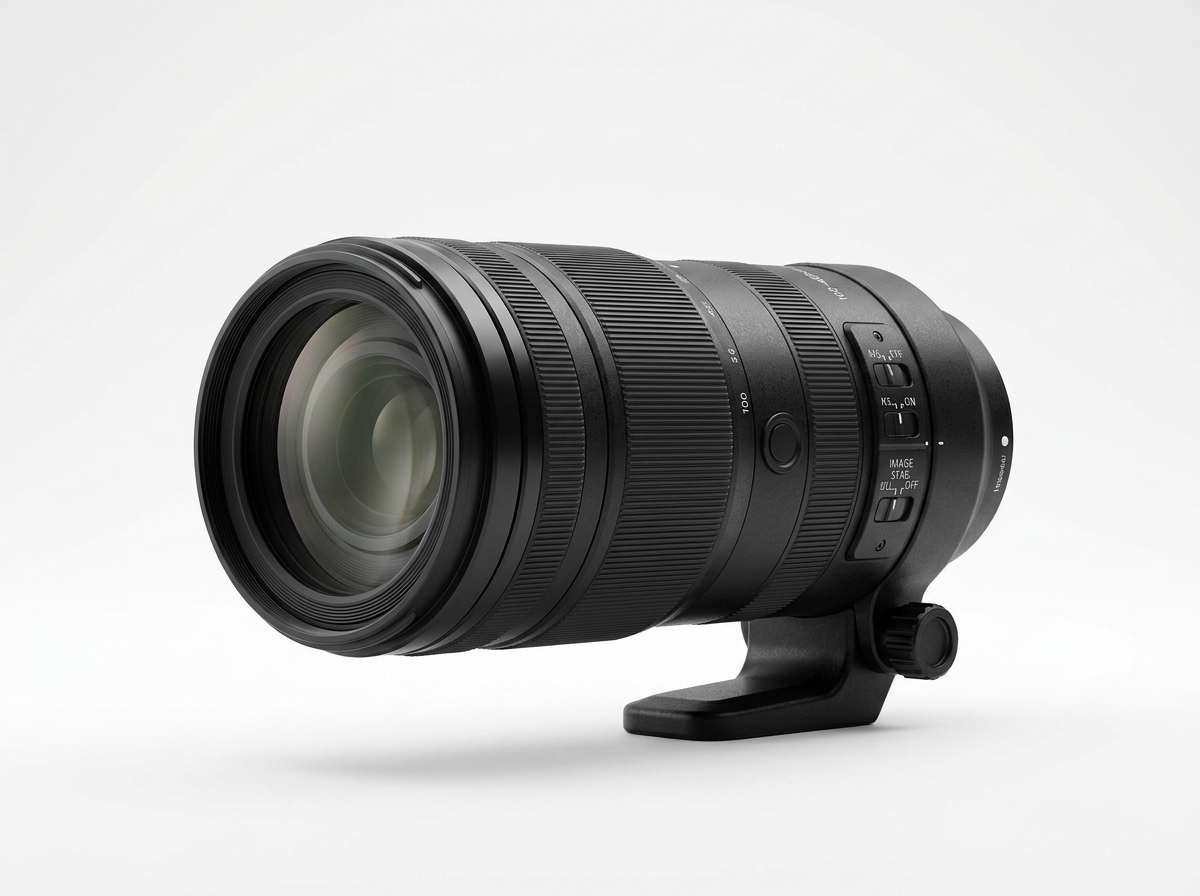
Nature photography is the moment when almost everyone realizes that the kit lens is not enough. That 16-50mm or 18-55mm you mount on your mirrorless reaches 50-55mm: with a heron thirty meters away, you get a gray dot in the middle of the green. This is where the question I hear at the counter every week begins: which telephoto lens should I buy to start?
In this article, I explain how to think about focal length, aperture, and stabilization without getting dazzled by spec sheets. We’ll look at what you really need to spend, why an APS-C sensor helps you more than you think, and which mistakes to avoid before putting €800 into a lens that ends up gathering dust in a closet. No abstract theory: just numbers, models, and real-world scenarios.
How much focal length do you really need for wildlife photography
Below 300mm equivalent, the animal remains a tiny dot in the center of the frame. This is not an opinion: it is geometry. The focal length determines how much space the subject occupies at a given distance, and with animals, they decide the distance, not you. That is why 300mm is the realistic minimum threshold, and often it is not enough.
Why subjects remain too small below 300mm
Take a heron on a bank, 30 meters away. It's a typical distance: any closer and it won't let you approach. With a 200mm lens, the heron occupies perhaps 10-15% of the frame height. You have to crop heavily in post, and the crop eats into resolution and detail.
With a 600mm lens, at the same distance, the same heron fills more than half the frame. You can see the feather, the eye, the reflection on the water. The difference is not gradual: it is the difference between a publishable photo and a file to be deleted. Tripling the focal length triples the apparent size of the subject.
300, 400, 600mm: what you shoot at each focal length
Each focal length range corresponds to a type of animal and a minimum distance to fill the frame with an average-sized subject.
| Equiv. focal length | What you shoot | Typical distance |
|---|---|---|
| 300mm | Garden birds, animals from a hide or close-range blind | 5-10 m |
| 400mm | Perched raptors, herons, medium-sized mammals with low wariness | 15-25 m |
| 600mm | Shy animals, small passerines, subjects that won't let you get close | 25-40 m |
The jump from 400 to 600mm is what opens up photography to truly wild animals, those that flee at 40 meters. But the more focal length you ask for, the more you pay in aperture: at 600mm, budget zooms stop at f/6.3. Light, not millimeters, becomes the real limit — and that is what we discuss in the following sections.
The crop factor: why APS-C gives you focal length for free
Mount a 300mm on an APS-C mirrorless and you get a 450mm equivalent, without spending a cent more on glass. It’s not marketing: it’s geometry. The APS-C sensor is smaller than full frame, so it “crops” the center of the image projected by the lens. For wildlife photography, where every millimeter of focal length helps fill the frame with the subject, this crop is a tangible advantage.
How to calculate the equivalent focal length on your camera body
The formula is a multiplication, nothing more. Take the actual focal length of the lens and multiply it by the sensor crop factor.
- APS-C Sony and Nikon (1.5x): a 300mm becomes 450mm, a 70-300mm becomes 105-450mm.
- APS-C Canon (1.6x): a 300mm becomes 480mm, a 100-400mm reaches 640mm.
Three bodies where this translates into practice, all in our catalog: the Sony A6100 at 550 euros, lightweight and with effective eye-detection autofocus, even on animals; the Nikon Z50 Mark II at 780 euros, the most recent in terms of electronics and tracking; the Canon EOS R100 at 400 euros, the most affordable entry point, where the 1.6x crop factor further extends the equivalent focal length.
When full frame is still worth it
Cropping is not free magic: you are using a portion of the image circle, not adding detail. A full-frame camera with high megapixels allows you to crop in post and achieve a similar result, with two real advantages when light drops: less noise at high ISOs and cleaner files at dawn or in the undergrowth.
A Sony A7 Mark II at 550 euros is a stabilized full-frame camera that handles ISO better than any budget APS-C. The limitation? 24 megapixels leave little room for aggressive cropping. For a beginner, APS-C remains the most sensible choice: more apparent focal length per euro spent. If you are undecided about the type of camera body, we covered the topic in the comparison DSLR vs mirrorless.
Aperture and Brightness: The Real Limit of the Budget Telephoto Lens
When you buy your first telephoto lens, you look at the focal length: 400mm, 500mm, 600mm. But the number that will make you go home with blurry shots is another one: f/6.3. At 600mm, an affordable telephoto lens opens to a maximum of f/6.3, and this determines how much light enters, what shutter speeds you can use, and how high the ISO has to go. Light, not focal length, is the real limit in wildlife photography.
Why at least 1/1000s is needed to freeze an animal
A long telephoto lens amplifies every vibration. The reciprocal rule states to use a shutter speed no slower than 1/focal length: at 600mm, this means at least 1/600s just to avoid the micro-shake of your hands. On APS-C, the 1.5x crop factor worsens the calculation, as a 600mm lens frames like a 900mm: the safe shutter speed rises towards 1/900s.
And that applies only to your stability. An animal moves: a bird turning its head, a squirrel jumping. To freeze it, fast shutter speeds are required regardless of the focal length.
- Stationary or slow subject (deer grazing): 1/500s is often sufficient.
- Active subject (perched bird moving): 1/1000s as a baseline.
- Subject in flight or running: 1/2000s and up.
Now the problem: at f/6.3, at dawn or under a forest canopy, to achieve 1/1000s you have to raise the ISO to 3200, 6400, or higher. This is why dawn and dusk — the hours when animals are active — are also the most challenging. Low light and fast shutter speeds do not go hand in hand, and the only remaining lever is the ISO.
f/2.8 vs f/6.3: is the €5,000 difference worth it?
There are super-telephoto lenses with f/2.8 and f/4 apertures that gather significantly more light: for the same shutter speed, you can work at a lower ISO, and autofocus locks on more reliably in low light. However, a new 400mm f/2.8 costs as much as a compact car, weighs over 3 kg, and is almost always used on a tripod.
It makes no sense for a beginner, for three concrete reasons:
- You don't have the technique yet to make the most of that glass: the limit is you, not the lens.
- The weight keeps you at home. You can take a 2 kg 150-600mm on a hike, but a 4 kg f/2.8 stays in the closet.
- Modern sensors handle high ISOs well. A file at ISO 6400 is clean today, and it recovers a good part of the brightness gap.
A used 150-600mm f/5-6.3 stabilized lens costs between 600 and 900 euros and covers 90% of situations. The bright super-telephoto comes later, once you know exactly why you need it. Until then, it is just an expensive weight.
Stabilization: what the declared 'stops' really mean
A manufacturer writes "5 stops of stabilization" on the box and you imagine you can photograph a flying heron handheld without any issues. It doesn't work that way. Those stops refer to one thing only: the shake of your hands. They have no effect on the subject's movement.
In practice, 5 stops mean that where 1/500 was needed to avoid micromotion, you can drop to much slower shutter speeds and still get a sharp shot — but only if the subject is stationary. In wildlife photography, a stationary subject is the exception.
Stabilization cannot stop a moving animal
Distinguishing between two things is fundamental. Micro-shake is the photographer's tremor: the stabilizer corrects it. Subject motion is the animal moving: no stabilizer can freeze it. Only a fast shutter speed does.
If you photograph a stationary roe deer at 600mm, stabilization saves you from a slow shutter speed. If that roe deer turns its head, at 1/200 you will still get motion blur, stabilizer on or off. For moving subjects, only the shutter speed matters: 1/1000 or faster. This is where the real problem lies: rising ISOs, which we address in the aperture section.
IBIS on the body or stabilization on the lens?
There are two systems. IBIS moves the sensor inside the camera body. Optical stabilization (OSS, VR, OS depending on the brand) moves elements inside the lens. For a telephoto lens, optical stabilization is often more effective because it works at long focal lengths, where shake is amplified more.
The practical point for a beginner: not all camera bodies have IBIS.
| Camera body | Used price | IBIS |
|---|---|---|
| Sony a6600 | 800 euros | Yes, on the sensor |
| Nikon Z5 | 680 euros | Yes, full frame |
| Sony A6100 | 550-600 euros | No |
| Canon EOS R100 | 400 euros | No |
The Sony a6600 is the only APS-C in this group with integrated stabilization: handy if you mount an affordable telephoto lens without OSS. The Canon EOS R100 at 400 euros lacks IBIS, so stabilization must be on the lens here. It is not a flaw: for wildlife photography, where you will use fast shutter speeds anyway, IBIS matters much less than marketing would have you believe.
Concrete options to get started: telephoto zooms and primes
For a beginner, there are three realistic paths, distinguished by maximum focal length, weight, and price. No €4,000 fast primes: those come later, once you know what you photograph. Here we talk about lenses that get you out in the field tomorrow, with a realistic budget.
The 70-300mm: an honest entry under 400 euros
A used 70-300mm f/4.5-6.3 lens ranges from 250 to 380 euros, depending on the system. It is the lens for learning: lightweight, compact, and it fits in a small backpack. On an APS-C body like the Sony A6100 (550-600 euros, fast phase-detection autofocus) or the Nikon Z30 (450 euros, lightweight and designed for beginners), the 1.5x crop factor turns it into a 105-450mm equivalent.
What you can do: herons on a pond, roes at medium range, birds from a hide. What you can't do: get close to a small, wary subject. At 300mm actual focal length, a sparrow at 15 meters remains tiny in the frame. It's perfect for finding out if wildlife photography truly appeals to you before making an investment.
The 150-600mm from Sigma and Tamron: the true workhorse for wildlife photography
It is the standard for the amateur segment, and there is a reason for it. A used, stabilized 150-600mm f/5-6.3 costs between 600 and 900 euros and covers 90% of a beginner's situations. The difference between 450 and 600mm in the field is enormous: it is the extra reach that lets you get the shutter count instead of missing it.
- Weight: 1.9-2.1 kg. You will feel it after an hour of handheld shooting. A monopod is recommended.
- Size: 26-29 cm when collapsed. It is not a lens for a small bag.
- Performance: excellent up to 500mm, slightly softer at 600mm wide open.
It is the logical step up from the 70-300mm, or even the first purchase if you already know that wildlife photography is your path. The same reasoning applies to the gear for moving subjects that we discuss in sports photography: the right gear.
Adapting bodies: choosing the right system
Before buying glass, check the ecosystem. Sony E (APS-C) has the widest selection of affordable third-party telephoto lenses. Nikon Z, with bodies like the Nikon Z50 Mark II (780 euros, next-generation autofocus tracking), is growing but offers fewer low-cost options. Canon RF, on the Canon EOS RP (600 euros, affordable full frame), is still closed to third-party super-telephoto lenses: affordable choices are scarce. Choose the body based on the lenses that exist, not just the sensor specifications.
Pairing body and lens without overspending
The rule we repeat to every customer at the counter is simple: for wildlife photography, spend more on the glass than on the body. A €1,500 body paired with a poor 70-300mm lens will yield worse photos than a €600 body with a good 150-600mm. Focal length and optical quality define the subject; the body merely helps you focus and does little else.
How much to spend on the body and how much on the lens
A good budget split for a beginner is 40% camera body and 60% lens. With a total budget of €1,500, this means approximately €600 for the body and €900 for the lens. The reason is simple: you will keep the lens for ten years, but you will replace the body sooner.
The only exception I make is for autofocus tracking. A bird in flight or a hare on the move can overwhelm older AF systems. Here, the camera body matters, because effective subject recognition recovers shutter counts you would otherwise lose. If buying used scares you, start with the guide on how to choose your first used mirrorless and then come back here for the telephoto.
Three complete setups for three budgets
Here are three real combinations featuring camera bodies currently in our catalog, paired with a used third-party 150-600mm f/5-6.3 (€600–900 depending on condition).
| Tier | Body | Why it works |
|---|---|---|
| Entry APS-C | Sony A6100 — 550 euros | 1.5x crop, fast phase-detection AF. A 300mm becomes 450mm equivalent. |
| Mid-range APS-C | Sony a6600 — 800 euros Nikon Z50 Mark II — 780 euros | More mature tracking and robust battery. The Z50 II has subject recognition from the higher-end series. |
| Croppable full frame | Canon EOS RP — 600 euros Nikon Z5 — 680 euros | No native crop, but excellent files in low light. Crop in post and keep detail in difficult light. |
My advice for those starting from scratch: get an APS-C like the Sony A6100 and invest the savings in a telephoto lens. The 1.5x crop gives you extra reach for free, which is exactly what you need for wildlife photography. Full frame only makes sense if you shoot at dawn or in dense woods, where high ISO performance justifies giving up the crop.
Mistakes to avoid on your first purchase
At the counter, I always see the same four mistakes, and almost none of them concern the quality of the glass. They stem from wrong expectations about what is truly needed to bring home a photo of a heron or a roe deer. I list them exactly as I encounter them, in order of frequency.
- Buying a super-tele f/2.8 without knowing how to use a telephoto lens. A 300mm f/2.8 or a 400mm f/2.8 costs as much as a used compact car, weighs over 3 kg, and has an extremely shallow depth of field at full aperture. If you haven't yet learned to track a subject in flight with a 70-300mm, that glass stays in the backpack. Start by learning to frame, not by using the maximum aperture.
- Ignoring the weight. A 150-600mm weighs between 1.9 and 2.1 kg, excluding the camera body. Handheld, after twenty minutes of waiting in a spot, your arm shakes and the shutter speeds are no longer sufficient. Weight is not a technical spec detail: it is the reason why you go home with blurry photos.
- Forgetting the support. Nobody budgets for a monopod, and then complains about micro-shake at 600mm. A used monopod costs 40-60 euros and improves results more than half a stop of stabilization. For spot shooting, you need a tripod with a fluid head or gimbal; handheld is only manageable for those with trained biceps.
- Choosing a system with few affordable telephoto lenses. Before buying the camera body, check which affordable telephoto lenses exist for that mount. Some recent mirrorless systems have excellent cameras but very few telephoto lenses under 1,000 euros: you end up forced to spend three times as much or use adapters that penalize autofocus.
There is also a mental mistake that sums them all up: thinking that a long focal length solves everything. I told you in the previous sections — the real limit is light, not millimeters. A 600mm f/6.3 at sunset forces you to ISO 6400 and shutter speeds on the edge of motion blur. Better a used 400mm with which you take good shots than a 600mm that scares you.
Honest advice, even though we sell lenses: start with a used, stabilized 150-600mm f/5-6.3, priced between 600 and 900 euros, add a monopod, and learn in the field. Once you understand your real limits, you will know exactly which more expensive glass you need. And often, you will discover that you don't need it at all.
What we check in the lab on a used telephoto lens
A used telephoto lens hides more pitfalls than a wide-angle or a 50mm. More lenses, more moving groups, a long zoom mechanism, and an autofocus motor that has to move heavy glass masses. When one comes to the counter, we don't trust its external appearance: we disassemble it behaviorally, lens by lens.
The most insidious defect is decentering: an optical group out of axis, often caused by a drop that leaves no external signs. The result is one side of the image sharp and the other soft, especially at 400-600mm where every error is amplified. We verify this with certified shutter count tests on a flat target at various focal lengths, ensuring sharpness is uniform from the edges to the center.
Here is what is checked on every lens before it goes on display:
- Lens decentering — tested on a flat target at short, medium, and long focal lengths. Symmetrical sharpness across all four corners.
- Stabilizer (OS/VR) — burst comparison with stabilization on/off at slow shutter speeds. Must provide real gain, not just noise without effect.
- Autofocus motor — focus cycling from minimum to infinity repeated dozens of times. No hesitation, no continuous hunting, no abnormal noises.
- Zoom ring — on a heavy 150-600mm lens, the extension must not drop on its own when holding the lens pointing down (lens creep). Friction present or locking switch functional.
- Mount and contacts — bayonet with no play, clean electrical contacts, correct body-lens communication for all functions.
- Internal lenses — check for fungus, haze, and excessive dust under backlight.
A zoom that retracts on its own may seem like a minor detail, but on a 150-600mm lens weighing over 2 kg, it’s the difference between framing a heron and finding yourself at 600mm when you were aiming for 300mm. It’s a common flaw on heavily used third-party gear, and you feel it immediately in your hand.
What you find here is not a lens "as is". Every lens is inspected, cleaned internally when necessary, and field-tested. If there are issues with decentering or the AF motor, the lens is not put up for sale: it is returned or used for parts. We apply a 2-year warranty to all certified used equipment, including stabilizer and autofocus. For a beginner, this matters more than the price: a decentering issue you cannot diagnose would lead you to blame your technique for months, without realizing the problem was in the glass.
Frequently Asked Questions
What is the minimum focal length for bird photography?
In practice, 300mm on full frame, which becomes approximately 450mm on an APS-C with a 1.5x crop. Below this threshold, wild birds remain too small in the frame, forcing you to crop heavily in post and losing detail.
Is a zoom telephoto lens or a prime lens better for getting started?
For a beginner, the zoom, without a doubt. A 150-600mm lets you frame subjects at different distances without changing lenses in the field. Fast prime lenses cost thousands of euros and only make sense when you already know what you need.
Is full frame necessary for wildlife photography?
No, in fact, an APS-C is often more advantageous: the 1.5x crop factor effectively extends the focal length for free, turning a 600mm lens into a 900mm equivalent. Full frame excels in high ISO performance and cropping flexibility, but for getting started, an APS-C camera like the Sony A6100 or Nikon Z50 II is a more sensible choice.
How much should I spend on a decent first telephoto lens?
Between 400 and 900 euros on the used market. A 70-300mm lens can be found for under 400 euros and is excellent for learning; a stabilized 150-600mm Sigma or Tamron lens costs between 600 and 900 euros and covers almost all amateur situations.
Does stabilization allow me to photograph moving animals?
No, this is a common misconception. Stabilization (IBIS or optical) compensates for camera shake, not subject movement. To freeze a moving animal, you need a fast shutter speed, at least 1/1000s, not the stabilizer.
Is an f/6.3 lens too slow for wildlife photography?
This is the usual compromise with budget telephoto lenses and it is manageable. At dawn or dusk, it forces you to raise the ISO or accept slower shutter speeds, but during the day with good light, f/6.3 at 600mm works without problems. Ambient light matters more than the maximum aperture.
Can I use an old telephoto lens adapted to my mirrorless?
You can, but I advise against it for wildlife photography if you are a beginner: adapters often slow down autofocus or make it unreliable on moving subjects, which is exactly what matters. A native lens for your system is better, even if used.
Looking for advice on your first telephoto lens?
If you have doubts about a purchase or need advice for your specific case, contact us. We offer free advice because we are photographers first, sellers second, and because a customer who buys the wrong gear stops taking photos.
Three ways to get in touch:
- Contact form — response within 24 business hours
- WhatsApp at 342 362 3454 (messages only)
- Phone: 071 291 6347 (Mon-Fri 9-13/15-18, Sat 9-13)
And if you want to see what we have in stock right away, explore the used gear available today: every camera is certified, comes with a 2-year warranty, and ships within 24-48 hours.
Article written by Matteo for the ReflexMania Team. Last updated: May 2026. Prices and availability as of the date of publication.