
In short
- The Sony A6000 features a 24-megapixel APS-C sensor from 2014 that remains competitive in daylight, with files usable up to ISO 1600.
- The 179-point phase-detection autofocus remains fast on static subjects, but lacks reliable Eye-AF and modern tracking.
- On the used market, the camera body is found between 250 and 350 euros: at that price, the value for money remains among the best in APS-C.
- Those looking for 4K video, stabilization, or animal Eye-AF should step up to the A6100, A6400, or A6600, spending an additional 200-450 euros.
The Sony A6000 was released in 2014 and we have seen hundreds of them pass through our counter. It is still one of the best-selling APS-C mirrorless cameras in the used market, and the question we are asked almost every week is always the same: does it still make sense to buy it in 2026? The short answer is yes, but with specific conditions. It is not the camera for everyone, and there are situations where spending 100 euros more on a newer model truly makes a difference.
In this article, we put the A6000 on the table for what it is in 2026: what it still does well, where it shows its age, how much you should pay for it used, and which alternatives inside and outside the Sony ecosystem are worth considering. No forced enthusiasm: only what we actually see when these camera bodies arrive in our workshop.
What is the Sony A6000 and why it became a phenomenon
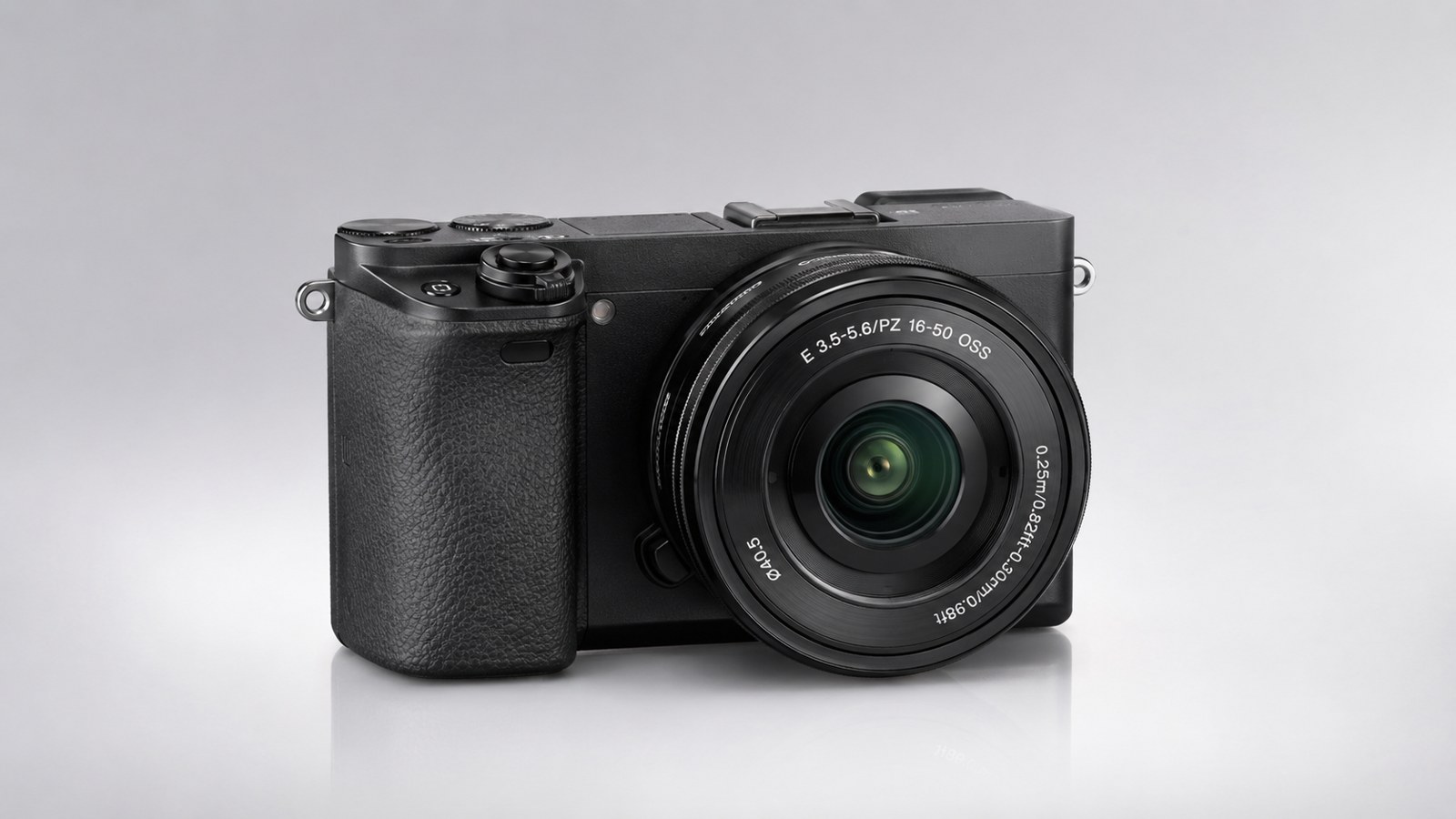
The Sony A6000 is the used mirrorless camera we see most often at the counter. It was released in 2014 as an APS-C entry-enthusiast body with an E mount, and over twelve years, millions of units have been sold. This explains both its reputation and why you find it everywhere in the used market today.
Back then, it offered a hard-to-beat mix: a 24-megapixel sensor, fast autofocus, a generous burst rate, and a body that fit in a jacket pocket. All at a price no direct competitor could match.
The specs that still matter today
Not all 2014 specifications have aged equally. Some hold up remarkably well, while others show their age. Here is what truly matters in 2026:
- 24MP APS-C Sensor: still the best part today. Sufficient resolution for large prints and cropping, clean rendering in daylight.
- Bionz X Processor: handles basic workflow well, but lacks the computational features of recent camera bodies.
- 179 Phase Detection AF Points: wide frame coverage, fast on stationary subjects. The limit is not speed, but tracking intelligence.
- 11 fps Burst: a number that many entry-level camera bodies still fail to reach today.
- OLED Viewfinder: small but usable, a rare luxury on a camera body in this price range.
The message is simple: the core photographic performance holds up, but the surrounding electronics do not. We return to this point in the following sections.
Why the used market is full of them
The reason is purely numerical. Sony has sold it in budget kits for years, often paired with the 16-50 zoom, making it the gateway to the E system. Many of those buyers have since moved to Sony full frame — A7 III, A7C — leaving the A6000 in a drawer or reselling it.
If you are buying today, this has two sides. On one hand, low prices and a wide selection: you rarely run out of options. On the other, many heavily used units with thousands of shutter counts and real wear. Such a widespread body also means many amateur sellers who do not know — or do not say — how much the camera has worked. In this regard, pre-purchase inspection makes all the difference.
Image quality in 2026: where it holds up and where it doesn't
The 24-megapixel APS-C sensor of the A6000 dates back to 2014, but in full light it still produces files that hold up against current standards for real-world use. The difference compared to a 2024 sensor, under identical conditions, is only visible if you place two crop images side by side at 100% on a calibrated monitor. For a 30x45 print or an Instagram post, it is invisible.
Good light: files still fully competitive
In daylight or landscape photography, this sensor performs well. Detail at ISO 100-400 is abundant, and Sony's color rendition is recognizable: slightly cool but natural skin tones, and vivid greens without overdoing it. In RAW, you have plenty of headroom to correct white balance and exposure without breaking the files.
Up to ISO 1600, RAW files remain fully workable: you can lift shadows by half a stop and recover some blown highlights without obvious artifacts. For street, environmental portrait, architecture, and travel photography in decent lighting conditions, you won't miss anything that a newer sensor would offer.
High ISO and dynamic range: the real limits
Age is definitely felt here. Beyond ISO 1600, noise becomes visible in shadows and uniform surfaces; at ISO 3200, it is manageable only with good post-processing reduction, and by ISO 6400, files lose fine detail and microcontrast. The dynamic range in RAW is honest but not generous: recovering three or four stops from the shadows, as you would with a sensor from 2020 onwards, results in banding and chroma noise here.
In practical terms, this means:
- Indoor and mixed lighting: ISO 1600-3200, manageable with slightly softer files.
- Concerts, venues, evening without a tripod: critical zone, often requires raising the ISO beyond the comfortable threshold.
- Urban night on a tripod: no problem, keep the ISO low and take advantage of long exposures.
The practical rule we apply at the counter is simple: if you mostly shoot in well-lit conditions, the A6000 still delivers image quality that justifies its price in 2026. If your work relies on low light and high ISOs, this is the limitation that will make you wish for a newer model.
Autofocus: fast for 2014, dated for 2026
Here, the A6000 reveals its true dual nature. The 179-point phase detection system, distributed across nearly the entire frame, was state-of-the-art in 2014 and still locks onto a static subject in a fraction of a second. The issue is not speed: it is intelligence. The camera focuses quickly but makes poor decisions about what to track, and this is a significant drawback in 2026.
What it still does well
When it comes to predictable scenarios, the A6000 holds its ground without excuses. The frame coverage is extensive, allowing you to compose with an off-center subject and still achieve focus.
- Street and reportage: instant lock-on on a stationary person or one walking towards you at a normal pace.
- Landscape and architecture: precise single-point autofocus, no tracking required.
- Posed portrait: if the model is stationary, you can focus on the eye manually using the focus confirmation zoom.
- Burst on predictable subjects: 11 frames per second with continuous AF work well on subjects moving in a straight line.
Where it lets you down
The bill comes due when the subject is unpredictable. Eye-AF exists, but it's the primitive 2014 version: slow to lock on, lacking tenacity, and it doesn't recognize animals. There's no real-time tracking worth the name, and with a child running through the living room or a dog in the park, the camera loses focus and "pumps" back and forth.
This is exactly where subsequent models play in a different league. The Sony A6100, which we keep at 550 euros, introduces real-time Eye-AF with human and animal recognition: the practical difference is huge, it locks onto the eye and doesn't let go. The Sony A6400 at 650 euros raises the bar even higher with some of the best tracking in the APS-C segment.
Our honest advice: if you photograph children, animals, or sports, the extra €200–300 to step up to a higher model pays off in sharp, in-focus shots. If you shoot street, landscape, and posed portraits, the autofocus on the A6000 will never hold you back.
Video: the A6000 shows its age
In the video, the A6000 holds no back: it records only Full HD 1080p at 60fps, and that is where it stops. No 4K, no usable log profiles for post-production, no in-body stabilization. It also lacks an external microphone jack, so you are stuck with the internal mic or a separate recorder requiring manual synchronization. For photography, these limitations barely exist. For video, they all weigh heavily together.
Only 1080p and no stabilization assistance
The practical issue isn't the resolution itself: clean 1080p still holds up on a medium-sized screen. The problem is shooting handheld without IBIS. Every micro-movement of the wrist ends up in the footage, and without a lens with stabilization or a gimbal, the result shakes. For a walking vlog or an improvised reel, it becomes tiring after just a few seconds.
This is where the limitations are truly felt:
- Vlog and reels: without stabilization and without 4K for post-production crop, you are forced to keep the framing static or buy a gimbal, which adds weight and cost.
- Family videos: kids running around the living room put a video autofocus system from 2014 to the test, with slow tracking and visible focus hunting.
- Audio: without a microphone input, every interview or serious dialogue requires an external chain and more post-production work.
If you take photos and occasionally shoot a clip on the side, the A6000 is enough. If video accounts for even 30% of your usage, it is the wrong camera and you should move up a model. Within the Sony lineup, the shortest step is the Sony A6100 at 550 euros: it adds 4K at 30fps, real Eye-AF, and much more reliable video autofocus, while remaining compatible with the same E-mount lenses.
If you are not tied to the Sony ecosystem and are looking for a camera designed specifically for video, the Nikon Z30 at 450 euros is built for content creators: 4K, front-facing recording light, and a fully forward-tilting display. It has no viewfinder, a deliberate choice for those who film more than they photograph. Two different paths, but both address a need that the A6000 no longer covers in this area.
How much does it cost used and what to check before buying
In 2026, the Sony A6000 body only is priced between 250 and 350 euros, while the kit with the 16-50 lens brings the price to between 350 and 450 euros. It is a 2014 camera with ten years on the market: there are many units in circulation, and the prices reflect that. The issue is not finding one, but determining which specific unit is worth the asking price.
Real prices for used gear today
The price ranges are fairly clear. Below, we outline what to expect based on the configuration and condition.
- 250-300 euros body only: example with several signs of use, shutter count above 20,000, often without box. Honest if the test photos are clean.
- 300-350 euros body only: excellent condition, shutter count below 15,000, possibly with warranty. The most sensible range.
- 350-450 euros with 16-50 kit: body plus retractable pancake zoom, ready to use.
Beware of the two extremes. Above 400 euros for a body only, you are paying too much: at that price, you are close to a used A6100, which has true Eye-AF and 4K. Below 200 euros, however, ask yourself why: a shutter count at its limit, a sensor with issues, or a dead battery are the most common explanations. A price that is too low is not a deal; it is a warning.
The checks we perform in our lab
On a ten-year-old camera body, the difference between a good purchase and a regret lies in the details the eye cannot see. Here is what we check before putting an A6000 up for sale.
- Real shutter count: we read the value from the file, we don't trust the seller. The A6000's shutter holds up well, but a body with 60,000 shutter counts is priced differently from one with 8,000.
- Sensor inspection: we look for dust, mold, and scratches with raking light. The E mount has exposed the sensor to every lens change.
- Autofocus and burst verification: we test the 179 phase-detection points and maintain 11 fps to ensure the buffer clears without issues.
- Battery retention: the NP-FW50 degrades. We measure how many shutter counts it actually delivers, not how many it did in 2014.
Every A6000 we sell goes through this bench check and ships with a 2-year warranty. For a camera of this age, knowing that someone has opened it, inspected it, and signed off on it is worth the small price difference compared to buying from a private seller.
Who the A6000 is for and who it isn't
Having reviewed the sensor, autofocus, and video capabilities, the question is no longer "what is the A6000 worth," but "is it right for you." The answer depends almost entirely on what you photograph and the lighting conditions. With a camera body that currently ranges between 250 and 350 euros on the used market, the margin for error is low: a wrong purchase costs you little. But buying the right camera on the first try spares you the hassle of reselling it after three months.
Buy the A6000 if...
The A6000 remains the smartest entry point into the E system when the budget dictates and the light is on your side.
- You have less than 350 euros and want a mirrorless body that shoots serious RAW, not a smartphone compromise.
- You mostly shoot during the day: street, travel, landscape, portrait in natural light. Here, the 24-megapixel sensor still performs excellently.
- You want a lightweight body to carry with you at all times, without the burden of a dedicated backpack.
- You need an affordable ecosystem: the E mount is full of used lenses at good prices, from Sigma f/1.4 to older 16-50 kits.
- It is your first mirrorless and you want to learn to control exposure and focus without breaking the bank.
Avoid it and step up to a higher model if...
If you fall into any of these profiles, the A6000 will frustrate you within a few weeks. It is better to spend an extra 200-450 euros and get the right model.
- You need 4K video or at least some stabilization: the A6000 is limited to Full HD, with no IBIS or microphone jack.
- Photographing small children: the basic Eye-AF loses track of subjects that move in bursts. Here, the Sony A6100 at 550 euros, with real Eye-AF and 4K, makes a difference.
- You are interested in sports, animals, or wildlife: modern tracking is required. The Sony A6400 at 650 euros adds animal recognition and a weather-sealed body.
- You shoot a lot indoors or need battery life: the Sony a6600 at 800 euros features in-sensor stabilization and the large Z battery, which doubles the shutter count per charge.
The reasoning is the same as the one we use with customers who come to our counter asking for a used full frame: the right camera is the one tailored to your actual use, not the one with the best technical specifications. We have also explained this when talking about the used Sony A7 III: often the best-selling model is not the one you need.
Alternatives inside and outside the Sony ecosystem
The A6000 remains an excellent starting point, but if you need reliable Eye-AF, 4K, or stabilization, the same E mount offers three steps forward at still reasonable prices. And if you are not tied to the E mount, Canon and Nikon today put modern mirrorless bodies on the table around 400-470 euros. Let's see when it makes sense to step up and when it makes sense to switch entirely.
Staying with Sony: A6100, A6400, A6600
The advantage of sticking with the E mount is that you keep the same lenses. The difference compared to the A6000 is not image quality — the 24-megapixel sensor is similar — but autofocus and video.
- The Sony A6100 at 550 euros is the most logical step up: it adds real-time Eye-AF (including animal detection) and 4K, which are precisely the two most significant limitations of the A6000. For an extra 200-250 euros, you solve the autofocus issue once and for all.
- The Sony A6400 at 650 euros adds a 180° flip-out monitor and better weather sealing: the choice for those who vlog or shoot outdoors.
- The Sony a6600 at 800 euros is the only one in this group with in-body image stabilization (IBIS) and a high-capacity NP-FZ100 battery. It is worth the investment only if you shoot a lot handheld or with telephoto lenses.
Switching systems: Canon and Nikon APS-C
If you're starting from scratch with no lenses at home, looking beyond Sony makes sense. The Canon EOS R100 at 400 euros is the most affordable entry into the RF system, featuring Dual Pixel autofocus that is more modern than the PDAF on the A6000 — we have six in stock. The Nikon Z30 at 450 euros is designed for creators, lacking a viewfinder but offering refined video ergonomics. The Nikon Z50 at 470 euros adds a viewfinder and remains the most balanced DSLR-killer of the trio. Those coming from the DSLR world and seeking continuity will also find insights in our guide to the used Nikon D7200.
| Model | Price | What you get |
|---|---|---|
| Sony A6100 | 550 € | Real-time Eye-AF + 4K |
| Sony A6400 | 650 € | 180° flip screen + outdoor use |
| Sony a6600 | 800 € | IBIS + large battery |
| Canon EOS R100 | 400 € | Entry into RF system |
| Nikon Z30 | 450 € | Video-oriented body |
| Nikon Z50 | 470 € | Viewfinder + balance |
Frequently asked questions
Is the Sony A6000 still a good camera in 2026?
Yes, for photography in good light, street, landscape, and posed portraits. The 24MP sensor remains competitive. It shows its limits in video, high ISO, and autofocus on fast-moving subjects.
How much should I pay for a used Sony A6000?
In 2026, a camera body in good condition costs between 250 and 350 euros, and between 350 and 450 euros with the 16-50 kit lens. Above 400 euros for the body alone, the price is not justified.
Does the Sony A6000 shoot 4K video?
No. It only records in Full HD 1080p, without in-body image stabilization and without a microphone input. For serious video, it is advisable to step up to the A6100 or A6400, which add 4K.
What is the difference between the A6000 and the A6100?
The A6100 adds real-time Eye-AF for animals, 4K video, and a touchscreen. The autofocus is significantly more modern. The sensor has the same resolution, but the processing is superior.
How many shutter count does the A6000 shutter last?
Sony does not declare an official value, but in practice these camera bodies comfortably exceed 100,000 shutter count. In our lab, we always check the count before sale.
Is the A6000 a good choice for starting photography?
Yes, it is one of the best entry points into APS-C for a limited budget. Lightweight body, comprehensive controls, and a wide selection of affordable used E-mount lenses. Excellent value for money.
Is a used A6000 worth it compared to a new entry-level mirrorless?
For the same price, a used A6000 often delivers better files than many new entry-level models. However, if you need modern autofocus or 4K, a more recent alternative like the Nikon Z30 or Canon R100 is a more sensible choice.
Looking for a Sony A6000 (or a higher-end model) that has been inspected and comes with a warranty?
If you have any doubts about a purchase or need advice for your specific case, contact us. We offer free advice because we are photographers first and sellers second, and because a customer who makes a poor purchase does not return to photography.
Three ways to get in touch:
- Contact form — response within 24 business hours
- WhatsApp at 342 362 3454 (messages only)
- Phone: 071 291 6347 (Mon-Fri 9-13/15-18, Sat 9-13)
And if you want to see what we have in stock right away, explore the used gear available today: every camera is certified, comes with a 2-year warranty, and ships within 24-48 hours.
Article written by Matteo for the ReflexMania Team. Last updated: July 2026. Prices and availability as of the date of publication.