
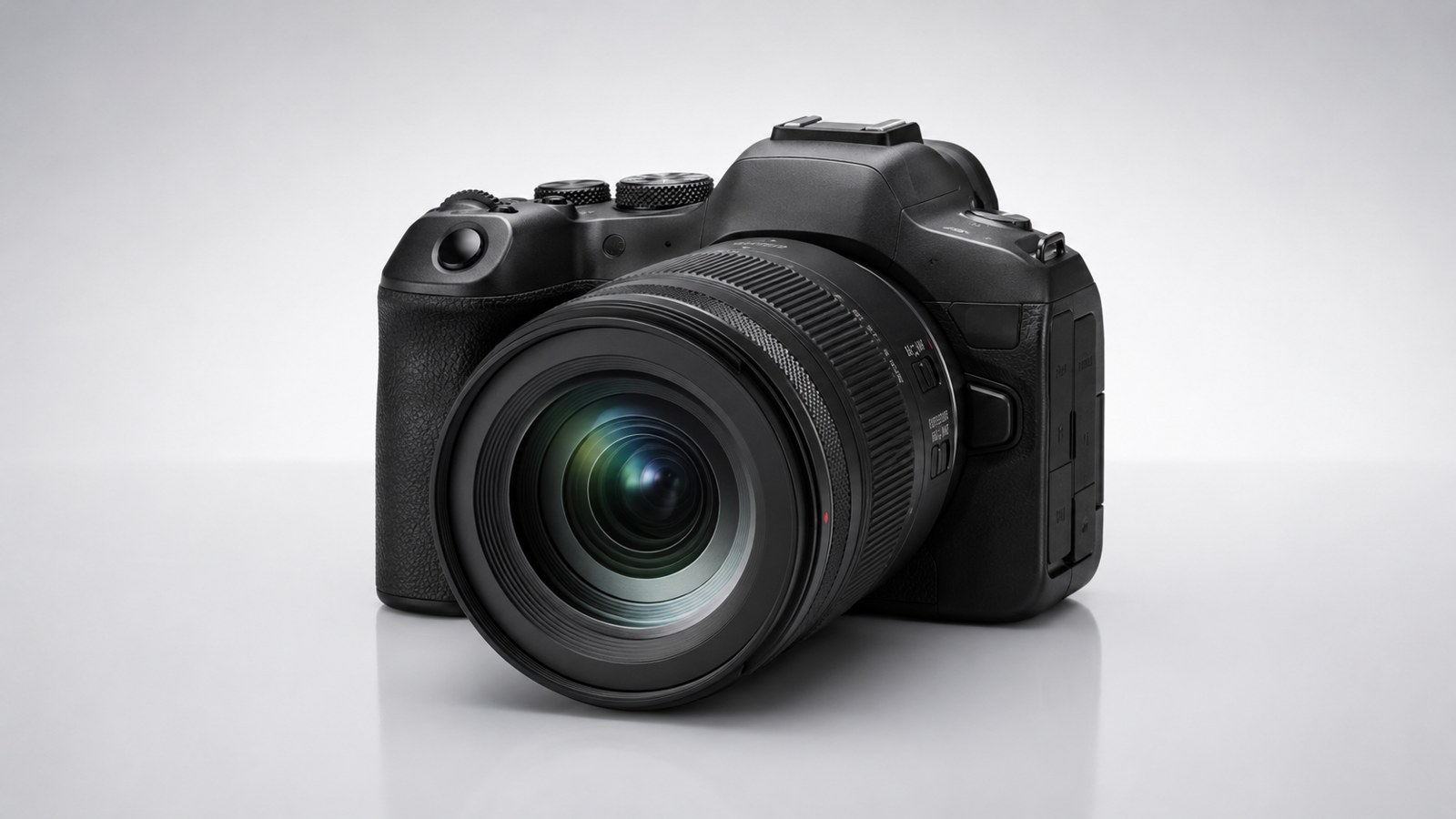
In summary
- Used R6 Mark II units today range from €1,500 to €1,800 for examples with under 30,000 shutter count, compared to €2,700 for new.
- The arrival of the R6 Mark III (expected 2026-2027) will lower the price of the used II body by approximately €200-350, no more, with a 6-9 month delay.
- Waiting has a hidden cost: 6 months without shooting are worth more than the €250 you might save.
- If your budget is under €1,200, the R6 Mark II is not the right choice: a Canon EOS RP at €600 today is better.
I get this question at least twice a week, either in person at the counter or via WhatsApp: "Should I buy a used R6 Mark II now, or wait for the price to drop?" Almost always, it stems from the same YouTube voice promising a price crash when the Mark III is released. I have seen dozens of R6 and R6 Mark II units pass through our workshop, and I have watched the prices fluctuate month by month: the predicted crash rarely works out the way people imagine.
In this article, I lay out the hard numbers. What does a used R6 Mark II cost today, what actually happens to the price when a new model is released, how much you save by waiting, and what that wait truly costs in unshot images. By the end, you’ll have the facts to make your own decision—not advice disguised as commercial urgency.
How much does a used Canon EOS R6 Mark II cost today
A used R6 Mark II in good condition with a low shutter count typically ranges from €1,500 to €1,800 today. This is the price we see at the counter and online from reputable dealers, including VAT and warranty. Below this threshold, there is usually a reason: high shutter count, visible wear, or a private seller without coverage. Above it, you are paying for the brand name or a complete accessory kit.
Price ranges by shutter count
The shutter count is the mileage of a camera. On a body like this, built to withstand heavy wear, it matters less than on an entry-level model, but the market still prices it accordingly. Here are the ranges we use as a reference for the body only.
| Certified shutter count | Indicative price | Notes |
|---|---|---|
| Under 10,000 | €1,700 — €1,800 | Like new, often with box and accessories |
| 10,000 — 30,000 | €1,500 — €1,700 | The most sensible range: well-used but far from wear |
| Over 50,000 | €1,300 — €1,450 | Only if you know what to check and the price reflects it |
The mid-range is the right choice for most photographers. A unit with 20,000 shutter count has already lost the "out of the box" depreciation but still has hundreds of thousands of actuations ahead. Paying 250 euros more to drop from 20,000 to 5,000 shutter count only makes sense if you resell frequently.
The difference compared to new
The new, real street price, is around €2,700. The gap between a low-shutter-count used unit and a sealed one is roughly €900–1,000. That’s a lot, and almost all of it is concentrated in the initial depreciation: the biggest drop happens in the first few months of the camera’s life, not in the years that follow.
Translated: those buying used today pay for the body after it has already lost the portion of value that depreciates fastest. From here on, the R6 Mark II declines slowly, and this changes all the calculations regarding the wait we will discuss later.
Used Canon EOS R6 Mark II: indicative 2026 prices by condition
| Condition | Shutter count | Indicative used price | Savings vs new |
|---|---|---|---|
| Like new | Under 10,000 | €1,700 - €1,800 | approx. €1,000 |
| Excellent condition | 10,000 - 30,000 | €1,550 - €1,700 | approx. €1,100 |
| Good / heavy use | Over 50,000 | €1,350 - €1,500 | approx. €1,300 |
Why the price of used gear hasn't crashed yet
A R6 Mark II released at the end of 2022 should, logically, be worth much less today. Instead, on the used market, it remains between €1,500 and €1,800 for units with a shutter count under 30,000, compared to €2,700 for new. The gap exists, but it is not the crash many expect from a camera body with more than three years on its shoulders. The reason is not Canon's marketing: it is how the value of a pro-consumer body truly behaves.
The depreciation curve of a Canon body
A camera body in this price range loses value quickly in the first 18 months, then the decline slows down. It is not a straight line to zero, but a steep drop followed by a long plateau. After the first year and a half, those who bought new have already absorbed the steepest loss, and from then on the price moves by only a few hundred euros per year.
In practice, the curve for a high-end Canon camera body works like this:
- 0-18 months: 30-35% drop from the launch price. This is the phase where buying used is more advantageous than buying new.
- 18-48 months: plateau. The price decreases slowly, by 100-200 euros per year, and stabilizes based on actual demand.
- over 48 months: value depends more on condition and certified shutter count than on age.
The R6 Mark II is at full plateau. That is why its used price is solid and does not drop from one month to the next.
High demand and slowing production
There is also a factor that keeps the price up: this camera body is still on the manufacturer's list and in high demand. A model you can buy new in a store acts as an anchor for the used market. As long as the new unit costs 2,700 euros, a used unit in excellent condition cannot depreciate below a certain threshold, otherwise the market would dry up within weeks.
This is compounded by the long tail of the component shortage that affected Canon between 2022 and 2024: fewer new units in circulation means more people looking for used gear. When demand holds steady and supply doesn't surge, prices don't drop by decree. They only fall when a credible alternative emerges — and that is exactly what we see in the next section.
What really happens when the R6 Mark III is released
The myth is simple: a new model comes out, the price of the old used one crashes, you wait and make a deal. In reality, it works much more slowly and much less dramatically, especially on a high-end Canon body like the R6 Mark II. The release of the Mark III is expected between 2026 and 2027, but on the day of the announcement, you won't see 600 euros disappear from the price of your used camera. The market doesn't work that way.
How much the price drops, in real euros
An honest estimate, based on what we observed with the first-generation R6 when the Mark II arrived, is a drop of 200-350 euros on the used market for the Mark II. Not a halving, not 600 euros. An R6 Mark II currently priced at 1,700 euros for a unit with under 30,000 shutter count will settle around 1,400-1,500 euros after the arrival of the III. It's a movement, not a crash.
The reason is that buyers in this used price range are not chasing the latest sensor. They buy a mature, reliable body with an already massive RF lens lineup. That value for money does not evaporate just because Canon has added a few fps or a revised autofocus.
- Announcement day: Used price remains stable, no real impact.
- First 3 months: The new model is unavailable and extremely expensive, while used units of the II remain in high demand.
- 6-9 months later: This is when the real price drop occurs, by 200-350 euros.
When it drops: the delayed effect
This is the point almost nobody explains. The used price of the Mark II doesn't drop when the III comes out: it drops when there is a large enough used market for the III to push down the entire price scale. And that market doesn't appear at launch. It forms when the first buyers of the III sell their Mark II to fund the upgrade, and that flow starts 6-9 months after the launch.
Translated: even if the Mark III were to release tomorrow, the used II you are interested in would remain at current prices for most of the coming year. You are waiting for a price drop that, at best, arrives with a delay that undermines half of your reasoning. In the actual calculations in the next section, you will see how much this wait truly weighs against those 250 euros.
Wait or buy now: the real numbers
The question I hear at the counter at least twice a week is always the same: is it worth waiting for the R6 Mark III to pay less for a used Mark II? Let's put the numbers on the table, because gut feeling leads you astray here. The arrival of the Mark III is expected between 2026 and 2027, and the effect on the price of the used Mark II will arrive with a 6-9 month delay, not on the day of the announcement.
Here are the real-world scenarios, starting with a used Mark II at €1,650 today:
| Scenario | Expected savings | Cost of waiting |
|---|---|---|
| Buy now | 0 euros | shutter count from day one |
| Wait 6 months | ~200-250 euros | 6 months without the camera |
| Wait 12 months | ~300-350 euros | a year on hold |
The hidden cost of lost months
The maximum realistic saving is 350 euros on 1,650, which is 21%, and you only get it after a year of waiting. For those who shoot for a living or have events on the calendar, six months without the right camera body are worth far more than those 250 euros. A poorly covered wedding, a postponed assignment, a vacation documented with a body that can't handle low light: the bill adds up quickly and you won't recover it.
There is also a factor that many overlook: the Mark II you buy today is one you continue to use, and when the Mark III is released, you sell it. You sell it at a lower price, of course, but in the meantime, you have been shooting for two years. Waiting does not give you that time back.
When waiting actually makes sense
It is not always the case that the advice is "buy now". Waiting makes sense in three specific cases:
- You have no real urgency and no work scheduled in the coming months.
- Your budget is strict at €1,400: the €250 savings make the difference between buying and not buying.
- You already have a bridge camera body that covers your needs, so you won't be left without a camera while waiting.
Outside of these three cases, the calculation always favors buying now. The price of used gear does not plummet, and the time spent waiting for a 20% discount is time in which you have produced nothing.
Waiting 6 months for the R6 Mark III: the real assessment
| Item | Buy now | Wait for the Mark III |
|---|---|---|
| Used R6 II price | approx. 1,650 euros | approx. 1,400 euros |
| Estimated savings | - | approx. 250 euros |
| Time without a suitable camera | 0 months | 6-9 months |
| Risk of stagnant prices | none | the drop may be delayed or minimal |
Alternatives if you don't want to wait or spend €1,700
Not everyone needs an R6 Mark II, and not everyone can afford it today. If your actual budget is under 1,200 euros, forcing the purchase means buying a bare camera body: without decent lenses, without a buffer for unexpected costs. It is better to choose a smaller system done well than a professional body that is financially stretched. Here are the concrete options we keep in stock, divided for those staying with Canon and those willing to change path.
Staying within the Canon RF system on a smaller budget
If you already own RF lenses or want to enter the system without closing any doors, the Canon EOS RP at 600 euros is the most sensible entry-level full frame on the used market. It is the right choice in two cases: as a first full frame for those shooting portrait, travel, and landscape without rushing the autofocus, or as a bridge body while you save up for the R6 Mark II. Its limit is honest: slow burst rate and first-generation autofocus; it is not a machine for action or demanding weddings. For everything else, it does its job and mounts the same RF lenses you will use tomorrow.
Further down, the Canon EOS R100 at 400 euros is an APS-C entry-level model: useful as a lightweight second body or for those starting from scratch, but I do not recommend it as a sole body if you already have experience and high expectations.
APS-C alternatives under €900
If your priority is compactness, modern autofocus, and a contained budget rather than a full-frame sensor, it is worth looking beyond Canon. Three options we frequently handle:
- Sony A6400 — 650 euros. Eye-tracking autofocus still among the best in its class, compact camera body. Ideal for street, video, and travel.
- Nikon Z50 Mark II — 780 euros. The latest Nikon APS-C in the group, with solid ergonomics and an updated processor. The choice if you want a near-new mirrorless for less than half the price.
- Sony A7 Mark II — from 550 euros. Here you stay full frame with in-sensor stabilization, provided you accept dated autofocus. Suitable for those who work calmly on portrait and landscape.
The reasoning is the same as for DSLRs from previous generations: sometimes a well-maintained older body outperforms a newer one constrained by budget. We explained this in detail in our article on the Canon 5D Mark IV used in 2026. If none of these options convince you, it is a sign that you truly want the R6 Mark II: in that case, wait until you have the full €1,500 and buy it in excellent condition.
Lenses: The real reason not to wait
When you switch bodies, you usually only look at the body. That's a mistake. The body is the part that ages the fastest and, on a Canon mirrorless, matters less than you think. What truly determines the quality of your photos is in front of the sensor, and it's also the item that costs you the most over time. If you wait for the R6 Mark III to save 250 euros on the body, you're optimizing the wrong thing.
If you already have EF lenses
This is the point that changes everything. If you are coming from a Canon DSLR — a 6D, a 5D Mark III, a 80D — you already have an EF lens lineup that continues to work perfectly on the R6 Mark II via the EF-RF adapter. It is not a compromise: the adapter is optically transparent, autofocus remains fast, and you retain stabilization and electronic aperture.
This lowers the real cost of the switch. You are not buying a body plus five new lenses: you are buying a body and that's it, reusing glass you already paid for years ago. On this topic, it is worth reading whether EF on RF mirrorless is still worth it in 2026, because there are exceptions you should know before adapting everything.
Investing in the glass while the body ages
The two items behave in opposite ways, and this is the practical reason not to wait:
- The camera body depreciates: an R6 Mark II loses value with each new generation, like any electronics with a sensor and processor.
- High-quality RF lenses hold their value: an RF 24-70 f/2.8 or a 50 f/1.8 are worth almost as much today as they were two years ago, and you will use them on three different camera bodies over the next decade.
The consequence is simple. The money you would save by waiting for the camera body price to drop is lost on the body anyway. If instead you put those 250 euros into a better RF lens, it stays in the system and you get it back when you resell. Buying the body now, even used, and starting to build your RF kit is the move that pays off, not waiting for a price list that moves little and late.
What to check on a used R6 Mark II before paying
A R6 Mark II on display may look flawless while hiding 80,000 shutter count, a tired shutter, or a sensor scratched by a poor cleaning. The used market rewards those who know where to look. Before signing a check or hitting "buy" on a private listing, these are the checks we perform in our lab when a camera body comes in.
Shutter count, shutter and IBIS
The shutter count on the R6 Mark II is not readable from the menu: you need software that queries the EXIF metadata or access to the internal data of the camera body. Be wary of anyone who tells you "few shutter counts" without a report. A unit with fewer than 30,000 shutter counts is young; the mechanical shutter is rated for approximately 300,000 cycles, so even at 60,000 you are safe, but the number changes the price assessment.
- Certified shutter count: demand a verified figure, not a rough estimate.
- Mechanical shutter: take 30-40 shots in burst mode while listening to the rhythm. Sticking, double strikes, or lag are warning signs.
- 5-axis IBIS: with the camera on and no stabilized lens attached, take a handheld shot at 1/10 second. If the image is sharp, the stabilizer is working. Also check if the sensor "floats" freely when you move the powered-off body.
Sensor, overheating and firmware
Inspect the sensor at a closed aperture, f/16, against a uniform white surface: dust and spots will immediately stand out. Dust can be cleaned; scratches cannot. A scratch on the AA filter means a significant devaluation or a camera to be rejected.
The R6 Mark II is less prone to overheating than the first generation, but it should be tested during extended video recording: start a continuous 4K recording for 20-30 minutes and verify that it does not trigger thermal protection too early. Abnormal behavior here may indicate a unit that is already worn out or has been poorly maintained.
Finally, check the firmware version in the menu. An outdated firmware is not a problem in itself — it updates in five minutes — but a camera stuck on a 2022 release tells you how well it was maintained by the previous owner. A small detail that, when added to the others, reveals the true history of the camera body you are about to pay for.
What we do in our lab for the R6 Mark II
Every R6 Mark II that comes to us goes through our workbench before it makes it to the display. It’s not a quick five-minute visual check: it’s a protocol that takes an average of 40-50 minutes per body, because on a camera worth €1,700, we cannot afford to rely on the naked eye.
The previous section explained what you should look for before paying. Here, we tell you what we check, using tools you wouldn't have at a private seller's counter. The difference between the two is why our 2-year warranty holds up.
Specifically regarding the R6 Mark II, there are points that require targeted attention, as it is a body featuring in-body image stabilization and a high-frequency electronic shutter:
- Certified shutter count: we read the actual value from the EXIF file of a fresh shot, not the one declared by the seller. You can find it listed on the product page.
- IBIS bench test: we verify that the in-body image stabilization engages correctly without producing residual micro-vibrations, a defect you won't see on these camera bodies until you print large.
- Servo autofocus on moving subjects: we test eye-detection and tracking, as this is the feature you pay for on this camera and the first to reveal a tired sensor.
- Sensor inspection under raking light: we look for dust, scratches, and fungus using controlled lighting, not on the LCD screen.
- Seal integrity: we check that the rubber seals on doors and the mount are not dry or lifted, because on a weather-sealed body, sealing is half the value.
- LP-E6NH battery health: we measure the actual residual capacity, not the three dashes on the display.
When a camera body fails an inspection, we don't fix it just to hide the issue: we either repair it properly in our workshop or we reject it. The R6 Mark II units you see for sale are those that have passed every check.
This is the foundation of the 2-year warranty we provide on all used equipment. It is not a commercial formula: it is the direct consequence of the fact that we have opened, tested, and certified the camera ourselves. If something fails within the two years, we will repair or replace it without any debate about "but you bought it used". For us, certified used and new carry the same weight of responsibility.
Frequently asked questions
How much does a used Canon EOS R6 Mark II cost in 2026?
A unit in excellent condition with fewer than 30,000 shutter counts is priced between €1,550 and €1,700. Below 10,000 shutter counts, prices reach €1,700–1,800, while heavily used bodies exceeding 50,000 shutter counts drop to around €1,350–1,500.
If the R6 Mark III is released, how much will the used price of the Mark II drop?
Based on previous cycles, the realistic drop is 200-350 euros, not a halving. And it arrives 6-9 months after the release, when a used market for the Mark III begins to circulate.
Should you wait or buy the used R6 Mark II now?
If you have projects, events, or work scheduled, buying now is almost always the better choice: the expected savings of 250 euros do not compensate for six months without the right camera. Waiting only makes sense if you have no urgency and your budget is strictly limited.
Is the used R6 Mark II a good choice for those coming from a DSLR?
Yes, especially if you have EF lenses: with the EF-RF adapter, you can mount them without loss of quality and reduce the real cost of the switch. The RF system is mature, and the R6 II is one of the most balanced camera bodies for those stepping up in level.
Is there a more affordable alternative if I don't reach the budget for the R6 Mark II?
Yes. A Canon EOS RP at 600 euros is a valid entry-level full-frame RF camera body, suitable as a bridge body or for those who do not need the burst rates of the R6 II. On the APS-C side, the Sony A6400 and Nikon Z50 Mark II well cover those who change priorities.
How do I know the shutter count of a used R6 Mark II?
The shutter count can be read from the file data or with dedicated software. On ReflexMania, every camera body is checked in the laboratory and the certified shutter count is listed in the product sheet, so you don't buy in the dark.
What warranty do I get when buying a used R6 Mark II from ReflexMania?
All certified used equipment from ReflexMania comes with a 2-year warranty. Every camera body is inspected in our workshop for shutter count, sensor, stabilizer, and firmware before being put up for sale.
Looking for a used, inspected R6 Mark II, or advice on what to expect?
If you have any doubts about a purchase or need advice for your specific case, contact us. We offer free advice because we are photographers first, and because a customer who makes a poor purchase does not return to photography.
Three ways to get in touch:
- Contact form — response within 24 business hours
- WhatsApp at 342 362 3454 (messages only)
- Phone: 071 291 6347 (Mon-Fri 9-13/15-18, Sat 9-13)
And if you want to see what we have in stock right away, explore the used gear available today: every camera is certified, comes with a 2-year warranty, and ships within 24-48 hours.
Article written by Matteo for the ReflexMania Team. Last updated: June 2026. Prices and availability refer to the time of publication.