
In short
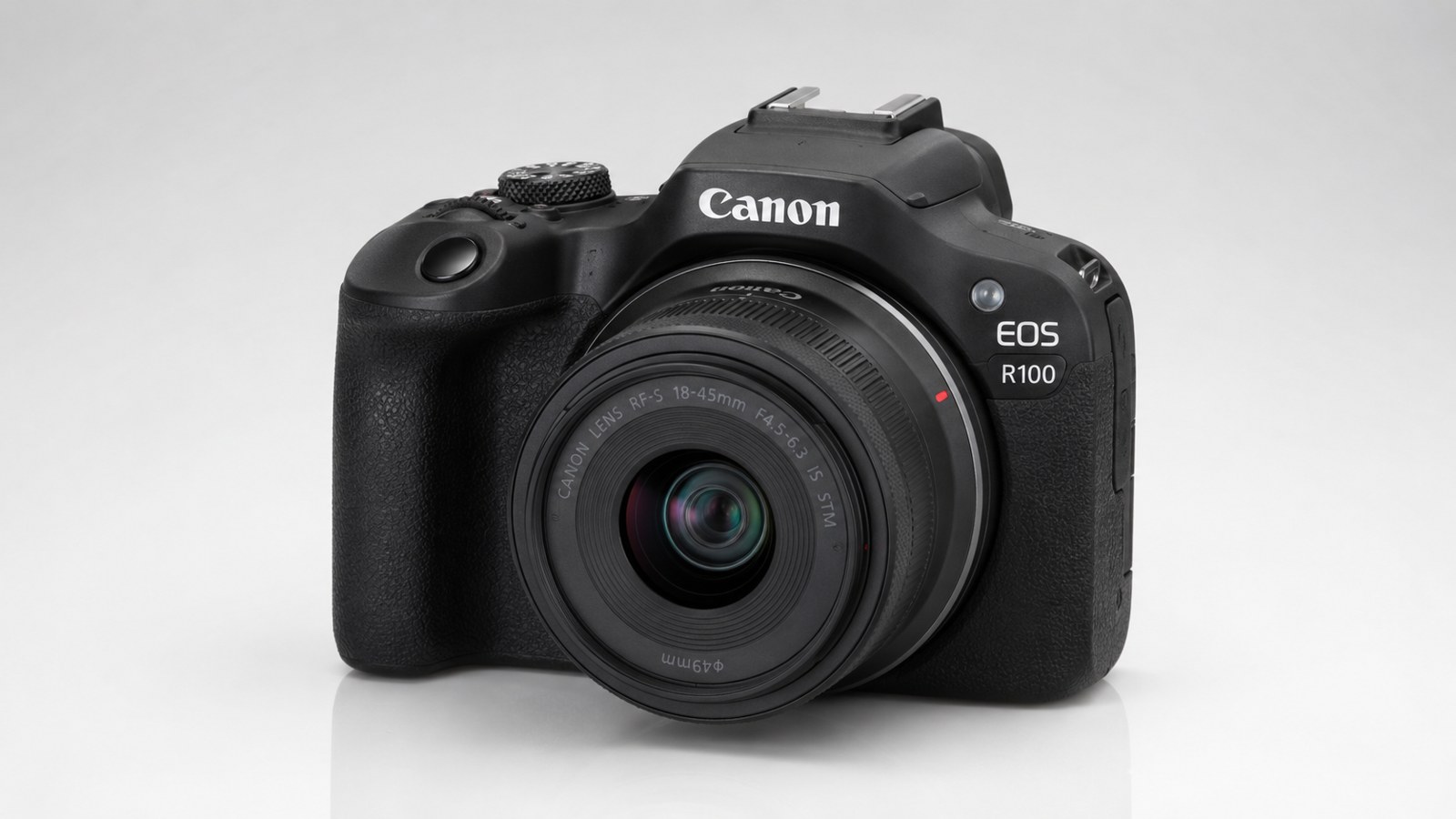
- The used Canon EOS R100 starts at 400 euros: it is the cheapest new Canon mirrorless, but it cuts a lot to reach that price.
- 24 MP APS-C sensor and valid Dual Pixel autofocus for stills, but no in-body stabilization, fixed non-touch screen for menus, and 4K video with heavy crop and contrast-detection AF.
- At the same budget, the Sony ZV-E10 (500 euros) and the Nikon Z30 (450 euros) offer a flip-out screen and better 4K for those who film.
- It only makes sense for those staying in the Canon RF ecosystem, shooting mostly stills, and wanting minimal spending: you can find it here at 400 euros with certified shutter count and 2-year warranty.
The Canon EOS R100 is the camera I most often see on the bench from people buying their first mirrorless. The reason is simple: it is the cheapest RF camera Canon has ever made, and it drops even further on the used market. But a low price is never free, and on this camera body, Canon has cut corners in areas worth understanding before you sign.
In this article, I explain what the R100 does well, where Canon cut costs to keep the list price low, and who it truly suits compared to the Sony and Nikon alternatives we keep in stock in the same price range. The goal is not to sell you the R100: it is to help you understand whether it is the right camera for you or if adding 100 euros gets you something that lasts longer.
What is the Canon EOS R100 and who is it for
The Canon EOS R100 is the most affordable mirrorless camera in Canon's lineup, released in 2023 to capture users transitioning from smartphones who want their first camera with interchangeable lenses. It features a 24-megapixel APS-C sensor and the RF mount, the same as Canon's more expensive mirrorless models. It is not a body designed for the experienced photographer looking for a second body: it is an entry point, and it should be judged as such.
Positioning: the most affordable RF on the price list
Canon built the R100 with a clear objective: to keep the price as low as possible while maintaining access to the RF ecosystem. Buyers enter a system with dozens of RF and RF-S lenses, ranging from the most affordable to high-end L-series lenses costing thousands of euros. The commercial logic is simple: we hook you at the entry level, and you stay in the system as you move up in range.
The actual target is precise: those switching from a smartphone who want superior image quality without studying photography. It is not the camera for serious videographers nor for those seeking versatility. It is the entry-level step of the RF mount, with the compromises this entails, which we will see in the following sections.
How much does it cost used today
In the used market, the R100 has already settled into an interesting price range. You can find it in our catalog at a price that makes the difference from new concrete, not symbolic.
| Model | Used Price ReflexMania | Note |
|---|---|---|
| Canon EOS R100 | 400 euros | Body, certified shutter count, 2-year warranty |
At 400 euros, we are talking about a new APS-C RF camera body from just a few years ago, with a certified shutter count and warranty included. Below this price point, on the RF mount, there is nothing more recent available today. If your budget is strict and you want to stay within the Canon ecosystem, this is the lowest possible entry point. However, if you shoot video or seek flexibility, keep in mind that for slightly more, there are alternatives with articulating screens and better video capabilities: we compare them further down.
What it does well: the strengths of the R100
Behind the aggressive price, the R100 hides components that are far from entry-level. Canon cut costs where it matters least, but the core that generates the image remains serious. Here is where the camera body delivers on its promises.
APS-C 24 MP sensor and image quality in photos
The sensor is a 24-megapixel APS-C, the same resolution you find on the more expensive siblings in the RF-S range. In practice, the file coming out of a Canon EOS R100 at low ISO holds up against camera bodies that cost twice as much.
Color rendering is the classic Canon signature: pleasing skin tones without corrections, good shadow recovery latitude in RAW. Up to ISO 1600-3200, noise remains manageable; beyond that, as with all APS-C cameras in this class, it's best not to push it. But for daytime photography, portraits, and travel, the sensor is not the limiting factor.
Dual Pixel Autofocus: where it works
In the photos, the Dual Pixel CMOS autofocus is the real standout feature. It locks onto the subject quickly, with face and eye detection that performs well in normal light. For portraits, moving children, and family scenes, this system makes a huge difference compared to an entry-level DSLR from a few years ago.
Note: we are talking about stills. In video, the R100 abandons Dual Pixel and switches to contrast detection, which is much slower and prone to focus hunting. This is one of the compromises I address in the limitations section. But for those shooting stills, the AF here is reliable and accurate.
Lightweight, simple, RF ecosystem
The body weighs approximately 356 grams: you can carry it around your neck all day without noticing. Canon's menus remain among the most readable on the market, designed for those coming from a smartphone who don't want to study a manual.
- Reduced weight: ideal as a travel body or second camera.
- Accessible interface: guided mode and clear icons for beginners.
- Native RF mount: access to all RF full-frame lenses and RF-S dedicated to APS-C.
This last point matters more than it might seem. Buying an R100 means entering a vibrant and growing lens system, not a dead end. If you move up the Canon range in the future, your lenses stay with you.
Where Canon cut corners: the limits to know
To reach the €400 price point, Canon has removed features you would take for granted on a higher-end camera body. None of these are manufacturing defects; they are pricing decisions. The key is to understand them before you buy, not after your first shaky video.
Fixed non-touch screen: the most annoying compromise
The 3-inch display is fixed to the body: it does not tilt, it does not flip, and it is not touch-enabled. To navigate the menus, you use the dial and buttons, not your finger. Vloggers cannot frame themselves, and shooting from the ground or overhead is done blind. It is a compromise felt every day, more than the lack of high-bitrate 4K.
No in-body image stabilization (IBIS)
The R100 does not have in-body image stabilization. All compensation depends on the lens: with an RF-S 18-45mm IS you get some help, but with a lens without IS you are left exposed. For handheld photos, you manage by increasing the shutter speed. In handheld video, the frame shakes, and without a tilting screen, it is also difficult to monitor while shooting.
4K video with crop and contrast autofocus
4K is available only at 24p and comes with two caveats. The first is the 1.55x crop: your 18mm lens frames the scene like a 28mm, so the wide-angle perspective is lost and you have to step back. The second is the autofocus: in 4K, the Dual Pixel system is not used; instead, contrast detection is employed, which is slower and exhibits the typical "pumping" effect when the subject moves. In Full HD 1080p, however, the Dual Pixel system returns, and focus is reliable.
Burst mode and viewfinder: real numbers
The burst rate reaches 6.5 frames per second, but this figure is only valid with locked focus. If you enable continuous subject tracking, it drops to 3.5 fps: too slow for football, motorcycles, or running children. The electronic viewfinder is small and serves to frame the shot, not to evaluate details.
- Screen: fixed, non-touch
- Body stabilization: none (IS lens only)
- 4K: 24p, 1.55x crop, contrast AF
- Burst with continuous AF: 3.5 fps
None of these limitations affect the quality of stills, where the Canon EOS R100 remains honest. They only become decisive if your use involves video, action, or acrobatic shooting.
R100: where Canon cut costs
| Feature | On the R100 | Implications |
|---|---|---|
| Screen | Fixed, non-touch | Difficult to film yourself or shoot from awkward angles |
| Body stabilization | Not available | Requires a stabilized lens for handheld video |
| 4K Video | 24p with 1.55x crop | Narrower angle and less precise AF in 4K |
| Mechanical burst | Approx. 3.5 fps | Not well suited for sports and action |
R100 vs used alternatives at the same budget
The R100 at 400 euros is the cheapest new Canon mirrorless camera body, but in the same 400-550 euro range, there are models that compromise less. If you stick to the RF mount, the discussion ends quickly, because Sony and Nikon use different mounts. However, if you are starting from scratch and the limitations mentioned above weigh on you — fixed screen, no 4K without heavy crop — it is worth looking at what the used competition offers for just a few euros more.
| Model | Used Price | Key Strength |
|---|---|---|
| Canon EOS R100 | 400 € | Lowest entry cost into the RF ecosystem |
| Nikon Z30 | 450 € | Flip screen for vlogging and video |
| Nikon Z50 | 470 € | Electronic viewfinder for photographers |
| Sony ZV-E10 | 500 € | Crop-free 4K, directional microphone |
| Sony A6100 | 550 € | Superior class autofocus tracking |
Sony ZV-E10: the choice for videographers
The Sony ZV-E10 at 500 euros is designed for video: forward-facing flip screen, 4K without the crop that plagues the R100, and an integrated directional microphone with a windscreen included. The compromise is clear: it has no viewfinder. For those who always frame using the screen and upload to YouTube or Instagram, it's not an issue; for those shooting in bright sunlight, it is.
Nikon Z30 and Z50: for content creators and hybrids
The Nikon Z30 at 450 euros follows the same video philosophy as the ZV-E10, featuring a flip screen and no viewfinder, but costs 50 euros less. The Nikon Z50 at 470 euros is the most balanced choice: it adds an electronic viewfinder and a deeper grip, making it suitable for both photography and occasional video. If you are coming from a DSLR and are looking for a similar approach, the reasoning is similar to what we do with the used Nikon D5600.
Sony A6100: autofocus of a superior class
The Sony A6100 at 550 euros is the most expensive in the group, justified by its autofocus: real-time tracking with Eye AF is at a level that neither the R100 nor the others on this list reach. It features a viewfinder and a tilting screen. If you shoot moving subjects — children, animals, sports — the 150 euro difference over the R100 is recovered in sharp shutter count.
Canon EOS R100 and used alternatives compared
| Model | Used Price | Screen | 4K Video | Viewfinder | IBIS |
|---|---|---|---|---|---|
| Canon EOS R100 | €400 | Fixed, no touch menu | 24p with 1.55x crop, contrast AF | Yes (low res) | No |
| Sony ZV-E10 | €500 | Articulating touch | No crop, fast AF | No | No |
| Nikon Z30 | €450 | Articulating touch | No crop | No | No |
| Nikon Z50 | €470 | Tilting touch | No crop | Yes | No |
| Sony A6100 | €550 | Tilting touch | No crop | Yes | No |
Is a used R100 better, or should you step up in the used Canon range?
The real question isn't "R100 yes or no," but how much extra budget makes sense. A used R100 costs 400 euros. Adding 150-200 euros gets you into the Canon full frame range, while adding 300-400 euros secures a camera body with controls for the advanced photographer. The price difference is real, but the gains in sensor and ergonomics often justify the extra cost.
Canon EOS RP: the full frame for just a little more
The Canon EOS RP starts at 550 euros with us and is the most affordable way to enter the full-frame RF system. The 26 MP sensor gathers more light than the R100's APS-C: cleaner high ISOs, more pronounced bokeh with the same lens, and a full field of view without the 1.6x crop factor. With older EF lenses and an adapter, you recover the original angle of view, something that doesn't happen on APS-C.
What you lose compared to the R100: a slower burst rate and less reactive tracking autofocus on fast-moving subjects. If your main subjects are portraits, landscapes, and still life, the RP is a clear step up. We have written a dedicated guide on the most affordable entry-level full-frame camera, which you can find in the article on the used Canon 6D.
Canon EOS R: viewfinder, dual dial, more serious body
The Canon EOS R is priced between 720 and 800 euros and is designed for those who want to truly grow. 30 MP full frame sensor, high-resolution electronic viewfinder, dual control dials, and a deeper grip: the difference compared to the R100 is felt from the very first shutter count. Here you control aperture, shutter speed, and ISO without entering the menus.
| Camera body | Used price | Why choose it |
|---|---|---|
| R100 | 400 € | Minimal spend, photo only |
| EOS RP | 550-600 € | First full frame, bokeh and ISO |
| EOS R | 720-800 € | Controls and viewfinder from a serious body |
Practical rule: if you only take photos and your budget is tight, the R100 is enough. If you already know you will work in manual mode and want to grow, it is better to start with the RP or R right away and avoid doubling the expense in a year.
Lenses for the R100: what to mount without breaking the bank
Without in-body stabilization, lens selection matters more on the R100 than on a camera with IBIS. Every stop you don't get from the sensor, you have to find in the lens: aperture, or in-lens stabilization. With the RF mount, you have few affordable native options, but the right ones will last for years.
The 18-45 kit and its limitations
The R100 almost always comes with the RF-S 18-45mm f/4.5-6.3. It is an honest lens: lightweight, compact, with optical stabilization that helps at slow shutter speeds. It covers the wide-angle and normal focal lengths, so for landscape, travel, and everyday photography in good light, it does its job.
The problem is the aperture. At f/6.3 on the telephoto end, little light gets in: indoors or in the evening, you have to raise the ISOs and image quality drops, or moving subjects come out blurred. The blurred background for portraits, that look you're aiming for by switching to mirrorless, you don't really get it with this zoom. The kit is enough as long as you take certified shutter counts during the day. It's not enough when you want clean portraits or indoor photos without flash.
A bright prime lens to grow with
The real step up comes from a fast prime lens. Two sensible options, both at reasonable prices on the used market:
- RF 50mm f/1.8 STM — on the R100's APS-C sensor, it behaves like an 80mm: a portrait focal length with soft bokeh and minimal cost. Note: it lacks stabilization, so in low light, keep your shutter speeds above 1/100.
- RF 35mm f/1.8 Macro IS STM — costs a bit more but features IS, the stabilization built into the lens. It is the true substitute for the IBIS missing from the body: you gain 3-4 stops and can shoot handheld even in low light. In terms of angle, it is more versatile, suitable for interiors, food, and environmental portraits.
If you mostly shoot portraits and want to spend as little as possible, go for the 50mm f/1.8. If you want a single lens that does almost everything and forgives shaky hands, choose the 35mm IS. The Canon EOS R100 available from us for 400 euros mounts both without any issues: start with the kit, and add a prime lens when you feel the limitations.
What we check at our workshop on a used R100
An R100 is affordable even when new, and this changes the type of inspection required. It is not a camera squeezed dry by a professional: in most cases, it comes from someone who took photos on vacation or as a hobby, with only a few thousand shutter count. The risk is not extreme wear, but the opposite: determining whether a "like new" body truly has low usage or a hidden defect. Every Canon EOS R100 we sell for 400 euros goes through the workbench before it reaches the display.
Shutter count, shutter and sensor
The shutter count is the first thing. We read it from the internal EXIF data, not from the seller's word, and report it as a certified shutter count on the product sheet. On an R100, a realistic used value is between 3,000 and 15,000 shutter counts: below that threshold, we are talking about a camera body that is practically virgin. The mechanical shutter of the R100 is rated for approximately 100,000 cycles, so the remaining margin is still huge, but we want you to know where you are starting from.
Then we check:
- Shutter: burst sequences at various speeds to rule out slow blades or irregular exposures.
- Sensor: shot on a uniform field to identify hot pixels, dead pixels, or dust spots under the low-pass filter.
- Cleaning: if we find dust on the sensor, we remove it before sale, not after your first photo of the sky.
Firmware, battery and field test
We update the firmware to the latest available Canon version: you start with an aligned camera, without having to do the download yourself on day one. Then we measure the health of the LP-E17 battery, the same one used by several entry-level Canon RF models. A tired battery on a mirrorless is felt immediately, because the electronic viewfinder consumes a lot: if the pack doesn't hold up, we replace it or flag it.
The final step is the real test shot. We mount a lens, verify the Dual Pixel autofocus engagement, ensure the ring, buttons, and SD slot respond correctly, and confirm that photos are written without errors. Only then is the camera body put up for sale with its 2-year warranty. This is not marketing: it is the difference between buying from a private seller in the dark and knowing exactly what you are bringing home.
Verdict: Who benefits from a used Canon EOS R100
The used Canon EOS R100 is a camera that makes sense for a specific profile, not for everyone else. At 400 euros, it does its job for photos, but the cuts Canon made to reach that price weigh in at the wrong moment. Before choosing, look at what you actually shoot, not what you think you might shoot one day.
Buy it if...
The R100 is the right choice when budget is the priority and photos come first. You already have EF lenses with an adapter, or you want to stay within the Canon RF ecosystem without spending a fortune on the camera body.
- You are a beginner and need a true mirrorless camera without emptying your wallet: 400 euros is the minimum to enter the Canon RF system.
- You mainly take photos: portraits, travel, family. Here, the 24 MP APS-C sensor and Dual Pixel AF deliver solid results.
- You want minimal spending and add a stabilized RF-S lens, so the lack of IBIS matters much less.
Find it at our store as a Canon EOS R100 for 400 euros, with certified shutter count and a 2-year warranty. It is the lowest entry price for a tested Canon mirrorless.
Avoid it if...
If you take video recording seriously, the R100 will hold you back immediately: 4K with heavy crop and contrast-detection autofocus, fixed non-touch screen. In that case, spend a little more and get a camera that won't feel limiting after six months.
| If your need is... | Check out instead |
|---|---|
| Vlogging and video, flip-out screen | Sony ZV-E10 — 500 euros, designed for solo filming |
| Full frame and longevity in used Canon | Canon EOS RP — from 550 euros, full frame sensor and more room for growth |
In short: the R100 is an honest camera at a minimal price, not an all-rounder. If you stay with Canon and shoot stills, it's a good starting point. If you're looking for clean video or a camera that will last for years, the extra 100-200 euros on the ZV-E10 or EOS RP are well spent.
Frequently Asked Questions
How much does a used Canon EOS R100 cost?
Certified used starts at around 400 euros for the body only. At ReflexMania today, you can find it for 400 euros with a certified shutter count and a 2-year warranty.
Is the Canon EOS R100 suitable for video and vlogging?
Only to a certain extent. The 4K is 24p with a 1.55x crop and contrast-detection autofocus, and the screen is fixed and not tiltable. For vlogging and serious video, the Sony ZV-E10 or the Nikon Z30 are more sensible choices.
Does the Canon EOS R100 have stabilization?
It does not have in-body image stabilization (IBIS). Stabilization relies exclusively on the lens, so it is advisable to mount optics with the IS designation for handheld video.
Which is better: the used Canon EOS R100 or the Canon EOS RP?
It depends on your budget and intended use. The R100 is less expensive and features an APS-C sensor, while the RP, priced at 550-600 euros, is full frame, comes with a vari-angle screen, and delivers better files in low light. If you can spend a bit more and are looking for quality, the RP is often the best deal.
Which lenses can I use on the Canon EOS R100?
It accepts all lenses with RF and RF-S mounts. It often comes in a kit with the 18-45mm; to grow, it is advisable to add a fast prime lens like a 50mm f/1.8 for portraits and low-light shots.
Is the Canon EOS R100 suitable for beginners?
Yes, for those starting from a smartphone, shooting mostly photos, and wanting to spend the minimum while staying in Canon. Those focusing heavily on video or wanting a camera that lasts longer should consider Sony and Nikon alternatives.
What is the difference between the Canon EOS R100 and the R50?
The R50 adds a vari-angle touchscreen, Dual Pixel autofocus in 4K video, and a faster burst rate. The R100 cuts exactly on these points to keep the price lower.
Want to see our used, guaranteed Canon EOS R100?
If you have any doubts about a purchase or need advice for your specific case, contact us. We offer free advice because we are photographers first and sellers second, and because a customer who makes a poor purchase will not return to photography.
Three ways to get in touch:
- Contact form — response within 24 business hours
- WhatsApp at 342 362 3454 (messages only)
- Phone: 071 291 6347 (Mon-Fri 9-13/15-18, Sat 9-13)
If you want to see what we have in stock right away, explore the used inventory available today: every camera body is certified, comes with a 2-year warranty, and ships within 24-48 hours.
Article written by Matteo for the ReflexMania Team. Last updated: July 2026. Prices and availability as of the date of publication.