
In short
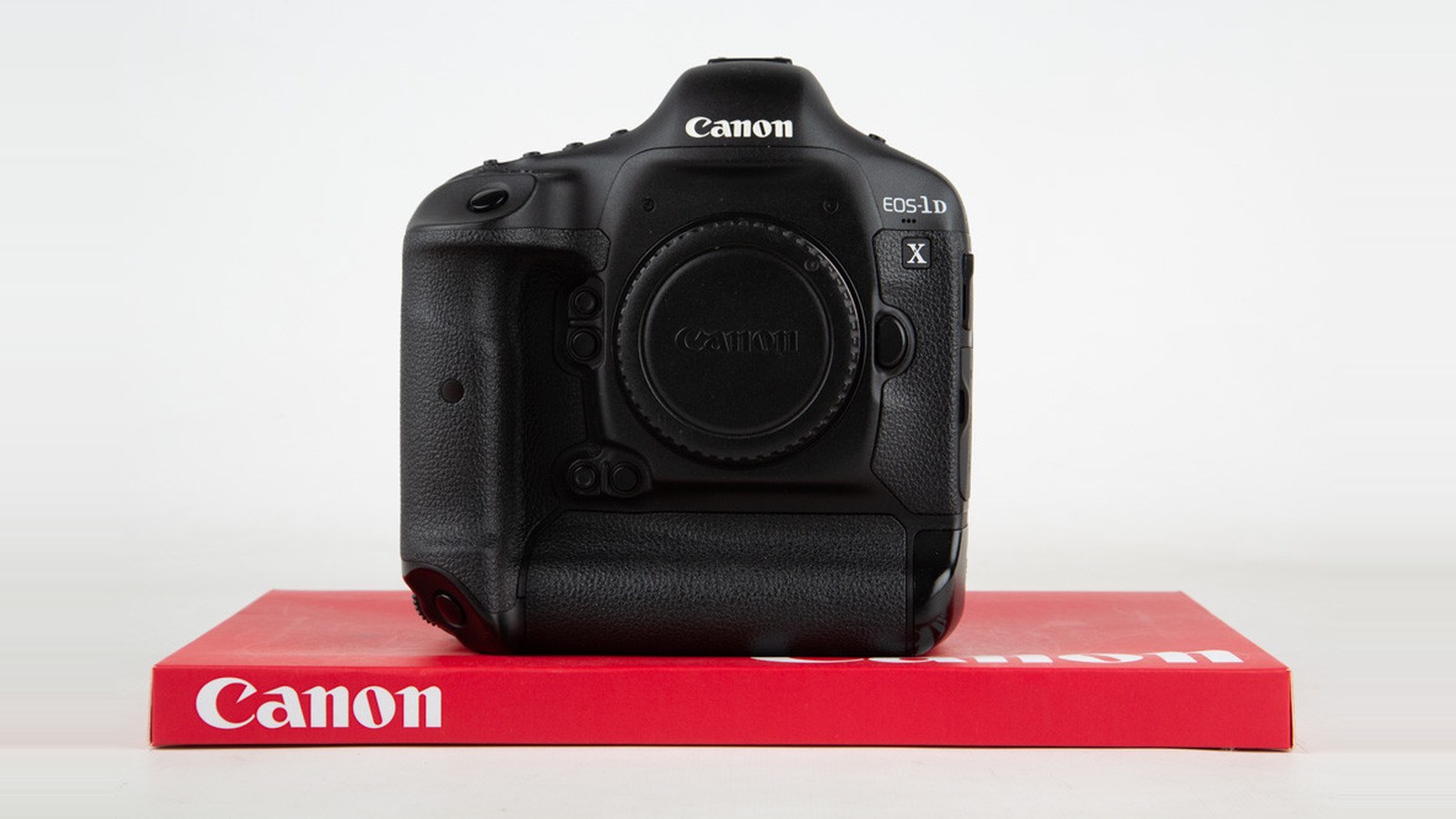
- The 2012 EOS-1D X cost over 6,000 euros at launch: today on the used market it is found indicatively between 700 and 1,000 euros, roughly the same as a used Canon EOS R.
- Its value lies in a certified shutter count of 400,000 cycles, a 12 fps burst rate with continuous AF, a battery life of over 1,100 shutter count, and a magnesium alloy weather-sealed body. It is not in the 18.1 megapixels.
- It weighs approximately 1,530 grams with battery and card (1,340 for the body alone), does not record in 4K, and uses CompactFlash cards: for travel, video, or light daily use, an EOS RP for 520-600 euros is the most sensible choice.
- On a pro body, the shutter count matters less than the actual condition: a unit with 200,000 shutter count that has been serviced is more reliable than one with 80,000 shutter count with a worn mount and bent CF contacts.
Looking for a used Canon 1Dx? The used Canon 1Dx page shows current availability and prices, with certified shutter count and a 2-year warranty. See also all used Canon cameras.
At the counter, I see 1D X bodies with 250,000 shutter counts that perform better than amateur camera bodies with 30,000. A customer who photographs his son's volleyball matches asked me if it made sense to spend 900 euros on a camera born for the London 2012 Olympics. The short answer is: it depends on what you photograph, not how good you are.
This article does not repeat the technical specifications (for that, refer to our dedicated guide on the 1D X as a sports flagship), but answers a specific question: when a professional camera from 2012 outperforms an entry-level mirrorless at the same price, and when it is a bad purchase. With numbers, comparisons with models we currently have in stock, and what we check in our lab before putting it up for sale.
What professional really means in the case of the 1D X
When it was released in 2012, the EOS-1D X cost over 6,000 euros, but not for image quality. Its 18.1-megapixel full-frame sensor produced less detailed files than those of the 5D Mark III, which cost just over half as much. That money paid for other things: dual DIGIC 5+ processors, 61 AF points including 41 cross-type, and a 100,000-pixel RGB meter that helps autofocus track faces and colors. If someone calls it "professional," you have to ask them: professional compared to what? The honest answer is compared to Canon's semi-pro DSLRs of the same era, not compared to a modern mirrorless in terms of sensor.
| Model | Megapixels | AF Points | Burst Rate | Certified Shutter Count |
|---|---|---|---|---|
| Canon EOS 6D | 20.2 | 11 | 4.5 fps | 100,000 cycles |
| Canon EOS 5D Mark III | 22.3 | 61 | 6 fps | 150,000 cycles |
| Canon EOS-1D X | 18.1 | 61 (41 cross-type) | 12 fps | 400,000 cycles |
Of the three, it has the lowest megapixel count, but it is the only one designed for those who shoot for 8 hours straight, every week.
A camera built to last, not to impress
The shutter of the 1D X is certified for 400,000 cycles, nearly three times that of the 5D Mark III. For a sports photographer taking 60,000 shutter count per year, this means more than six seasons before reaching the declared limit. With a 6D, at the same pace, the limit is reached in less than two years. The camera body is made of magnesium alloy and is weather-sealed, meaning it is protected against dust and splashes. This does not mean it can be used in a thunderstorm without caution.
The integrated vertical grip is the most underrated detail. In portrait orientation, you get the same shutter button, the same dial, and the same joystick, and after a full match, your wrist will notice the difference. On the other two, you need an external battery grip, which adds an extra contact point that will eventually get dirty.
Why 18 megapixels are not a flaw for everyone
A 1D X file measures 5184 × 3456 pixels. At 300 dpi, it yields approximately 44 × 29 centimeters, which is practically an A3 size without interpolation. For sports, news, and events, this is more than sufficient, even with a moderate crop to tighten the framing on an action. The lighter files also offer a practical advantage: with 3,000 shutter count per evening, they download and get selected faster.
The limitation becomes apparent in two specific cases:
- Landscape and architecture, where large prints and fine detail are required: a body with 30 megapixels or more does a different job.
- Wildlife with heavy crops: if you crop 50% of the area to get closer to a distant bird, you are left with about 9 megapixels. That is fine for the web, but too few for a large print.
If you need a general overview of the model before diving into the details, we have written it in the article about the used Canon 1D X as a sports flagship at a bargain price.
Where the 1D X still outperforms entry-level mirrorless cameras
For 800 euros, you can take home a Canon EOS R, and for 520-600 euros, a Canon EOS RP. They feature more recent sensors, but on three measurable aspects, a 1D X at the same price point remains superior: sustained speed, battery life, and field reliability. These are precisely the factors that matter on the sidelines, during a ten-hour event, or in a birding blind.
Burst and buffer: 12 fps that truly hold up
The shutter count matters little if the camera locks up after two seconds. The 1D X shoots at 12 fps with continuous autofocus and exposure, reaching 14 fps in JPEG with the mirror locked up. With a CompactFlash UDMA 7, the buffer holds approximately 38 RAW files, meaning over three seconds of full-speed action.
- Canon EOS-1D X: 12 fps with continuous AF, approximately 38 RAW shots before slowing down.
- Canon EOS R (800 euros): 8 fps, but with focus locked on the first frame. In AF Servo it drops to 5 fps.
- Canon EOS RP (520-600 euros): 5 fps in single AF, 4 fps in AF Servo.
In a youth basketball game, the difference is immediately apparent. A layup lasts less than a second: at 12 fps you have about ten frames to choose from, while at 4 fps you only have three. Often, the perfect moment falls right between two shutter counts.
LP-E4N Battery: A Full Day Without Swaps
Canon states that the 1D X delivers over 1,100 shutter count per charge according to the CIPA standard. This is a conservative test: by shooting in bursts without reviewing every photo on the screen, you can easily exceed 2,000 shutter count. The reason is simple: the optical viewfinder consumes no power and the sensor remains off between shots.
The EOS RP uses the small LP-E17 and stops at around 250 CIPA shutter count. Even going beyond the CIPA rating, as happens in real-world use, a wedding with 3,000 photos requires five or six batteries, and every swap risks happening at the wrong moment. In the cold, on ski slopes or in a cabin in January, small batteries suffer more than large ones.
Optical viewfinder and reliability in difficult conditions
In the viewfinder of the 1D X, you see the real scene through the mirror and pentaprism. There is no display lag and no refresh. The only blackout is the mirror flip-up, which is very brief. On the electronic viewfinders of the EOS R and the EOS RP, in burst mode, you see an image chasing the scene: tracking a raptor that changes direction becomes more difficult.
Then there is the build. The magnesium alloy body, with seals designed to work in the rain, and the dual CF slots for recording copies on two cards are not just technical sheet details. The EOS R and EOS RP have a single SD slot: for someone shooting a paid event, a corrupted card means losing the job. With the 1D X, the backup is already inside the camera.
Where its 14 years show
The 1D X is a 2012 camera, and you can barely tell when you use it outside a sports field. The limitations that follow are not defects of that specific unit: they are design choices from fourteen years ago. Those who know them before buying accept them. Those who discover them later usually resell it within a few months.
Weight and size: 1.5 kg before the lens
The body alone weighs approximately 1,340 grams. With battery and card, it comes to around 1,530 grams. Mount an EF 70-200mm f/2.8L IS II, which weighs about 1.5 kg, and you have roughly 3 kg around your neck. For 8 hours on location, this is a manageable weight; in fact, the integrated vertical grip helps keep it steady. On the go, at dinner, or during a city walk, it becomes the camera that stays in the backpack.
At the counter, this story repeats often. Those who buy a 1D X as their first full frame, attracted by the price, end up shooting more with their phone than with it after three months. Not because it takes bad photos, but because they don't feel like carrying it around.
Video capped at Full HD
In the video, the 1D X was stuck at 2012, with no room for debate:
- Max resolution 1080p up to 30 fps. 60 fps is only available in 720p.
- No 4K, not even cropped.
- No Dual Pixel AF: in live view, focus is slow and does not track the subject during recording.
The 61-point AF system only works with the mirror down, meaning you must look through the viewfinder. As soon as you switch to the screen, you lose the main reason for buying it. If you also shoot video, even just clips for social media, this is the wrong camera for you.
CompactFlash cards and fixed screen
The 1D X features two slots, both CompactFlash. By 2026, CF is a dying format: production volumes are low, and a branded CF UDMA 7 card costs significantly more than an SD card of the same capacity. The market is also flooded with counterfeit CF cards, especially those sold as new at suspiciously low prices. Recent laptops lack built-in CF readers, so a dedicated USB reader is required.
The screen is also a product of its time: 3.2 inches, sharp, but fixed and non-touch. No low-angle or over-the-crowd framing with a tilting screen, no touch to select the focus point. It matters little for those who always use the viewfinder. For those coming from a mirrorless or a smartphone, it means giving up a daily habit.
Same budget, different choices: 1D X vs EOS R, EOS RP and R100
With €700-1,000 today, you can buy a used Canon 1D X, or a more recent full-frame mirrorless camera with a few hundred euros to spare. The right question is not which is the best camera. It is which camera you will actually use every week.
| Model | Price | Sensor | Max burst rate | Weight (with battery) | Video |
|---|---|---|---|---|---|
| Canon EOS-1D X | 700-1.000 € (market) | 18.1 MP FF | 12 fps with AF | 1,530 g | Full HD |
| Canon EOS R | 800 € | 30.3 MP FF | 8 fps (5 in AF Servo) | 660 g | 4K with crop |
| Canon EOS RP | 520-600 € | 26.2 MP FF | 5 fps | 485 g | 4K with crop |
| Canon EOS R100 | 320-400 € | 24.1 MP APS-C | 6.5 fps | 356 g | 4K with crop |
Canon EOS R: the pro-sumer mirrorless at the same price
Today, the Canon EOS R is available at our store for 800 euros, with 2 units in stock: essentially, it costs the same as a 1D X in good condition. It features 30.3 megapixels and Dual Pixel AF with eye recognition, and the AF works with live view, something the 1D X does poorly. The 4K video has a crop of about 1.7x, so a very wide-angle lens is required for wide video shots. It falls short on speed: continuous AF drops to 5 fps. Then there is battery life, approximately 370 certified shutter count CIPA compared to over 1,100 for the 1D X. For a wedding, you need at least 3 batteries.
Canon EOS RP: the lightweight full-frame that saves you money
The Canon EOS RP is our best seller in this price range: we have 9 units in stock between 520 and 600 euros. It features 26.2 MP and weighs 485 grams, less than a third of the 1D X. Compared to a 1D X at 900 euros, you have 300-400 euros left for:
- a compact RF lens like the RF 50mm f/1.8 STM, which on this body is the most sensible pairing for portrait and street;
- the Canon EF-EOS R adapter, which allows you to mount all your existing EF lenses without any loss;
- 2 spare batteries, necessary given the stated battery life of approximately 250 shutter count.
For portrait, travel, and general use, it is the most rational purchase. For sports, it is not, and there is no point in pretending otherwise.
Canon EOS R100: when APS-C is enough
If you are buying your first serious camera, the 1D X is overkill in every respect. The Canon EOS R100 costs between 320 and 400 euros, we have 8 units available, and with its 24.1 MP on APS-C it comfortably covers the needs of beginners. With the 500-600 euros you save, you can buy two lenses, and that is where a photo truly improves. The advice we give at the counter is always the same: spend on optics first, then on the body.
Who should buy it, and who shouldn't
The 1D X performs very well for precise work but becomes cumbersome for almost everything else. At the counter, we start with two questions: what lenses do you already have in your bag, and what do you photograph most often?
The right profile: for those who already have EF lenses and shoot action
The most common scenario we see is a parent who every Saturday follows their child to volleyball or basketball games at the gym, using a 70-200 f/2.8 EF lens purchased years ago. The lighting is poor, the subjects are fast, and the match lasts two hours. Here, the 1D X delivers more than any 800-euro mirrorless camera: the lens is already paid for, and the camera body was designed specifically for this use.
Other profiles for whom the purchase makes sense:
- Amateur and youth sports: football, rugby, and athletics, where high-speed burst shooting and all-match durability are required.
- Motorsport: panning and track sequences, often in dusty or rainy conditions.
- Birding, but only if you already have an EF telephoto lens in your bag, such as a 100-400 or a 500 mm.
- Event photographers who finish the night with 3,000 shutter count and don't want to worry about the camera body.
- Those looking for a robust second body to pair with a 5D or a Canon mirrorless, to keep permanently mounted on the telephoto lens.
Those shooting with Nikon have a direct equivalent, which we discussed in the article on the used Nikon D5. The logic is the same: without the optics of that system already in your bag, the numbers don't add up.
The wrong profile: a full frame for everything first
When someone comes in looking for their first full-frame "to do a bit of everything," we don't recommend the 1D X. We are happy to handle professional DSLRs, but selling it to someone who doesn't need it means we'll likely see it back in a trade-in a few months later.
- Travel: a body like this ends up staying in the hotel, and a camera left in the room doesn't take photos.
- Video: it does not record in 4K, and for those who shoot video, this is not a negligible limitation.
- Starting from scratch, without EF lenses: at least one f/2.8 zoom lens must be added to the body, and the budget easily doubles.
- High-resolution landscape: 18.1 megapixel leave little margin for cropping or large-format prints.
For those also considering other systems and seeking low-light performance and video capabilities in a compact body, the Sony A7s Mark II at 800 euros is a sensible alternative. It features 12 megapixels, records 4K internally, and includes in-body image stabilization. It is a different system: it is only worth it if you do not already have Canon lenses to utilize.
What to check on a used 1D X
A used 1D X has almost always been hard at work: stages, newsrooms, entire wedding seasons. Don't look for a pristine specimen. Try to understand how much of that work still weighs on the camera body in your hands.
Shutter count on a 400,000-cycle camera body
Canon certifies the shutter of the 1D X for 400,000 cycles. A unit with a certified shutter count between 150,000 and 250,000 has used at most two-thirds of its lifespan, which is the range most commonly found on the market. However, this data does not always appear in the EXIF. It can be read by connecting the camera body via USB with dedicated software, or at a service center. Be wary of anyone who gives you a number without being able to tell you how they obtained it. Also keep in mind that 400,000 is a statistical average, not a guarantee: what matters is how the shutter is working today.
Wear and tear that the shutter count doesn't show
On a professional body, the real issues often lie outside the shutter count. This is the checklist we use at the counter when assessing a trade-in:
| Point | How to check | Warning sign |
|---|---|---|
| Mount | Mount a lens and try to move it | Play, deeply worn lugs, worn screws |
| CF slot | Inspect the pins with a torch, insert a card in each slot | Bent pins, card not recognized, read errors |
| Seals and doors | Open and close slots, side doors, and battery compartment | Doors that do not close under pressure, missing rubber seals |
| Grip rubber | Press on the edges, including on the vertical grip | Bulging, peeling, or sticky rubber |
| LP-E4N battery | Battery information menu | Charging performance at one bar: battery needs replacement |
| Firmware | Settings menu, firmware version | Not updated: fixable, but indicates the camera has not been well maintained |
| Sensor | Shutter count at f/16 against sky or white wall | Fixed spots, marks on the filter |
| Corners and top plate | Visual and tactile inspection | Dents in the magnesium: sign of a drop |
A dent on a corner is not an aesthetic flaw to be discounted in the price. On a body weighing over one kilogram, it indicates a genuine impact, and after such an impact, alignments and focus must be rechecked.
What we do in our workshop
Before listing a body like the 1D X, our lab performs checks that a private seller cannot do at home. We read the certified shutter count via software and test the shutter at all speeds and in full burst mode, not just with a single shot. We verify autofocus on the target using a reference lens to rule out front focus and back focus. We clean the sensor and check the pins of both CF slots and the condition of the seals. Then the camera is released with a 2-year warranty: on a 14-year-old body, this is the concrete difference compared to a private purchase.
1D X, 1D X Mark II or 5D Mark IV
Within the Canon EF pro family, the 1D X is not the only option, and for many, it is not the best one. Between the 2012 1D X, the 2016 Mark II, and the 5D Mark IV, the price difference is significant, but the real difference lies in the type of work you do. It is advisable to start with that, not with the technical specifications.
When it's worth upgrading to the Mark II
The EOS-1D X Mark II features 20.2 megapixels, a 14 fps burst rate in the viewfinder, 4K video, and dual CFast + CompactFlash slots. On the used market, it typically ranges from €1,400 to €1,900: that is €500 to €900 more than the 1D X. That extra cost only makes sense in two specific cases.
- You shoot video. The 1D X does not record in 4K, the Mark II does. In live view it also features Dual Pixel AF, which tracks the subject smoothly. The 1D X remains slow and less usable in live view.
- You need the extra 2 fps. Going from 12 to 14 fps matters in motorsport and athletics, where the moment lasts mere hundredths of a second. For youth football or weddings, it makes no difference to the result.
There is a hidden cost: the Mark II's 4K produces very large files, and 4K at 50/60p requires CFast cards, which cost significantly more than CompactFlash. If you don't need video, the 20.2 megapixels versus 18.1 do not justify the extra expense on their own. Better to keep the difference for a better EF telephoto lens.
When the 5D Mark IV is the best choice
The 5D Mark IV starts from a different concept. It features 30.4 megapixels, 7 fps, a much lighter camera body without an integrated vertical grip, and CF + SD slots. It is a camera designed for those who work with subjects that are stationary or move slowly, not for those chasing a wing on the fence.
For weddings, portraits, corporate events, and still life, it is the most sensible choice of the three. With 30 megapixels, you can crop with margin and print large. It weighs approximately 890 grams with battery, compared to the 1,530 grams of the 1D X, and after 10 hours of ceremony around your neck, the difference is noticeable. The limitation is the burst rate: 7 fps is enough for the bride and groom's exit, but not for a basketball game. Prices, typical wear, and versions are covered in detail in the guide to the Canon 5D Mark IV used in 2026.
| Profile | Recommended choice |
|---|---|
| Sport, action events, birding: stills only, limited budget | 1D X |
| Professional sports with 4K video or fast motorsport | 1D X Mark II |
| Weddings, portrait, events, landscape | 5D Mark IV |
| Mixed stills and video, no need for burst mode | 5D Mark IV |
Frequently Asked Questions
How much does a used Canon EOS-1D X cost in 2026?
On the used market, the body alone typically ranges from 700 to 1,000 euros, depending on shutter count, cosmetic condition, and included accessories. Below 600 euros, it is advisable to be cautious or request a laboratory inspection before paying.
How many shutter count is too many for a used 1D X?
The shutter is certified for 400,000 cycles, so 150,000-250,000 shutter counts are normal for a body designed for professional use. Beyond 350,000, it is advisable to know whether the shutter has already been replaced. The condition of the mount, CF slot, and seals is as important as the count.
Is the 1D X suitable for a beginner?
Technically, it can also be used in automatic mode, but it is heavy, expensive to equip with high-quality lenses, and oversized for beginners. For those starting from scratch, a Canon EOS R100 or an EOS RP leaves budget for lenses, which matter more.
Can EF lenses from the 1D X be used on a Canon mirrorless camera?
Yes, with the Canon EF-EOS R adapter, EF lenses work on RF mirrorless cameras without loss of quality and with fully operational autofocus. This is one of the reasons why an EOS R or RP is a concrete alternative even for those who already have an EF lens collection.
Is the 1D X suitable for video?
No, if video is an important part of your work. It records at most in Full HD at 30 fps, it does not have 4K, and it lacks Dual Pixel AF in live view. For video, the 1D X Mark II or a mirrorless camera are more sensible choices.
Which is better: a used 1D X or a Nikon D5?
These are the two sports flagships of the same extended generation: the D5 is newer (2016), features 20.8 MP and 153-point AF, but costs more. The real choice depends on the lens system you already have: switching brands for the camera body alone rarely makes sense.
Looking for a professional Canon or a refurbished alternative?
If you have questions about a purchase or need advice for your specific case, contact us. We offer free advice because we are photographers first, and because a customer who makes a poor purchase will not return to photography.
Three ways to reach us:
- Contact form — response within 24 business hours
- WhatsApp at 342 362 3454 (messages only)
- Phone: 071 291 6347 (Mon-Fri 9-13/15-18, Sat 9-13)
And if you want to see what we have in stock right away, explore the used gear available today: every camera is certified, comes with a 2-year warranty, and ships within 24-48 hours.
Article written by Matteo for the ReflexMania Team. Last updated: September 2026. Prices and availability refer to the time of publication.