
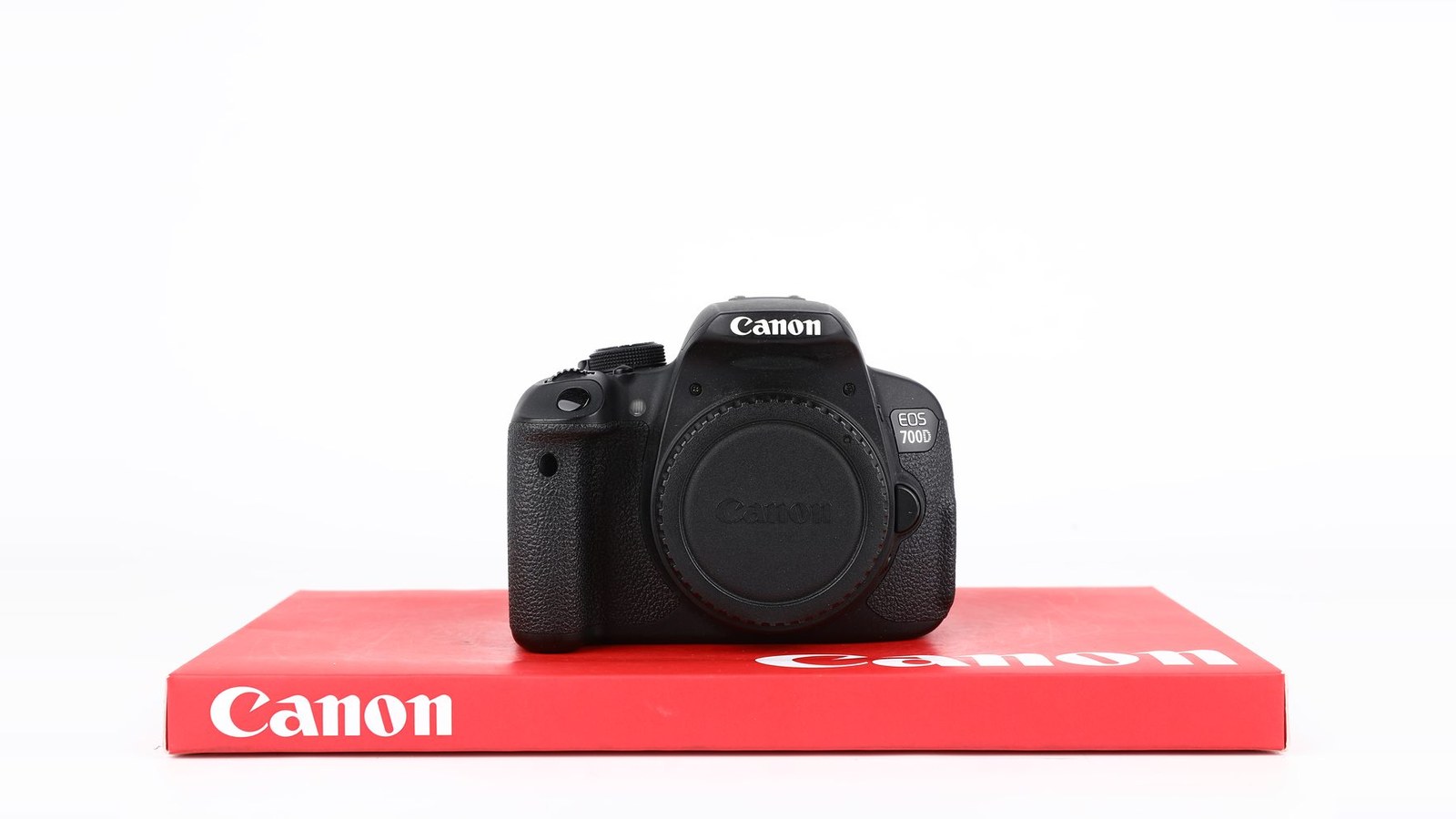
In summary
- The Canon 700D is from 2013: 18-megapixel APS-C sensor, 9 cross-type AF points, 5 frames per second, and a 3-inch tilting touchscreen. It still holds up for family, travel, and getting started.
- 150 euros is the private seller price, with no warranty and no way of knowing the shutter count. Certified and serviced, with a 2-year warranty, it costs 260 euros here today.
- If you only take photos, a Canon 600D for 180-200 euros or a Nikon D3300 for 220 euros (24 megapixels) deliver similar results for less. The 700D is worth the difference only if you use the touchscreen, Live View, and video.
- The limitations are concrete: visible noise above ISO 3200, video capped at Full HD 30p, no Wi-Fi, and an LP-E8 battery rated for approximately 440 shutter count according to the CIPA standard.
Looking for a used Canon 700D? The used Canon 700D page shows current availability and prices, with certified shutter count and a 2-year warranty. See also all used Canon cameras.
Every week, someone comes to the counter with the same screenshot: a Canon 700D with the kit lens for 150 euros on Subito. They ask if it's a bargain or a trap. The honest answer is that it depends almost entirely on three things: the shutter count, the flat cable of the articulating screen, and what you intend to use it for. We have serviced quite a few 700D units over the past ten years, and the defects tend to be the same ones.
In this article, we disassemble the 700D piece by piece, just as we do in our workshop. We examine what it still does well in 2026, where its 13 years show, and its true value, whether from a private seller or certified. Then, we compare it with the alternatives currently available in our store, including those that cost less and sometimes offer better value. Finally, we tell you who it makes sense to buy it for and who is better off leaving it where it is.
What the Canon 700D really is, thirteen years later
The Canon 700D was released in March 2013 and is almost entirely the 650D from the previous year, with a new finish. It is not a cult camera nor old iron: it is a well-made low-end APS-C DSLR for its price, and it still is today. In the lineup, it sat above four-digit entry-level models like the 1100D (later replaced by the 1200D and, in 2016, by the 1300D) and below the 60D. Here, "entry level" means three specific things: a polycarbonate body, a single control dial, and no weather sealing.
The spec sheet that matters
2013 specs are few, but they translate into real-world performance.
- 18 MP APS-C CMOS sensor, DIGIC 5 processor: 5184 × 3456 pixel files and 1.6 crop factor. A 50 mm lens frames like an 80 mm on full frame.
- 9 AF points, all cross-type: every point reads both horizontal and vertical lines, so it locks on even with low-contrast or striped subjects. However, nine points cover a limited area of the frame: in practice, you focus with the center point and then recompose.
- On-sensor hybrid AF: this is a focus assist integrated into the sensor and works only in Live View and video. When looking through the viewfinder, you use the 9 classic points.
- 5 fps: one frame every 200 milliseconds. Enough to have two or three shutter count options to choose from in a changing scene, but not for breaking down a rapid gesture.
- ISO 100-12800, extendable to 25600: the extended value must be activated from the menu and is not part of the native range.
- 3" 1.04 million dot vari-angle touchscreen: rotates to shoot from below, above, or facing you.
- 1080p video up to 30p, with 3.5 mm microphone input: an external microphone improves audio more than any setting.
- Pentamirror viewfinder, 95% coverage: at the edges of the photo, you always see a bit more than what you saw while shooting.
700D, 650D and 750D: the real differences
In the listings, you often find these three cameras in the same price range, with descriptions copied from one to another. The differences that matter are all in this table.
| 650D | 700D | 750D | |
|---|---|---|---|
| Year | 2012 | 2013 | 2015 |
| Sensor | 18 MP | 18 MP | 24 MP |
| Processor | DIGIC 5 | DIGIC 5 | DIGIC 6 |
| AF Points | 9 cross-type | 9 cross-type | 19 cross-type |
| Wi-Fi | No | No | Yes, with NFC |
Between the 650D and the 700D, the mode dial changes, rotating 360° on the 700D, along with the external finish. The sensor, autofocus, screen, and video capabilities are identical. At the same price, choose based on the condition of the individual camera body and the shutter count, not the model name. The 750D, however, is a genuine step forward: higher resolution, an AF system covering much more of the frame, and wireless transfer to your phone. If you need these three features, the price difference is worth it; otherwise, the Canon 700D does the same job.
150 euros from a private seller or 260 certified: what you're really paying
On listings, a Canon 700D can be found for 150 euros, often with the EF-S 18-55 included in the package, without warranty and with a shutter count declared verbally or not declared at all. Our Canon 700D is refurbished in our lab, comes with a 2-year warranty, and costs 260 euros today. That is a difference of 110 euros, and before deciding, it is worth understanding where that money goes.
What's behind the price difference
Those 110 euros cover two things: the work done before the sale and the risk you take off our hands. The work is the inspection. We read the certified shutter count with dedicated software, test the shutter, autofocus, touch, SD slots, and flash, and clean the sensor. Anything that doesn't pass the tests gets repaired, or the camera body doesn't go on sale.
The warranty, however, is the aspect most often underestimated. These are the faults we see most frequently on the 700D, along with the indicative cost of an out-of-warranty repair:
| Fault | Typical symptom | Indicative cost |
|---|---|---|
| Shutter replacement | Error 20 or photos with black bands | €130-180 |
| Screen hinge flat cable | Black screen in certain positions | €80-120 |
| SD card slot | Card not read or write error | €70-110 |
Just one of these repairs within the first two years wipes out the savings for a private buyer. With the shutter, the repair costs as much as the entire camera body, at which point repairing it no longer makes sense. This doesn't mean it will definitely happen. It means that with this listing, you are the one taking that risk.
When buying from a private seller still makes sense
There are cases where I would also recommend the €150 listing. If the seller is a friend, a relative, or a colleague whose handling of equipment you know, the risk drops significantly. Even so, there are minimum conditions to demand:
- On-site test with your own card: at least 30-40 shutter count, a short video in Live View, and the screen rotated in all positions.
- Shutter count displayed in front of you, read with software on the computer. A number stated verbally is worthless.
- Lens tested at all focal lengths, with autofocus and stabilizer active, checking for spots in backlight.
- Camera history: who used it, for how long, and whether it has ever been opened or repaired.
If all four are present, you save 110 euros with a reasonable risk, and for a camera in this price range, it is a sensible choice. If even one is missing, 150 euros is not a deal: it is a gamble, and often the buyer is the one who loses.
What the 700D still does well in 2026
The 700D has three key strengths. It is controlled by touch in Live View, accepts used lenses that cost very little, and records clean family videos without expensive accessories. These three factors justify it over its cheaper siblings.
Touchscreen and Live View: the real advantage over its siblings
The screen is capacitive, like that of a smartphone, and responds to a light touch. In Live View, you tap the subject and the camera focuses there, or it focuses and takes the shutter count in the same gesture. On a tripod, for a portrait or a flat dish shot from above, it is faster than moving the AF point with the arrows. The 600D has a tilting screen but no touch, while the 1300D has neither.
The touchscreen is also useful outside of Live View. From the Q menu, you can adjust ISO, white balance, and AF mode by tapping the respective items. In playback, swipe through photos and pinch to zoom with two fingers, so anyone coming from a smartphone can master the camera in a single evening.
Lenses: Where a Used Canon DSLR Beats Them All
The most concrete reason to stick with DSLRs is the cost of lenses. Canon has been producing EF and EF-S optics for decades, and the used market is full of them. These are the prices currently found on the used market:
- EF 50mm f/1.8 STM, 80-110 euro: on the 700D it is equivalent to an 80mm, excellent for portraits, with a bokeh that the kit zoom cannot achieve.
- EF-S 55-250mm f/4-5.6 IS STM, 120-170 euro: stabilized telephoto for trips, school plays, and stationary animals.
- EF-S 10-18mm f/4.5-5.6 IS STM, 150-190 euro: wide-angle for interiors and landscapes.
- EF-S 24mm f/2.8 STM, 100-130 euro: a pancake lens that makes the camera almost pocketable.
On an entry-level APS-C mirrorless, the same kit often costs twice as much, and the used selection is much more limited. A practical example: the Canon 700D we have today for 260 euros, plus a used 50mm STM, makes for a complete portrait kit under 370 euros.
Basic video: microphone input and tracking AF
In the video, the 700D uses hybrid AF on the sensor in continuous mode. With an STM lens, such as the EF-S 18-55 IS STM from the kit, the focus tracks a child approaching and the motor does not end up in the audio track. With older lenses without STM, the whining is audible and the focus hunts back and forth. If you are interested in video, budget for at least one STM lens.
The 3.5 mm microphone input accepts an external microphone mounted on the hot shoe, and the audio improves significantly compared to the built-in mic. The screen flips forward, so you can start vlogging. The limitation remains: Full HD up to 30p, while 60p is only available in 720p. For family videos, interviews, and tripod shots, it's sufficient. For slowing down action in post-production, no.
Where the thirteen years show
The 700D performs well as long as the light is good and the subject is stationary, or nearly so. When either of these conditions is missing, the limitations of a 2013 design become apparent. These are not flaws of that specific camera body, but rather signs of its era, and it is advisable to be aware of them before purchasing.
- Autofocus: 9 cross-type points, all concentrated in the center. A cyclist or a dog crossing the frame from the side exits the covered area, and the camera loses focus.
- Burst: 5 frames per second are enough for a child running towards you. They are not enough for a football match or for birds in flight.
- Video: up to Full HD at 30p. No 4K and no 60p, so no smooth slow motion.
- Viewfinder: it is a pentamirror, smaller and darker than a pentaprism, and shows 95% of the scene. At home, in the photo, you find things at the edges that you had not seen.
High ISO: what to really expect
The practical limit is between 1600 and 3200 ISO. Up to 1600, files are clean and print without issues. At 3200, noise is visible, but a photo for social media holds up. Beyond that, noise eats into fine details like hair, fabrics, and leaves, and noise reduction leaves skin looking waxy. 12800 is an emergency: better a noisy photo than no photo at all, but it is not a value to use routinely.
Think of a typical school play in the gym. With the EF-S 18-55 at 55 mm, you are at f/5.6, and freezing a moving child requires at least 1/250 of a second. Under the gym's fluorescent lights, the camera easily climbs to 3200-6400 ISO. The most cost-effective solution is not to change the camera body: it is a used 50 mm f/1.8, which at the same shutter speed lets you drop by three stops. If you often shoot indoors and high ISOs are your priority, the real step up is the larger sensor: we discuss this in used full-frame DSLR or mirrorless.
Battery and connectivity
The LP-E8 delivers approximately 440 certified shutter counts when using the viewfinder. In Live View, with the touch screen always on or while recording video, battery life drops to less than half. A battery that is ten years old no longer holds a charge like it did when new. The practical advice is to buy at least one spare LP-E8, preferably an original one. Fifteen-euro compatible batteries often display the charge level incorrectly and die suddenly, right in the middle of shooting.
There is no Wi-Fi. The simplest way to transfer photos to your phone is an SD card reader with a USB-C or Lightning connector: insert the card, import the JPEGs into your gallery, and within a minute they are on WhatsApp. It is one extra step compared to a recent camera, but for someone who shoots once a week, it makes little difference.
Canon alternatives in store today: 1100D, 600D, 100D, 1300D and 60D
In store, we have five Canon DSLRs that cost less than the 700D, but not all of them are a bargain. What matters is the sensor, screen, and autofocus, not the lowest price. Here is how they stack up with today's prices.
| Model | Our Price | Key Strength | Main Limitation |
|---|---|---|---|
| Canon 1100D | 160 € | Lowest cost in the group | 12 MP, 720p video, 2.7" screen |
| Canon 600D | 180-200 € | 18 MP, articulating screen | No touch, slow video AF |
| Canon 100D | 176-220 € | Hybrid AF and touch in a compact body | Fixed screen, only central cross-type point |
| Canon 1300D | 200 € | Built-in Wi-Fi | DIGIC 4+, 3 fps |
| Canon 60D | 210 € | Dual dials, pentaprism | No touch, outdated video AF |
| Canon 700D | 260 € | Articulating touch, hybrid AF | Highest price in the group |
I do not recommend the 1100D, even though it costs less: with 12 MP and 720p video, it is a generation behind. The 1300D is more recent, but with the DIGIC 4+ and 3 fps, Wi-Fi alone does not justify 200 euros. The 100D is a good choice for those who want the most compact body with touch control and are willing to give up the articulating screen.
600D vs 700D: a 60-80 euro difference, what changes
At the counter, this is the comparison we get asked about most often. The sensor is of the same type, an 18 MP APS-C: at the same ISO and with the same lens, you struggle to find differences in the photos, even when zooming in to 100%. The extra 60-80 euros for the 700D pay for something else:
- Touch: on the 600D, menu and AF point in Live View can only be moved using the buttons.
- Video AF: the 600D uses contrast detection, which is slow and exhibits hunting, making manual focus the practical choice for video. The 700D, paired with an STM lens, tracks the subject.
- Cross-type points: 9 out of 9 on the 700D, only the center one on the 600D. The difference is noticeable with off-center subjects and low light.
- Burst rate: 5 fps versus 3.7.
If you only take photos and compose through the viewfinder, the 600D is the smartest choice: it also has a tilting screen. Today, it is also the model for which we have the most units in stock: six.
60D: the choice for those who want serious camera controls
The 60D costs 50 euros less than the 700D and, for those shooting in manual, is often the better camera. It has two dials, one under the index finger and one under the thumb: shutter speed and aperture can be changed without entering the menus and without taking your eye off the viewfinder. The viewfinder is a pentaprism, brighter than the pentamirror of the 700D. On the top plate there is the LCD display with the shooting parameters, and the LP-E6 battery has a higher capacity than the LP-E8. It also has the 9 cross-type points and the articulating screen, but not touch, and in video the autofocus is the old contrast type.
My criterion is simple. If you work in manual or aperture priority mode and frequently adjust the exposure, get the 60D. If you look at the screen more than the viewfinder or shoot video, stick with the 700D.
And what about Nikon's lineup: D3200, D3300, D5200 and D5300
All Nikon models of the same generation feature a 24-megapixel APS-C sensor, compared to the 18 megapixels of the 700D. On the D3300 and D5300, Nikon has also removed the anti-aliasing filter in front of the sensor. Therefore, with the same lens, the files contain more fine detail. These are the prices of the units we currently have in store:
| Model | Price | Key Features |
|---|---|---|
| Nikon D3200 | €200 | 24 MP with AA filter, 4 fps, Full HD video up to 30p |
| Nikon D3300 | €220 | 24 MP without AA filter, 5 fps, Full HD video at 60p |
| Nikon D5200 | €250 | 39 AF points, articulating screen, AA filter present |
| Nikon D5300 | €300 | No AA filter, 39 AF points, articulating screen, Wi-Fi and GPS |
Three limitations apply to all four. None has a touch screen. In Live View and video, autofocus operates via contrast detection: it is slow and tends to hunt, significantly more so than the hybrid AF of the 700D. Furthermore, the system matters: if you switch brands in two years, you can sell your Nikon F mount lenses and start over.
D3300 at 220 euros: the most troublesome rival
The Nikon D3300 costs 40 euros less than our 700D and, if you look only at the photos, it outperforms it. It features 24 megapixels without an anti-aliasing filter, the same 5 fps burst rate, and an EN-EL14a battery rated for approximately 700 certified shutter counts CIPA, compared to the 440 of the LP-E8. There are two compromises: 11 AF points with only the central one being cross-type, and a fixed screen.
To be blunt: if you are starting from scratch and only take photos, you should consider the D3300 before the 700D. The D3200 at 200 euros is not a sensible alternative, because for a 20 euro saving you lose one frame per second and keep the AA filter.
D5300 at 300 euros: when it's worth the extra 40 euros
The Nikon D5300 costs 40 euros more than the 700D and adds what the D3300 lacks:
- 39 AF points, 9 of which are cross-type: they track a running child or a dog in the garden better than the 9 points of the Canon.
- 3.2-inch tilting screen: useful for low-angle shots, shooting over crowds, and video.
- Built-in Wi-Fi and GPS: photos transfer to your phone without adapters and travels remain geotagged. However, GPS drains the battery, so it should be turned off when not needed.
The Nikon D5200 at 250 euros features the same 39-point autofocus system and tilting screen, but retains the anti-aliasing filter and lacks Wi-Fi. For a 50 euro difference, the D5300 is the more balanced choice between the two.
What to check before buying a used 700D
At the counter, we always see the same issues on the 700D, and almost all of them are spotted within minutes with the camera in hand. The first piece of data to request is the shutter count. Canon does not declare an official lifespan for the shutter of the three-digit series: the circulating estimate is 100,000 cycles. This number does not appear in the EXIF of the photos. To read it, you must connect the camera body via USB to dedicated software. If the seller cannot show it, consider the shutter an unknown.
These are the typical defects of this model:
- Hinge flat cable: after thousands of openings, the screen flickers or turns off when rotated into certain positions.
- Touch: responds in the center but not on the edges, or ignores an entire corner.
- Grip rubber: peels off the edge and lifts up. Photos are unaffected, but it's a sign of how the camera body was handled.
- SD slot: a card inserted crookedly bends the pins, causing read errors or the camera failing to recognize the card.
- Pop-up flash: won't rise, or only rises if assisted by hand.
- Sensor and mirror: dust, spots, and scratches left by improper cleaning.
The five-minute test
When you meet the private seller, bring your own SD card and follow this sequence:
- Insert the card, format it from the camera, and take a shot. If an error appears, the slot is suspect.
- In aperture priority mode, set f/16, frame the sky or a white wall, and take a shot. Then zoom in on the photo on the screen: the dark spots are dust on the sensor.
- Open the screen and rotate it slowly in all positions, including upside down. The image must not shake or disappear.
- Touch the four corners and the center of the screen, both in the menus and in Live View. Every point must respond to the first touch.
- Take a burst of 10-15 frames in continuous mode. The rhythm must remain regular, without stutters.
- Press the flash button, then remove the lens and look at the mirror with a raking light.
What we do in our workshop
Every 700D that comes to us goes through the same sequence, using tools you won't find in a parking lot. We read the shutter count and record it on the product sheet. We rotate the screen with the camera powered on to check the flat cable, test the touch across the entire surface, and verify the SD slot, flash, and grip. Then we clean the sensor and mirror. The Canon 700D we have today for 260 euros has passed these checks and comes with a 2-year warranty. If any of these defects appear in the meantime, the warranty covers it.
Who the 700D is for, and who it isn't
The 700D is a good buy only if you actually use what costs more than its siblings: the touch, the vari-angle screen, and the hybrid autofocus in Live View. If you don't need these three features, you are paying for functions you will not use.
The right profile
At the counter, we see the 700D leave with three types of customers. They are the ones who come back satisfied even after a year.
- Those who are learning. With the touch interface, you can change aperture, shutter speed, and ISO without getting lost in the menus. This shortens the learning curve, especially for those coming from a smartphone.
- Those who photograph family and travel. The vari-angle screen allows you to take shots at child height or above the crowd without lying on the ground. For subjects who walk, play, or pose, the 9 cross points are sufficient.
- Those who shoot some video and want affordable lenses. With an STM lens, the hybrid AF tracks the subject without noise during recording, and there is a microphone input. Additionally, the used EF lens park allows you to add a 50mm f/1.8 or a telephoto lens without breaking the bank.
For these profiles, our Canon 700D at 260 euros, serviced and with a 2-year warranty, is a solid foundation to build upon.
If you only take photos, look through the viewfinder, and don't shoot video, touch is a luxury. In that case, a Canon 600D between 180 and 200 euros delivers very similar files. A Nikon D3300 at 220 euros offers 24 megapixels without an anti-aliasing filter. That's 40-80 euros saved that can go toward a better lens.
When is an entry-level mirrorless the better choice?
There is a point beyond which no DSLR in this price range makes sense, no matter the price. You have crossed that line if you identify with at least one of the following situations:
- you photograph sports, running dogs, or birds in flight, where you need an AF that tracks the subject across the entire frame and faster burst rates;
- you frequently shoot in dim indoor environments, such as plays, gyms, or dinners, where you regularly operate above 3200 ISO;
- you want 4K, or to transfer photos to your phone without cables or card readers.
In these cases, it is worth spending more and moving to an entry-level mirrorless. The Canon R100 features Dual Pixel AF with eye recognition and Wi-Fi, and accepts EF lenses via an adapter. The Sony A6100 offers real-time subject tracking and 11 frames per second, making it much better suited for action. If you are considering this path, we have analyzed the pros and cons in our article on the used Canon EOS R100. Buying a 700D only to replace it after six months is the most expensive way to save money.
Frequently asked questions
Is 150 euros a good price for a used Canon 700D?
From a private seller, this is the correct price for a camera body in good condition, often including the EF-S 18-55. It is a good deal only if you can test it in person and verify the shutter count. A certified, refurbished 700D with a 2-year warranty costs more; at our store today it is 260 euros, because the risk of failure is taken by the shop, not by you.
What is the shutter count capacity of the Canon 700D?
Canon does not declare an official shutter count for three-digit series DSLRs. The circulating estimate is around 100,000 cycles, but it is an average: some units fail earlier, others last much longer. The count can be read with dedicated software, because the 700D does not write it in the EXIF.
Which is better, the Canon 700D or the 600D?
In photos, the difference is minimal: both feature an 18 MP APS-C sensor. The 700D adds a touchscreen, 9 cross-type AF points, 5 fps versus 3.7, and hybrid AF that tracks subjects in video. If you only take photos, the 600D at €180-200 is the smarter choice. If you use Live View and shoot video, the extra €60-80 for the 700D is well spent.
Is the Canon 700D suitable for video or vlogging?
For basic video, yes. It has a screen that tilts toward the lens, a microphone input, and a hybrid AF that works silently with the EF-S 18-55 STM lens. The limitations are Full HD at a maximum of 30p, no 4K, no 60p, and a battery that drains quickly during video recording. For a serious channel, a mirrorless camera is recommended.
Can the photos from the 700D be transferred to a smartphone?
Not directly: the 700D does not have Wi-Fi. The practical solution is an SD card reader to connect to your phone, which costs just a few euros. SD cards with built-in Wi-Fi (Eye-Fi, Toshiba FlashAir) are discontinued and are now only available used. If you need immediate transfer every day, look at the Canon 1300D or the Nikon D5300, which have built-in Wi-Fi.
Does it still make sense to buy an entry-level DSLR in 2026 instead of a mirrorless?
It makes sense if your budget is under 300 euros and you want to take advantage of used EF and EF-S lenses, which cost much less than their mirrorless equivalents. Above that price, an entry-level mirrorless like the Canon R100 offers a much more modern AF and 4K, although in 4K the framing is cropped by approximately 1.55 times. The choice depends on how much you spend in total, not just on the camera body.
Want to see our 700D or compare it with a 600D in store?
If you have doubts about a purchase or need advice for your specific case, contact us. We offer free advice because we are photographers first, sellers second, and because a customer who makes a bad purchase does not return to photography.
Three ways to get in touch:
- Contact form — response within 24 business hours
- WhatsApp at 342 362 3454 (messages only)
- Phone: 071 291 6347 (Mon-Fri 9-13/15-18, Sat 9-13)
And if you want to see what we have in stock right away, explore the used gear available today: every camera is certified, comes with a 2-year warranty, and ships within 24-48 hours.
Article written by Matteo for the ReflexMania Team. Last updated: October 2026. Prices and availability refer to the time of publication.