
In summary
- In the used market, as of October 2026, an A6600 costs around 750-850 euros and an A6700 around 1,150-1,300: the difference is 400-450 euros, roughly the price of a good used lens.
- In photos, the 24 MP sensor of the A6600 and the 26 MP sensor of the A6700 are nearly equivalent. The real leap lies in the AI-based autofocus with bird, insect, and vehicle recognition, and in 4K60 10-bit video.
- The A6600 has the longer-lasting battery: 810 certified shutter count CIPA versus 570 for the A6700, using the same NP-FZ100. Both feature sensor stabilization rated at 5 stops.
- For portraits, travel, and family photography, the A6600 is still sufficient. For birding, fast sports, or 10-bit video, the extra money spent on the A6700 is well worth it.
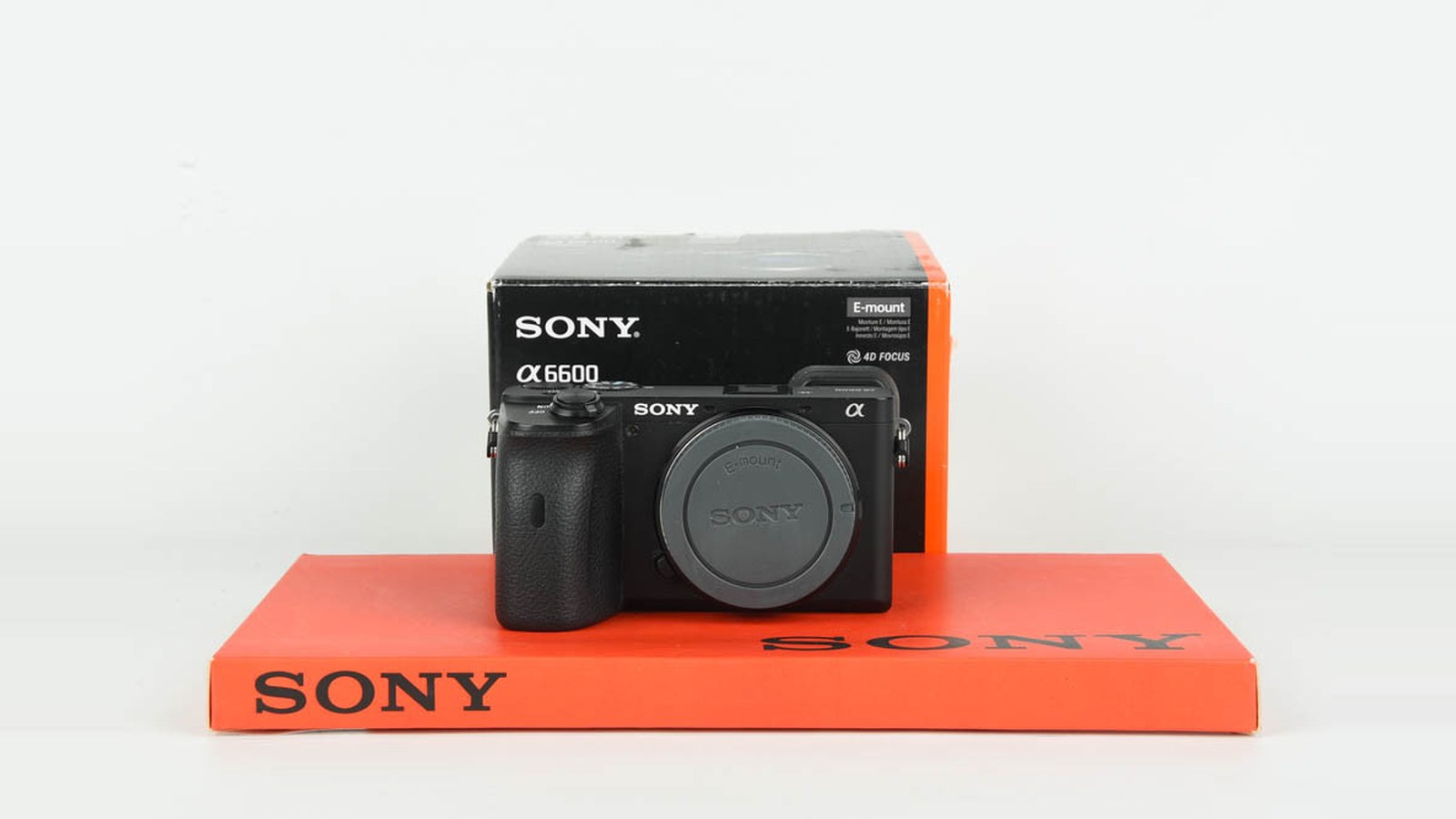
Looking for a used Sony a6600? The used Sony a6600 page shows current availability and prices, with certified shutter count and a 2-year warranty. See also all used Sony cameras.
At the counter, the question comes up almost every week, often with two listings open on the phone: an A6600 at 800 euros and an A6700 at 1,250. The customer asking has usually already decided they want a stabilized Sony APS-C with the large battery. The doubt is whether four years of development, from 2019 to 2023, are worth an extra 450 euros. The honest answer is that it depends on what you shoot, and for a good part of those who walk into the store, the answer is no.
In this article, I compare the two camera bodies based on what truly matters in practice: autofocus, video, ergonomics, battery life, and the real price of the used market. I also explain what to check on a second-hand A6600, as many units have seen significant use seven years after their release. If a more affordable alternative makes more sense than either of these, I say so clearly.
A6600 and A6700: what really changes on paper
Four years separate the two bodies: the A6600 was released in 2019, the A6700 in 2023. Both reached the top of Sony's APS-C lineup with a list price above €1,500 for the camera body only. The A6700 replaced the A6600 as the flagship APS-C model. However, the new generation did not change everything.
| Specification | Sony A6600 | Sony A6700 |
|---|---|---|
| Release year | 2019 | 2023 |
| Sensor | 24 MP CMOS | 26 MP CMOS BSI |
| Processor | BIONZ X | BIONZ XR + AI unit |
| Phase-detection AF points | 425 | 759 |
| Video | 4K30, 8-bit | 4K60, 10-bit 4:2:2 |
| Screen | Tilting | Fully articulating |
| In-body stabilization | 5 stops | 5 stops |
| Viewfinder | 2.36 million dots | 2.36 million dots |
| Battery | NP-FZ100 | NP-FZ100 |
| Card slot | 1 SD UHS-I | 1 SD UHS-II |
| USB port | Micro-USB | USB-C |
| Weight | 503 g | 493 g |
What they have in common
Far more than what the brochures suggest. They share the same 2.36-million-dot viewfinder, the same NP-FZ100 battery, and in-body image stabilization rated at 5 stops according to the CIPA standard. Both feature the E mount, a single SD slot (UHS-I on the A6600, UHS-II on the A6700), and a weather-sealed camera body. The difference between the two is just 10 grams. If you think the A6700 belongs to a different class of camera, you are wrong: in hand, they are almost twins, and lenses transfer from one to the other without compromise.
Where the A6700 is a whole other generation
The real differences lie inside and on the back, not in the megapixel count. Going from 24 to 26 MP means moving from 6,000 to 6,192 pixels on the long side: less than 200 pixels. In print and on a monitor, no one sees that difference. It's a spec sheet item, not something that matters to the photographer. What actually matters are these changes:
- BIONZ XR processor with dedicated AI unit: this is the foundation of the new subject recognition, which we analyze in the autofocus section.
- BSI sensor with 759 phase-detection AF points versus 425.
- 4K60 video at 10-bit 4:2:2 versus the 4K30 at 8-bit of the A6600.
- Articulating screen instead of a flip-out screen, more convenient for vertical shooting and vlogging.
- Front dial, new-generation tabbed menu, and USB-C replacing micro-USB.
If you want the full breakdown of the latest camera, we analyzed it in the article on the used Sony A6700.
Autofocus: Real-time Tracking vs. AI Recognition
Between these two cameras, autofocus is where the €450 difference truly shows. In other aspects, it matters little. The A6600 uses the Real-time Tracking introduced by Sony in 2019: it recognizes human and animal eyes and tracks the subject based on color, distance, and contrast. The A6700 adds a dedicated AI processor. This processor recognizes body pose and distinguishes between people, animals, birds, insects, cars, trains, and airplanes.
In practice, the difference is just one. The A6600 needs to see an eye, or at least a face, to stay locked onto the right subject. The A6700 understands where the subject is even when the eye disappears.
Where the A6600 is more than enough
If the subject is looking roughly towards the lens, the Eye AF on the A6600 is still highly reliable today. We test them side by side at the counter: on a portrait shot with a 50mm f/1.8, the difference in sharpness is not visible. These are the cases where the older camera holds up without any issues:
- Portrait and wedding as a guest: frontal or three-quarter face, immediate lock-on even at full aperture.
- Street and travel: slow or stationary subjects, where the shooter's speed matters more than the processor's.
- Playing children: as long as the face remains visible, tracking follows well even while running.
- Dog and cat in the park: animal Eye AF works in stills for dogs and cats, provided the muzzle is clearly recognizable.
One limitation to be aware of: on the A6600, Animal Eye AF works only in stills, not in video. For those photographing their family, this is not an issue.
Where the A6700 makes the difference
The A6600's issues begin when the subject turns their back, is in profile, or is too small in the frame. There, Real-time Tracking loses eye focus and reverts to tracking a zone of color and contrast. With fast-moving subjects, that zone can end up on the background. The A6700, however, reads the body silhouette and continues to track the person or animal even without seeing the face.
- Flying birds: the A6600 lacks specific bird recognition, making it struggle to track a raptor against a variable sky. The A6700 locks onto and maintains focus on the subject.
- Insects and nature macro: small, irregular subjects that dedicated recognition distinguishes from leaves.
- Team sports: a player who turns or is obscured by an opponent remains tracked thanks to pose recognition.
- Motorsport, trains, and aircraft: vehicle recognition targets the vehicle itself, not the foreground fence.
If at least a third of your shoots fall into these categories, the extra cost of the A6700 is well spent. The A6600 already handles everything else just fine.
Video: where the A6600 shows its age
In the photos, the two bodies are nearly equivalent, but not in video. The A6600 records 8-bit 4K oversampled from 6K, sharp and clean, but it tops out at 30 frames per second. The A6700 reaches 60p without crop and adds 10-bit. In post-production, this is the difference you pay for.
| Sony A6600 | Sony A6700 | |
|---|---|---|
| Max 4K | 30p | 60p without crop, 120p with 1.58x crop |
| Color depth | 8-bit | 10-bit 4:2:2 |
| Full HD slow motion | 120p | 240p |
| Profiles | S-Log3, HLG | S-Log3, HLG, S-Cinetone |
| Audio | Microphone input, headphone output | Microphone input, headphone output |
8-bit and S-Log3: why it's an awkward combination
An 8-bit file has 256 levels per channel, while a 10-bit file has 1,024. S-Log3 compresses the entire dynamic range into a flat signal, so each stop of light receives very few levels. When you restore contrast and saturation in post-production, those levels are stretched, and the gaps between them become visible.
The typical symptoms are twofold. The first is blue skies breaking into concentric bands. The second is skin tones shifting towards green or magenta as soon as you adjust the white balance. With the A6700's 10-bit depth, you have four times the levels per channel and a correction margin that holds up even under heavy processing.
Practical advice for A6600 owners: skip S-Log3 unless you have perfect exposure and plan to do light grading. A well-configured standard profile, or HLG, delivers nearly finished files that require minimal correction and are less prone to breaking. If you're shooting travel clips to edit on your phone, you will never notice the difference. If you're delivering video to a client, with a sky in the frame and color correction required, you will see the difference on the first export.
Screen and vlogging
The A6600 screen tilts up 180 degrees above the camera body. The problem is that the hot shoe is located there: as soon as you mount a microphone, the screen remains covered and you can no longer see yourself. The solutions are a side bracket or a microphone mounted elsewhere, and both are inconvenient.
The A6700 features a side-flip screen that keeps the hot shoe clear. For those filming themselves—whether for vlogs, tutorials, or social media content—this is a practical, day-to-day advantage, not just a spec sheet detail. If you primarily take stills or film other people, it matters little: the A6600's screen is more than sufficient.
Ergonomics, menus, and battery in everyday use
After a month with the camera around your neck, nobody thinks about megapixels. You remember how many times you searched for a dial that wasn't there, and when the battery died halfway through the day. The two Sony models share the same rangefinder-style body. The grip is also virtually identical, deep enough to hold a mid-range zoom without straining your hand. The differences lie elsewhere.
The A6600 lasts longer with the same battery
Both use the NP-FZ100, the same battery as the Sony A7 series full-frame models. Yet the CIPA rating states 810 shutter count for the A6600 and 570 for the A6700: nearly 30% less with the same battery. The reason is the more powerful processor in the A6700, accompanied by the AI unit for subject recognition. It is hardware that works continuously and consumes power accordingly.
The CIPA test, however, is conservative: it assumes frequent power cycles and intensive screen usage, which are less common in practice. In photography, with the camera powered on for extended periods and short bursts, an A6600 often exceeds 1,000 shutter count on a single charge.
- One-week trip: two batteries are enough for the A6600, while three are recommended for the A6700.
- Day hiking: a single battery on the A6600 is almost always sufficient, but carrying a spare is mandatory for the A6700.
- Video: power consumption increases significantly on both models. A second battery is required regardless of the model.
On this point, the older camera wins, and by a significant margin.
Controls and menus
The A6600 features a dial on the top plate and a rear wheel. It lacks a front dial, which is noticeable in manual mode: both shutter speed and aperture end up under the thumb. You get used to it, but adjusting exposure on the fly is slower. The A6700 has three dials, with the front one under the index finger, and a photo/video/S&Q selector that avoids navigating through the menu to change modes.
The menus are the second difference you notice right away:
- A6600: old-style Sony menu, with long horizontal pages to scroll through, no touch navigation.
- A6700: new vertical tabbed menu, grouped by function and navigable by touch. It is more logical, and you find what you need faster.
There is, however, a downside. Those coming from a Sony A6000 (currently available from us for 342 euros, still an excellent body to start with) or a Sony A6100 (550 euros, modern autofocus in a compact body) will find the same menu logic on the A6600. The Fn menu and customizable buttons are configured in the same way, so you can switch to the other camera without having to relearn anything. The A6700 menu, on the other hand, requires one or two weeks of adaptation. The time is well spent, but it is a cost to consider if the camera is needed immediately for a job.
Used prices and the real value of the difference
As of October 2026, a used A6600 in excellent condition costs between 750 and 850 euros, while an A6700 ranges from 1,150 to 1,300 euros. These are indicative price ranges derived from listings and shops, not list prices. Cosmetic condition, shutter count, and warranty can shift the price by 50–100 euros in either direction. Currently, neither model is in our catalog, so as a concrete reference, I am using two Sony models we have in the shop.
| Model | Used Price | Key Strength |
|---|---|---|
| Sony A6100 | 550 EUR (ReflexMania) | Same autofocus as the A6600, no stabilization |
| Sony A6600 | 750-850 EUR | In-body stabilization and NP-FZ100 battery |
| Sony A7 Mark II | 570 EUR (ReflexMania) | Stabilized full-frame, dated autofocus |
| Sony A6700 | 1,150-1,300 EUR | AI-based autofocus, 10-bit video |
The price difference between the A6600 and the A6700 is therefore 400-450 euros. The useful question is what you get if you spend that amount elsewhere.
Thresholds beyond which you should not buy
- A6600 above €900: skip it. At that price, you're €250-300 short for a used A6700, which has four years of additional design and will remain relevant longer. This also applies to "accessory kits": a grip and two compatible batteries do not justify the markup.
- A6700 under €1,050 from a private seller: that is a suspicious price. Ask for the receipt or invoice, verify that the serial number matches, and ask why they are selling it. If a camera at that price has no documents or warranty, it may be stolen, have been through undeclared service, or have been heavily used for video.
What you get for a 450 euro difference
We see it often in-store: those who switch bodies but keep the kit zoom are often disappointed. Those who change lenses see the difference from the very first shutter count. On the used market, for 450 euros you can get:
- A bright APS-C zoom: a used Sigma 18-50mm f/2.8 DC DN can be found for around 400 euros. Compared to a kit zoom, you gain from two-thirds of a stop to two stops of light, depending on the focal length, and significantly better edge performance.
- A portrait prime plus a spare battery: a used Sigma 56mm f/1.4 DC DN costs about 300-350 euros, and an original NP-FZ100 battery costs about 80. You won't get the same bokeh and subject separation from any newer camera body.
- An adequate memory card: for the A6600's 4K30, a 64 GB SD V30 card is sufficient, costing 25-30 euros. The slot is UHS-I, so expensive UHS-II cards are useless here.
For portraits, travel, and family, an A6600 with one of these lenses takes better photos than an A6700 with the kit zoom. If, however, you photograph birds in flight or edit video for clients, spend those 450 euros on the camera body.
What to check on a used A6600
A 2019 A6600 may have lived two very different lives: a few trips a year or three seasons of weddings and vlogs. From the outside, they look identical. Sony does not publish an official shutter lifespan. However, above 100,000 shutter count, the camera enters a wear zone, and the price must reflect that. There is also a catch: the counter is not readable from the menus. Furthermore, a used camera operated almost exclusively for video may have a low shutter count but many hours of work on the sensor and stabilization. Ask the seller how they used it, and if possible, request an original file to read the count.
The most common weak points we see at the counter
The A6600 units that arrive at our workshop tend to exhibit the same recurring issues. All of them can be verified in ten minutes, before you pay:
- Loose screen hinge. Vloggers flip the screen into selfie position thousands of times. If the screen doesn't stay put in intermediate positions or moves with every touch, the hinge is worn out.
- Noisy stabilization. On many stabilized Sony models, a slight rattle with the camera off is normal, as the sensor is free to move. However, with the camera on, you should hear no humming. In the viewfinder, the image must remain steady, without any flickering, even when using a non-stabilized lens.
- Dirty or scratched sensor. DIY cleanings with the wrong swabs leave marks. Take a shot of a white wall at f/16 and check the file at 100%. Then, take a long exposure of a few seconds with the lens cap on to check for hot pixels.
- Peeling grip rubber. This is a cosmetic defect, but it reveals intensive use, often in hot conditions.
- Mount contacts and battery door. Oxidized contacts cause communication errors with the lens. The battery door must close with a firm click.
- Firmware. Check the menu to ensure the latest version published by Sony is installed. If it isn't, the owner probably didn't care much for the camera.
What we do in our workshop
Every A6600 that passes through ReflexMania follows the same inspection procedure before reaching the store. The shutter count is read and certified, ensuring the number on the product sheet is accurate. Stabilization and autofocus are tested with reference lenses: this allows us to distinguish a body issue from a lens issue. We clean the sensor and check the screen in all hinge positions, along with the microphone, headphone, HDMI, and USB ports.
If a camera does not pass the tests, we do not put it up for sale. Those that pass come with a 2-year warranty. On a camera with seven years of life behind it, this is the part that matters most.
When another Sony makes more sense
Out of ten customers who walk in undecided between the A6600 and the A6700, at least two leave with a third camera. Sometimes the doubt stems from a requirement that neither model covers at the right price. There are two scenarios: one more affordable, and one that forces you to reconsider the sensor format.
Sony A6100: the A6600 without stabilization
The Sony A6100 we have today for 550 euros features the same 24 MP sensor and the same Real-time Tracking as the A6600. In photos, using the same lens and the same lighting, the files are indistinguishable. Compared to a used A6600, you save approximately 250 euros. However, the compromises must be listed clearly:
- No IBIS. Stabilized shooting is only possible with OSS lenses, such as the 18-135 or the 70-350. With a Sigma 16mm f/1.4 or a Sigma 30mm f/1.4, there is no stabilization.
- NP-FW50 battery. This is the small battery used in older Sony models and lasts about half as long as the NP-FZ100. You need at least two for a day of travel.
- Handheld video. Without IBIS, clips shot while walking will shake. It works fine on a tripod or a gimbal, but not for vlogging.
It makes sense for those who shoot mostly during the day, use stabilized zoom lenses, and want the autofocus of the A6600 while spending less. We analyzed the pros and cons in our guide on the used Sony A6100.
Sony A7 Mark II and A7 III: full frame at the same price
The Sony A7 Mark II costs 570 euros, just 20 more than the A6100, and features a 24 MP full-frame sensor with 5-axis stabilization. In low-light portrait and landscape photography, the advantage of the larger sensor is evident. We have two units in stock, both professionally serviced in our lab.
However, age takes its toll: the A7 II is from 2014. Its autofocus lacks Real-time Tracking and misses moving subjects far more often than an A6100. It also uses the NP-FW50, which drains even faster on a full-frame body with IBIS. Video is limited to Full HD. It is a camera for slow, deliberate photography, not for running children.
If you already have 1,150–1,300 euros in hand for a used A6700, you should know that for the same price you can get an A7 III. It features full frame, modern AF with eye recognition, dual SD slots, and the same NP-FZ100 battery as the two APS-C models. Before committing to the A6700, it is worth comparing them, keeping in mind two limitations of the A7 III:
- Full-frame lenses are more expensive and heavier: a 70-350mm APS-C lens has no equivalent at the same price point.
- For birding, the 1.5x crop factor and the AI bird recognition of the A6700 remain a concrete advantage.
The verdict: who the A6600 is for, and who the A6700 is for
The A6700 is undoubtedly the best camera. The real question is: what do you photograph most of the time, and where do you prefer to spend €400–450? For those who are undecided, we always ask the same question. We’re not interested in the subject you dream of photographing, but the one you actually frame most often.
The A6600 is the right choice if you are:
- Travel photographer: with a single NP-FZ100 you make it to the evening without hunting for power outlets, which is the most concrete reason to choose the older camera body.
- Portrait photographer: Eye AF on the human eye locks onto and holds the subject in focus without hesitation. On a stationary or slow-moving subject, the pose recognition of the A6700 adds little.
- Parent photographing the family: kids in the park and the dog in the garden stay within the capabilities of Real-time Tracking, even in burst mode.
- Street photographer: human subjects, short distances, no need for 4K60 or 10-bit.
- Those who want to grow their lens kit: the money saved becomes a fast lens, and on the final image it weighs more than the body.
The A6700 is worth the extra cost if you:
- Avifauna: in the field, AI bird recognition makes the most noticeable difference, especially with small subjects against backgrounds full of branches.
- Sport and motorsport: pose recognition tracks the athlete even when they turn their back, while vehicle recognition keeps the car on track.
- Insect macro: it is one of the few cases where an AF that recognizes the insect truly saves you from wasted shutter counts.
- Video for clients: if you deliver paid work and correct it in S-Log3, 10-bit 4:2:2 is a working tool, not a whim.
- Vlog: 4K60 without crop and the laterally tilting screen make the A6700 much more convenient when filming yourself.
If you want full frame and can spend more than 1,100 euros, consider the used Sony A7 III shown above, keeping in mind the 8-bit video and the more expensive and heavier FE lenses. If you already have two or three E-mount lenses for APS-C, sticking with the A6600 or A6700 is almost always the most sensible choice. We discuss this in detail in the article about the used Sony A7 III.
Frequently asked questions
Are the photos from the A6700 better than those from the A6600?
Under normal conditions, the difference is minimal. Going from 24 to 26 MP is not noticeable in print, and the dynamic range is very similar. At high ISO, the A6700 gains something thanks to the back-illuminated sensor, but we are talking about about half a stop. The real difference lies in autofocus and video, not in image quality.
How many shutter counts are too many for a used A6600?
Sony does not declare an official shutter life for the A6600. Based on our laboratory experience, below 30,000 shutter count, the camera is young, and between 30,000 and 80,000, it represents normal use. Above 100,000, the price must drop significantly, as shutter replacement costs several hundred euros.
Does the A6600 overheat in 4K video?
In long 4K recordings, during summer, and with the screen closed on the camera body, it may reach the temperature warning. For clips of just a few minutes, this does not happen. Those recording interviews or events of 30 minutes or more will find the A6700 better suited, as it handles heat more effectively.
Are A6600 lenses compatible with the A6700?
Yes, both have an E mount and use the same APS-C and full-frame lenses. If you ever switch from the A6600 to the A6700, or to a Sony A7, your lens collection remains valid. That is why it is worth investing well in lenses before the camera body.
Does it make sense to buy a new A6600 in 2026?
No. Sony has practically replaced it with the A6700, and the remaining new units are priced too close to those of an A6700. The A6600 only makes sense today as a used camera, between 750 and 850 euros, preferably serviced and with a warranty.
Is the A6600 enough for bird photography?
For perched birds, yes, with a good telephoto lens and single-point or tracking AF. For birds in flight, the A6700's AI subject recognition locks onto and maintains focus much more reliably. Serious bird photographers recoup the 450 euro difference in saved shutter count.
Choosing between the A6600 and the A6700? Let's talk
If you have questions about a purchase or need advice for your specific case, contact us. We offer free advice because we are photographers first, and because a customer who makes a poor purchase decision will not return to photography.
Three ways to get in touch:
- Contact form — response within 24 business hours
- WhatsApp at 342 362 3454 (messages only)
- Phone: 071 291 6347 (Mon-Fri 9-13/15-18, Sat 9-13)
If you want to see what we have in stock right away, explore the used equipment available today: every camera is certified, comes with a 2-year warranty, and ships within 24-48 hours.
Article written by Matteo for the ReflexMania Team. Last updated: October 2026. Prices and availability refer to the time of publication.