
In short
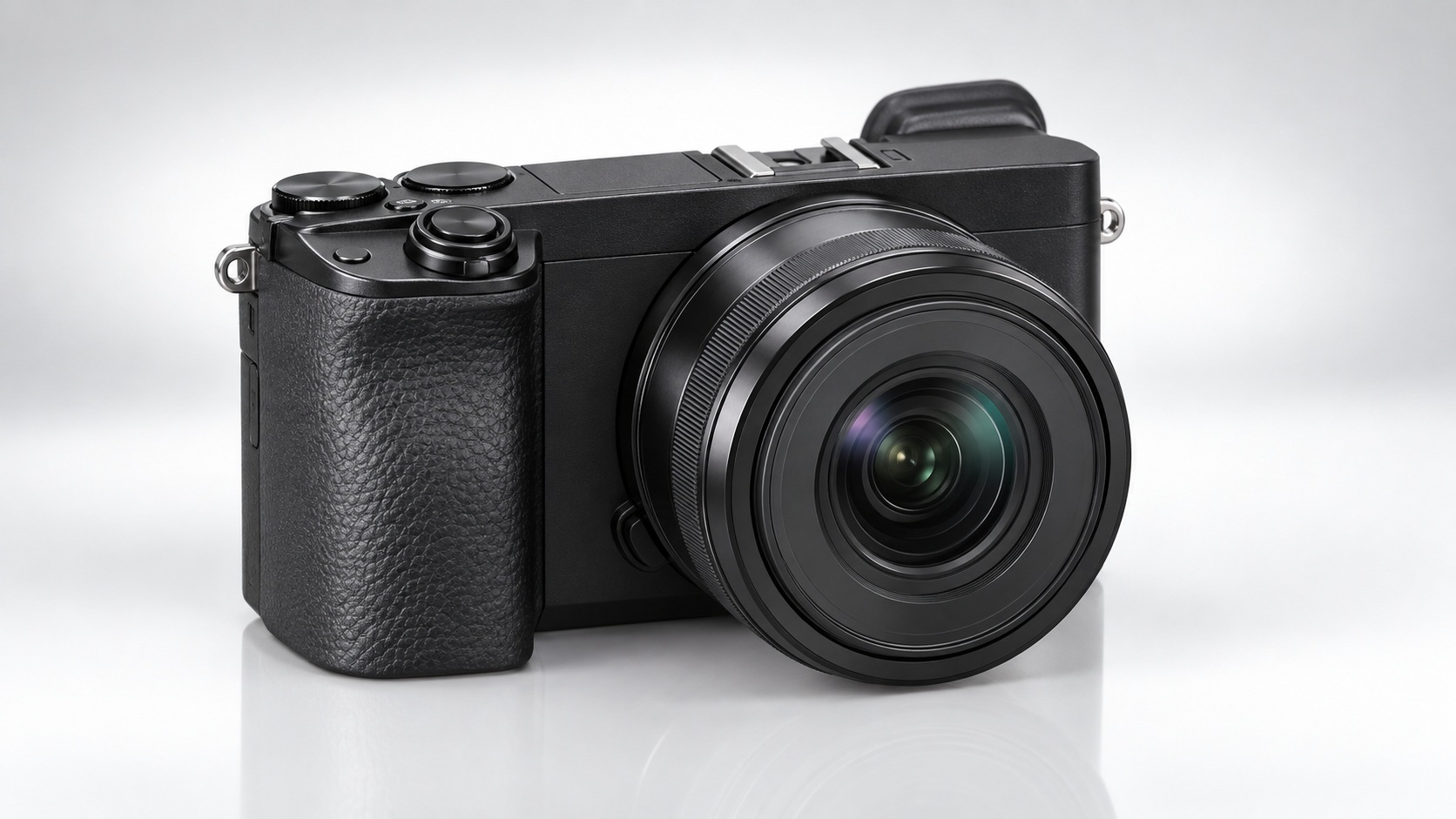
- The A6100 (2019) features the autofocus system of the A6400, with 425 phase-detection points and real-time tracking, housed in the budget-friendly body of the A6000.
- In the used market, the A6100 camera body typically changes hands for between 450 and 520 euros. The A6000, which currently costs between 342 and 360 euros at our store, has an AF system two generations older.
- It lacks in-body image stabilization, S-Log profiles, and a decent viewfinder: 1.44 million dots, the same as the 2014 A6000.
- If you need IBIS, the A6500 at 600 euros is the better choice. If you want full frame for under 600 euros, get the Canon EOS RP at 534 euros or the first-generation Sony A7 at 400.
In the used market, the A6100 often comes from the same source: it is resold by people who bought it as a kit for a trip or for their kids and, a few years later, moved to a full frame, often with the standard 16-50 still attached. It is a camera that is widely available, and precisely for this reason its used price has dropped more than its autofocus deserves.
We won't tell you the A6100 is right for everyone. Let's see what remains competitive in 2026, which limits truly matter in daily use, what to check before paying, and when it makes sense to spend 100 euros less or 100 more. We don't have it in stock today, but we have the alternatives it should be compared against: we make the comparison using real prices.
What the A6100 really is: an A6000 with the brain of the A6400
Sony introduced the A6100 in August 2019, alongside the A6600, to replace the A6000 as the entry-level model in the APS-C range. To build it, Sony took the 24.2-megapixel sensor and autofocus system from the A6400 and placed them in a body almost identical to that of the A6000. The grip, controls, and viewfinder remained the same.
Here, "entry-level" does not mean a worse sensor. The savings come from three other areas: the viewfinder, the materials, and the video. The A6400 features a 2.36-million-dot viewfinder, S-Log and HLG profiles, and magnesium alloy covers, whereas the A6100 has plastic covers. If you only take photos, the files from both cameras are identical.
Essential technical specifications, without the fluff
| Data | Sony A6100 | What it means in practice |
|---|---|---|
| Sensor | APS-C 24.2 MP, BIONZ X processor | Same image quality as the A6400 |
| Autofocus | 425 phase-detection points | The real reason to choose it |
| Burst | 11 fps with continuous AF | Same as the A6400 |
| Video | 4K up to 30p | Full width at 24p and 25p, with crop at 30p |
| Viewfinder | 1.44 million dot OLED | The same as the 2014 A6000 |
| Screen | Touch, tilts up 180° | Frame yourself when the camera is facing you |
| Battery | NP-FW50 | Small: better to have two |
| Storage and charging | One SD UHS-I slot, micro-USB | No backup, old standard cable |
Why it costs less than it's worth today
In the used market, an A6100 body only is typically found between 450 and 520 euros, a low price for a camera with this autofocus. The main reason is the A6400: used, it costs approximately 550-650 euros, and for about 100 euros more, it offers a better viewfinder, S-Log, and a more robust body. Many make this calculation, and the A6100 remains unsold until the price drops. The supply is also increased by bodies resold by those upgrading to the Sony A6700.
Autofocus: the only serious reason to choose it over the A6000
24 MP resolution and 11 fps burst rate are what you get with the Sony A6000, which starts at 342 euros here. When you choose the A6100, you're paying almost all of that extra 100-150 euros for the autofocus. If you don't need it, you're paying for something you won't use.
| Sony A6000 (2014) | Sony A6100 (2019) | |
|---|---|---|
| Phase detection points | 179 | 425 |
| Contrast detection points | 25 | 425 |
| Eye AF | On custom button, people only | Real-time, people and animals (animals in stills only) |
| Subject tracking | Lock-on AF | Real-time tracking, touch-initiated |
Eye AF and tracking in practice
On the A6000, Eye AF must be assigned to a button and held down. If the subject turns, it loses focus, and it takes a moment to reacquire it. On the A6100 in AF-C, the eye is detected automatically, without pressing anything. Tracking starts by touching the subject on the screen and remains locked even when it moves out of the center of the frame.
Three situations where the difference is immediately visible:
- Children running towards you. In AF-C burst mode, the A6100's real-time tracking follows the subject as they approach. The A6000's Lock-on AF more easily loses focus when the distance changes rapidly.
- Dog in the park. Animal Eye AF reliably locks onto dogs and cats with visible muzzles. With long-haired, dark-colored dogs, it may fail to detect the eye and switch to face detection.
- Portrait at f/1.8. At half-body framing, the depth of field is only a few centimeters. Here, the A6100's real-time Eye AF makes the difference: focus lands on the eye without needing to chase it with a button.
However, be aware: "real-time tracking" does not mean you can lock onto a bird in flight with the 16-50 kit lens: it will miss that subject too.
Where the A6100's AF shows its age
Sony states an AF sensitivity down to EV -2, measured with an f/2 lens. In practice: in a dimly lit restaurant or a church in the evening, the AF starts hunting back and forth. With an f/5.6 zoom at maximum focal length, the limit is reached even sooner.
It lacks bird, insect, and vehicle recognition, which Sony included on the A6700. Video tracking is also less reliable than in stills: if the subject moves quickly across the frame or someone walks in front of it, focus is more likely to lose lock.
If the AF seems slow, however, the body is often not to blame. The fault almost always lies with the 16-50 kit lens, which has a slow autofocus motor and lets little light reach the sensor. Mount a fast prime lens and the same A6100 feels like a different camera.
The limitations you feel after a month of use
In the first week, the A6100 seems to have no flaws, as the autofocus puts everything else in the background. After a month of real-world use, four compromises emerge that occupy just one line on the spec sheet. None is critical for everyone, but each carries significant weight for certain users.
1.44-million-dot viewfinder
The electronic viewfinder is the same as the 2014 A6000: 1.44 million dots, compared to the 2.36 million dots of the A6400 and A6500. It is sufficient for framing and checking exposure. The issue arises when you need to judge focus by eye: the image is grainy, and focus peaking becomes the only reliable reference. Anyone mounting manual or vintage lenses with an adapter will notice this on the first wide-open portrait.
No in-body stabilization
With an OSS-stabilized lens, the limit is barely noticeable. With non-stabilized optics, such as the Sigma 30mm f/1.4 or the Sigma 18-50 f/2.8, below 1/60 s micro-shake sets in quickly. In a church or a venue in the evening, you are forced to raise the ISOs instead of lengthening the shutter speed. In handheld video, every step is visible, and without a gimbal, moving shots are difficult to use.
NP-FW50 Battery and Micro-USB Charging
The NP-FW50 is rated for approximately 400 shutter count according to the CIPA standard. With the viewfinder, continuous AF, and some bursts, you will get fewer in reality. A used battery from a few years ago has almost always lost part of its capacity, so those numbers drop even further. For a full day out, a second battery is mandatory.
Charging the camera body is handled via a micro-USB port. In 2026, this means carrying a dedicated cable, different from your phone's. The port is also a fragile point: repeatedly inserting a cable at an angle will eventually loosen the connector.
Plastic body and a single slot
Sony does not declare any weather sealing for the A6100, and it features a single slot for SD UHS-I cards. This makes no difference on vacation. At a wedding or in paid work, it is a concrete risk: if the card gets corrupted, you lose the job, because there is no copy on a second card. Even light rain during an outdoor event requires rain cover.
Video: What it does and what it doesn't
The A6100 records very sharp 4K, provided you stick to 25p. At 25 frames per second, it uses the full width of the sensor and upsamples a larger image, resulting in excellent detail. At 30p, however, it crops the frame by approximately 1.23x, and with the kit 16-50mm lens, you immediately lose the wide-angle perspective.
| What it does | What it doesn't do |
|---|---|
| 4K 25p full width, cropped | No S-Log or HLG, only creative styles |
| 4K 30p with approx. 1.23x crop | No 10-bit: records in 8-bit |
| Full HD at 120 fps for slow motion | No headphone jack for audio monitoring |
| 3.5 mm microphone input | Rolling shutter is visible in fast pans |
The rolling shutter is the limitation you notice first. If you pan quickly across a facade, the vertical lines tilt like jelly. If you move the camera slowly, or keep it steady, the issue is not visible.
Is it suitable for vlogging and social media content?
For talking in front of the camera and shooting standard creative-style B-roll, yes. Sony colors are good straight out of the camera, and Eye AF keeps faces in focus even if you move. However, if you want to do color grading, the 8-bit footage without a log profile degrades as soon as you push the curves: banding in the skies and skin tones that shift.
Then there's the screen. It flips up 180°, so you can see yourself while recording, but it covers the hot shoe. If you mount a microphone, the screen hits it. The solution is a side mount, meaning another 20-30 euros and extra bulk.
If video is the main reason for your purchase, check out the Canon EOS R50 V, which currently costs 550 euros at our store. It was designed for this purpose. It features a side tripod mount for vertical format, 10-bit C-Log 3, and a headphone jack. The screen flips out to the side without blocking the microphone. Its limitation is the lack of a viewfinder: in bright sunlight, you compose using the screen, which is a significant drawback for those who primarily take photos.
Overheating
The body is small and made of plastic, and the heat from the sensor and processor has nowhere to go: in continuous 4K, with hot weather and direct sunlight, recording may stop due to overheating. For long shoots, it is advisable to split the footage into shorter clips or switch to Full HD, and to keep a spare battery within reach.
What to check before buying a used A6100
On a used A6100, the sensor and autofocus rarely cause issues. The weak points are mainly the mechanical parts: shutter, screen hinge, ports, and dials. Here is what to check.
Shutter count: how to read it and why it matters
Sony does not display the shutter count in the menu, so often even the seller does not know it. The data can be read from the metadata of an original file, using an EXIF tool or a dedicated online service. Ask for a JPEG taken at the time of sale, never a photo that has already been shared via social media or messaging apps. Sony does not state the official shutter life, so the thresholds below are only indicative.
| Shutter count | How to read it |
|---|---|
| Under 20,000 | Excellent, light hobby use |
| 20,000–50,000 | Normal for a body released in 2019 |
| 50,000–80,000 | Acceptable, but affects the price |
| Over 80,000 | Expect to need a shutter replacement |
Screen flat cable, ports and wheels
Vloggers open and close the screen thousands of times, causing the flat cable running through the hinge to wear out. Initially, flickering appears, and then the screen goes black only in certain positions.
- Flip the flat screen from closed to 180° while viewing the image: it must remain stable at every angle.
- Connect a cable to the micro-USB and wiggle it slightly: if the charge interrupts, the port is loose.
- Turn the rear dial to shutter speeds or ISO: it must not skip values or revert.
- Check that the battery door closes without play and that the latch is intact.
Sensor, mount and signs of use
Shoot a white sky or wall at f/16 and zoom in on the file at 100%. Dark spots are dust or residue, and if they remain after blowing, they need to be cleaned with a wet method. Also look for fine scratches on the glass in front of the sensor, which is almost always a sign of a poorly executed DIY cleaning. Then mount a lens and try to move it without pressing the release: there should be no play on the E mount. If the release and bayonet are full of marks, the camera body has seen a lot of use with microphones, gimbals, and frequent lens changes.
Private or store
The cameras in our catalog arrive already serviced in our lab and come with a 2-year warranty, which on a 2019 camera body matters more than any description. If you buy from a private seller, using the checklist above, you can rule out most cameras to avoid in just a few minutes of testing.
2026 Prices and Alternatives: Where Your 400-600 Euros Actually Go
Today, the A6100 is not in stock, and on marketplaces, the camera body alone typically changes hands for between 450 and 520 euros. The comparison should therefore be made with what the same amount buys elsewhere. The prices below are from our September 2026 catalog and refer to cameras already serviced in our workshop.
Spend Less: Sony A6000 and Canon EOS R100
The Sony A6000 costs between 342 and 360 euros at our store. Under the same lighting conditions, the files are practically identical to those of the A6100. The autofocus, video, and screen differ: there is no 4K and the screen is not touch-enabled. If you photograph landscapes, architecture, or stationary subjects while traveling, you won't use the new autofocus. In that case, the 100-150 euros saved are better spent on a lens.
The Canon EOS R100 ranges from 320 to 400 euros. The Dual Pixel autofocus performs well. However, 4K is capped at 25p with a 1.55x crop, and the screen is fixed and non-touch. The real limitation is the system: there are very few RF-S lenses for APS-C. We discussed this in detail in Canon EOS R100 used: is it worth it?
Spending a little more: Sony A6500
The Sony A6500 at 600 euros features in-body image stabilization, which is the biggest differentiator in this price range. In real-world use, the gain is less than the 5 stops claimed by Sony, but even two stops make a significant difference: with a 30mm lens, it means shooting at 1/15 instead of 1/60. It also has a 2.36-million-dot viewfinder and S-Log profiles. However, it was released in 2016, three years earlier, and the battery life is even shorter. If you use fast prime lenses without stabilization, this is the upgrade that truly matters.
The step up to full frame: Sony A7, A7 II and Canon EOS RP
- Sony A7, 400 euros: a full-frame sensor for less than an A6100. If you already own Sony FE lenses, this is the most sensible choice in the group. If you are starting from scratch, the slow autofocus and lack of stabilization weigh heavily.
- Sony A7 Mark II, 570 euros: adds sensor stabilization. With moving subjects, the autofocus remains a step behind the A6100.
- Canon EOS RP, between 534 and 600 euros: among these three, it has the autofocus closest to the A6100, featuring Dual Pixel with Eye AF for people, but without Eye AF for animals. The price to pay is switching systems and buying new lenses.
Full frame delivers cleaner files at high ISO and more background blur, given the same aperture and framing. This does not automatically make photos better. If the subject moves and the autofocus loses it, an out-of-focus full frame file is just as useless. And a full frame lens almost always costs more than its APS-C equivalent.
The real cost of the A6100: the lenses
With just the 16-50 kit lens, a used A6100 only utilizes half of what its autofocus is capable of. The camera body typically ranges from 450 to 520 euros, but the budget must be planned together with the lens: the optics determine whether the camera delivers or disappoints. Below you will find the most sensible combinations for three different uses. Prices are indicative for the used market.
| Use | Lens | Indicative used price | Key strength |
|---|---|---|---|
| Getting started | Sony E 16-50mm f/3.5-5.6 OSS | 80-120 euro | Lightweight, stabilized, travel-ready |
| Portraits and low light | Sony E 35mm f/1.8 OSS | 250-300 euro | Stabilized, useful on a body without IBIS |
| Portraits and low light | Sigma 30mm f/1.4 DC DN Contemporary | 200-260 euro | Brighter and sharper, but without stabilization |
| All-rounder | Sigma 18-50mm f/2.8 DC DN Contemporary | 400-480 euro | Constant f/2.8 in a compact body |
Between the Sony 35mm and the Sigma 30mm, the choice depends on what you shoot. If you shoot indoors handheld at slow shutter speeds, the Sony's OSS works better for you. If you photograph moving people, the Sigma's f/1.4 gives you more advantage, as it allows you to use faster shutter speeds.
Don't ditch the 16-50: it weighs 116 grams and fits in your pocket while traveling. Keep it as a lightweight zoom, not as your only lens.
If you plan to switch to full frame within a couple of years, buy FE lenses right away: they mount on the A6100 today and on an A7 tomorrow, while APS-C lenses work in crop mode on a full frame body. You can find the pros and cons of Sony's most affordable full frame mirrorless in the article about the used Sony A7 first generation.
The verdict: who it's right for and who it's not
The A6100 is the right camera for those who photograph moving subjects and do not want to study the autofocus manual. Everything else comes after. If your way of shooting does not depend on AF, compared to an A6000 you are spending over 100 euros more without gaining anything.
Sì, se...
- Photograph your kids, even at their games. Futsal, indoor volleyball, dance recitals: the tracking keeps the subject locked on while you focus solely on composition. The combination we recommend is the body paired with the Sigma 18-50 f/2.8. In a dimly lit gym, you gain two stops on the telephoto end compared to the 16-50, keeping shutter speeds fast enough to freeze motion.
- You travel with just a backpack. The body and the 16-50 weigh just over half a kilogram and fit easily into a city bag. For well-lit travel photography, the kit lens is sufficient, and the flip-out screen helps with shots taken at ground level.
- You have a dog or a cat. Animal Eye AF works in stills, and the A6000 doesn't have it: this is the most concrete reason to prefer the A6100. Pair it with the Sony 35mm f/1.8 OSS or the Sigma 30mm f/1.4, because indoor lighting is almost always lacking.
- You are coming from a smartphone. You want a camera that doesn't miss focus even if you leave everything to it. Start with the 16-50 and add a fast prime only when you realize what you are missing.
No, better something else if...
| Profile | Where the A6100 limits you | Alternative |
|---|---|---|
| Video with color grading | No S-Log, only 8 bit: the file breaks down quickly in color correction | Canon EOS R50 V at 550 euros: Log profile and 10 bit. It has no viewfinder, so buy it only if you really shoot video. |
| Low light handheld | Without in-body stabilization, below 1/60 with a fast prime lens, motion blur becomes a problem | Sony a6500 at 600 euros: IBIS and same E mount, so lenses remain compatible. |
| Paid work | Polycarbonate body and modest viewfinder: it is not a tool you can rely on for eight hours at an event | Canon EOS RP at 534 euros: full frame, more headroom at high ISOs, adapter for used professional EF lenses. It also has only one SD slot: for a wedding, it remains the minimum. |
| Manual focus with vintage lenses | With 1.44 million dots, the viewfinder is not enough to judge focus on a 50mm at f/1.4 | Sony A7 first series at 400 euros: 2.36 million dot OLED viewfinder and no crop factor on old focal lengths. |
Frequently Asked Questions
How many shutter count can the shutter of a Sony A6100 handle?
Sony does not declare an official lifespan for the A6100. As a reference, beyond 80,000 shutter count, you should budget for shutter replacement, whereas under 20,000 indicates the camera has been lightly used.
Is a used A6100 better than an A6000 for 100 euros less?
It depends on what you photograph. For landscapes, travel, and stationary subjects, the image quality is the same and the A6000 is sufficient. If you photograph children, animals, or sports, the A6100's real-time Eye AF is worth the difference on its own.
Is the A6100 suitable for YouTube video production?
For talking videos and social media content, yes: 4K at 25p without crop, microphone input, and a front-tilting screen. It lacks S-Log, 10-bit recording, and a headphone jack, so anyone looking to do color grading should look elsewhere.
Do lenses bought for the A6100 work on a Sony full frame?
FE lenses work fully on A7 bodies. APS-C lenses, such as the 16-50 or the Sigma 18-50, mount on full-frame bodies but operate in crop mode at approximately 10 MP. If you plan to switch to full frame, it is better to invest in FE lenses.
Looking for a used, serviced Sony mirrorless?
If you have questions about a purchase or need advice for your specific case, contact us. We offer free advice because we are photographers first, and because a customer who makes a poor purchase won't return to photography.
Three ways to get in touch:
- Contact form — response within 24 business hours
- WhatsApp at 342 362 3454 (messages only)
- Phone: 071 291 6347 (Mon-Fri 9-13/15-18, Sat 9-13)
And if you want to see what we have in stock right away, explore the used gear available today: every camera is certified, comes with a 2-year warranty, and ships within 24-48 hours.
Article written by Matteo for the ReflexMania Team. Last updated: September 2026. Prices and availability as of the date of publication.