
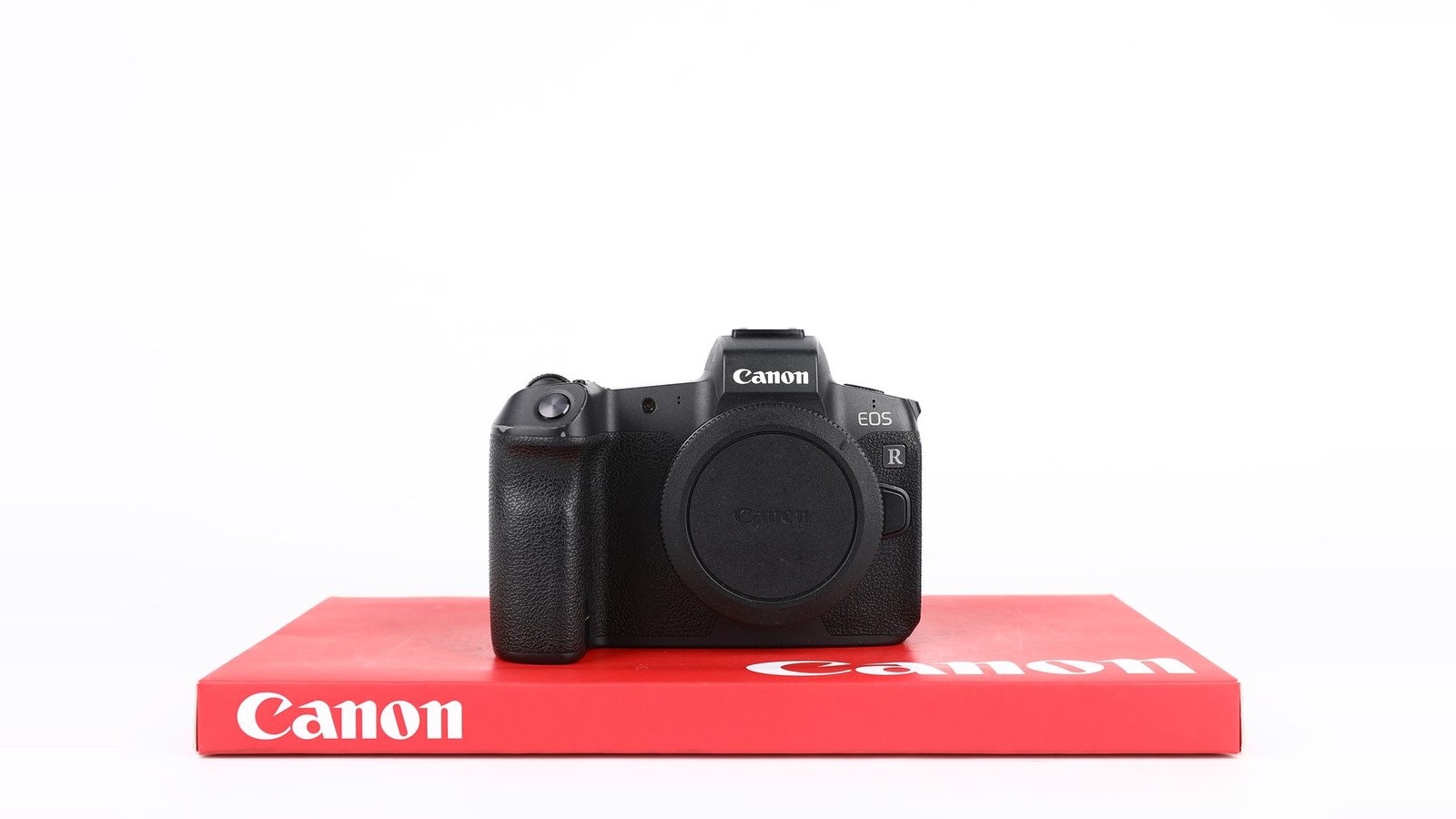
In short
- The EOS R features a 30.3 MP full-frame sensor derived from the 5D Mark IV: in 2026, the used market price ranges between 700 and 900 euros, compared to approximately 2,600 euros at its 2018 launch.
- The Dual Pixel autofocus with 5,655 selectable positions and Eye AF, introduced with firmware 1.2, performs well for portrait and wedding photography. However, sports tracking is limited to 5 fps.
- The main limitations are three: no in-body image stabilization, a single SD card slot, and 4K video with a 1.74x crop. For video-focused users, the answer is almost always a different camera.
- The used Canon EOS RP costs 520-600 euros and offers the same RF mount: the EOS R is worth the extra 200-300 euros only if you need a better viewfinder, more complete weather sealing, and 30 MP.
Looking for a used Canon EOS R? The used Canon EOS R page shows current availability and prices, with certified shutter count and a 2-year warranty. See also all used Canon cameras.
When the EOS R hit the counter in autumn 2018, Canon customers viewed it with suspicion: no mirror, a new mount, and a touch bar nobody had asked for. Eight years later, the situation is reversed. Long-time users refuse to let it go, and those coming from the used market specifically seek it out as an affordable entry point into the RF system, often accompanied by a bag of EF lenses to reuse.
In this article, we look at what still holds up for the first full-frame Canon mirrorless in 2026 and where the age of the camera starts to show. We discuss real prices on the used market, what we check in the lab before listing an EOS R, and when it makes more sense to consider an RP or an R6. We also explain when, at this budget, it is better to look elsewhere.
What was the EOS R in 2018 and what remains today
In September 2018, Canon introduced the EOS R at approximately 2,600 euros for the camera body only. It was their first full-frame mirrorless camera and arrived late, after years in which Sony had dominated the market almost entirely. The mount mattered more than the camera itself: the new RF mount, with a 20 mm flange distance and 12 electrical contacts, is the same one Canon still uses today across its entire mirrorless lineup. In 2026, a used EOS R costs between 700 and 900 euros. It is not a collector's item. It is the most affordable way to enter the RF system with a 30 MP full-frame sensor.
A mirrorless 5D Mark IV, on paper
The 30.3 MP sensor is derived from the one in the 5D Mark IV, the DSLR that in 2018 was in the hands of many wedding photographers. The battery is also the same LP-E6N. Those coming from a 5D Mark II, III or IV, or from a 6D and 6D Mark II, can use the batteries they already have in their bag. The exception is the first series 5D from 2005, which still uses the old BP-511A: we talked about that pioneer of affordable Canon full frame in the article on the used Canon 5D first series.
In everyday use, the differences compared to a DSLR are as follows:
- Weight: 660 g with battery and card. You will feel it after a full day with the camera around your neck.
- 3.69 million dot OLED electronic viewfinder: see the exposure before you take the shutter count, which helps a lot in backlight and mixed lighting conditions.
- Articulating screen: rotates to the side and flips forward. Essential for low-angle shots, overhead shots, and self-recording video.
The choices Canon later abandoned
The EOS R also served as a testing ground, and some ideas did not survive. The most discussed is the M-Fn touch bar, a touch-sensitive strip next to the viewfinder to which you can assign ISO, white balance, or other functions. On paper, it was a good idea. In practice, it gets triggered accidentally by the thumb, and it does not respond when wearing gloves. Many customers tell us they disabled it after a week. Canon removed it on all subsequent R models.
The second point is the lack of a joystick. To move the AF point, you use touch-drag on the screen while looking through the viewfinder. It works, but you have to find the right active zone, and those with a "left-handed" nose end up moving the point with their face. From the EOS R5 and R6 onwards, the joystick has returned: an implicit admission that touch alone was not enough.
The Fv mode is the concept that has stood the test of time. It is an exposure mode where you choose the shutter speed, aperture, and ISO, while the camera body manages whatever you leave on automatic. Those who actually use it find it convenient, and it has remained on subsequent models as well. Compared to the newer R series, therefore, the ergonomics of the EOS R are different but not necessarily worse. Before buying it, it is advisable to hold it in your hands for five minutes.
Sensor and image quality: 30 MP are enough in 2026
A file from the EOS R measures 6,720 × 4,480 pixels, which is more than enough for everyday work. A 50x70 print comes out at approximately 240 dpi without interpolation, which is the quality a professional lab considers full. However, the 30 MP are not there to inflate print sizes. They are there for cropping: those who shoot with an 85 mm and then tighten the framing in post end up with files that are still usable, whereas with 20 MP you start working at the limit.
| Model | Resolution | dpi on 70 cm print | MP after 1.6x crop |
|---|---|---|---|
| Canon EOS R | 30.3 MP | 244 | 11.8 |
| Canon EOS RP | 26.2 MP | 226 | 10.1 |
| Sony A7 II | 24.3 MP | 218 | 9.4 |
| Canon EOS R6 | 20.1 MP | 199 | 7.8 |
The difference between 30 and 26 MP is barely noticeable in print. It becomes more apparent when cropping heavily: after cropping, the 11.8 MP of the EOS R still supports an A3 print at approximately 250 dpi, whereas the 7.8 MP of the R6 tops out around 200. If cropping is part of your workflow, this column matters more than any other.
Dynamic range and shadow recovery
The sensor comes from the 5D Mark IV, the first-generation Canon with on-chip analog-to-digital conversion. Compared to the older 5D Mark III and 6D, banding in the shadows has almost entirely disappeared. In practice, a CR3 RAW at ISO 100 supports 3 stops of shadow recovery without visible artifacts. Beyond 4 stops, color noise and a slight magenta cast appear in the darkest areas.
The Sony A7 III, released in the same year, 2018, offers approximately one additional stop of headroom at base ISO. For a landscape photographer shooting backlit scenes without bracketing, this is a tangible difference. For those shooting weddings and portraits, it matters much less: you expose for the skin, leave deep shadows closed, and rarely recover more than 2 stops. In those genres, Canon's color rendering on skin tones outweighs that single stop.
High ISO: where it stops
The native range goes up to 40,000 ISO, but that's just a spec sheet number. These are the thresholds we use when we test the files:
- Up to 3,200 ISO: clean files, large prints without worries.
- 6,400 ISO: fine grain and intact detail, 30x40 prints without issues after light noise reduction.
- 12,800 ISO: excellent for web and albums, less suitable for prints larger than A4. Saturation drops noticeably.
- 25,600 ISO and above: for emergencies only, when the shot matters more than quality.
For a dark church or a candlelit reception, 6,400 ISO is the comfortable working threshold and 12,800 the reserve. These are the same values as the 5D Mark IV, which cost over 3,500 euros in 2016.
Dual Pixel Autofocus: where it holds up and where it shows its age
In a portrait at f/1.8, the EOS R finds the right eye with the confidence of a recent mirrorless. The limit is not precision but speed: it struggles to track a subject that changes direction suddenly. The Dual Pixel offers 5,655 selectable positions and goes down to -6 EV, but that value only applies when mounted with an f/1.2 lens.
Portrait, events, wedding: on sale
With stationary or walking subjects, the camera does what it needs to. With the 2019 firmware 1.2, Eye AF works in Servo mode: it locks onto the eye at half-body and full-body distances, and maintains focus even with a three-quarter face. In low-light conditions like a church or a banquet hall, it confirms focus where many DSLRs of that era started hunting back and forth. Before buying, check the firmware version: an EOS R that has never been updated loses this function entirely.
Performance varies significantly depending on the lens motor:
- Native RF with Nano USM or STM motor: fast and silent autofocus, the best combination for ceremonies.
- Adapted EF with ring USM motor: as responsive as on DSLRs and often more precise, because focus is read on the sensor. No more AF microadjustment or front focus on fast focal lengths.
- Older EF with micromotor, like the old EF 50mm f/1.8 II: they work but are slow and noisy, to be used only in One Shot.
Sport and animals: the real boundary
For fast action, the EOS R is the wrong camera. The stated burst rate of 8 fps exists, but only with focus locked on the first shot.
| Mode | Burst | Real-world use |
|---|---|---|
| One Shot, focus locked | 8 fps | Subject staying at the same distance |
| Servo AF | 5 fps | Subjects with predictable movement |
| Tracking Priority | 3 fps | Maximum priority on tracking, very few shutter count |
In practice: a child running towards you at 3 meters per second moves 60 centimeters between one shutter count and the next at 5 fps. At the park, with zone AF and a bit of patience, you get good photos and discard a few. When the subject crosses paths with other people or changes shooting trajectory, the tracking loses it more often than you would like. Animal recognition is also missing, having arrived in the Canon lineup only with the next generation.
If you photograph youth soccer, birds in flight, or running dogs, spending on an EOS R means buying frustration. Here, an R6 plays in a different league, and we discuss this in the comparison further down.
Limitations to know before buying
The EOS R has three flaws that no firmware has fixed. They are not technical spec details: they determine whether this camera is right for you. Better to know them now than discover them on your first job.
No in-body stabilization
The EOS R does not have IBIS: stabilization comes only from the lens. The old rule of thumb is to shoot at least at 1/focal length, so 1/50 s with a 50 mm. On a 30 MP sensor, however, micromotion becomes visible sooner. If you want files that are sharp at 100%, it is advisable to double the speed: 1/100 s with the 50 mm, 1/160 s with an 85 mm.
With an RF 24-105 IS, things change. Canon claims 5 stops of stabilization. In practice, handheld, we count 3-4 reliable stops: at 24 mm, you can drop to 1/8 s with a good percentage of sharp shots. With unstabilized adapted EF primes, however, you're on your own. Those shooting at night with an EF 85 f/1.8 will have to raise the ISOs instead of lengthening the shutter speeds.
4K video with 1.74x crop
In 4K 30p, the EOS R applies a 1.74x crop to the frame. Your 24 mm lens becomes approximately a 42 mm equivalent, and a 16 mm becomes approximately 28 mm. Canon Log is available, but internal recording is limited to 8-bit: 10-bit 4:2:2 output is only available via HDMI to an external recorder. However, the fundamental issue is upstream: the wide-angle perspective no longer exists in 4K.
If you vlog handheld or shoot in tight interiors, you're left out. In Full HD, the crop disappears, but in 2026, few buy a full frame to shoot in 1080p. If video accounts for more than 30% of your work, look elsewhere.
Single SD slot and battery life
A single SD slot means no real-time backup. If the card corrupts mid-wedding, you lose the shutter count. No post-event recovery can retrieve them. Event photographers can mitigate this risk with a few habits:
- use branded UHS-II cards, never counterfeit or bought at suspicious prices;
- change cards at each phase of the day: preparations, ceremony, reception;
- download to a laptop or portable SSD during breaks, without waiting until the evening.
Regarding battery life, the CIPA standard indicates approximately 350-370 shutter count with the LP-E6N. In real-world mixed use, with the viewfinder and minimal screen review, we see between 500 and 700. That is not enough for a full day. A second original LP-E6N should be included in your budget from the start, but if you are coming from a Canon DSLR with an LP-E6 (60D, 70D, 80D, 90D, 7D and 6D series, 5D from Mark II onwards), you likely already have one.
When an EOS R passes through our workshop, the battery is checked just like the rest of the camera body. A worn-out LP-E6N is immediately noticeable and can make the camera seem defective.
Lenses: Native RF and the real advantage of adapted EF
The most concrete reason to buy an EOS R in 2026 is everything you already have in your bag. With the EF-EOS R adapter, EF lenses work without losing any autofocus performance, and often with greater precision than on a DSLR. If you have a 24-105 f/4L or a 70-200 f/2.8L, you enter the full-frame mirrorless world by spending only for the camera body.
Those starting from scratch will find two affordable RF lenses that make sense: the RF 50mm f/1.8 STM, compact and sharp even at f/2.8, and the RF 24-105mm f/4-7.1 IS STM, lightweight and stabilized but not very bright on the telephoto end. The issue lies with the RF L series. A used RF 24-70mm f/2.8L IS USM costs more than an EOS R on its own. For those spending 800 euros on the camera body, rarely does it make sense to spend twice that on a lens.
The EF-EOS R adapter in practice
Canon has produced three versions. The glass is not included in any of the three: they are extension tubes with electrical contacts, and the optical quality remains the same.
- Mount Adapter EF-EOS R: the base version, weather-sealed. For 80% of photographers, this is the right choice.
- Control Ring Mount Adapter: adds the RF control ring, assignable to ISO or exposure compensation. It is only useful if you use EF lenses extensively and want an additional control near your left hand.
- Drop-In Filter Mount Adapter: features a slot for a circular polarizer or variable ND filter. It is essential for landscape photographers using wide-angle lenses with protruding front elements, such as the EF 11-24mm f/4L, which do not accept screw-in filters.
EF-S lenses mount, but the camera automatically activates the 1.6x crop and the file drops to approximately 11 MP. It works as a temporary stopgap. If your lens collection is primarily EF-S, a full frame is not the right step.
From Canon DSLR to EOS R: the sensible path
If you are upgrading from a 6D or a 5D Mark III, you gain significantly. The resolution increases from 20-22 MP to 30 MP, and the AF points are no longer clustered in the center of the viewfinder. Eye AF works with adapted EF lenses, and the electronic viewfinder displays the exposure before the shutter count. The LP-E6N batteries are the same and can be kept.
You lose something. The joystick for moving the AF point is missing, replaced by touch-and-drag on the screen, which not everyone likes. Battery life per charge drops significantly. Those coming from the 5D Mark III also give up the dual slot. If you are still undecided about switching systems, read our comparison on used full-frame DSLR or mirrorless. Start with what you photograph, not the technical specifications.
EOS R vs. Used Alternatives: RP, R6, and Sony A7
In the €400 to €1,300 range, the EOS R has five direct used competitors. Two remain within the Canon RF system, three are outside it. The choice depends on what you photograph and the lenses you already own, not on the megapixel count.
| Model | Used Price | Sensor | In-Sensor Stabilization | Key Strength |
|---|---|---|---|---|
| Canon EOS R | €700-900 | 30.3 MP | No | Viewfinder, weather sealing, detail |
| Canon EOS RP | €520-600 | 26.2 MP | No | 485 g, entry-level RF price |
| Canon EOS R6 | €1,100-1,300 | 20.1 MP | Yes | AF, burst rate, video |
| Sony A7 II | €570 | 24.3 MP | Yes | Low-cost stabilization |
| Sony A7R | €700 | 36.4 MP | No | Resolution |
| Sony A7 | €400 | 24.3 MP | No | Cheapest full-frame |
EOS R or EOS RP: Is the 200-300 euro difference justified?
In store today we have 9 units of the Canon EOS RP ranging from 520 to 600 euros. Same RF mount, same lenses, and a 485 g body that weighs less on your neck while traveling. As a first full-frame camera, or for those who walk all day, the RP is more than enough.
The EOS R is worth the difference if you need these features:
- Viewfinder: sharper, noticeable during manual focus and when using adapted lenses.
- Top display: read parameters without turning on the viewfinder or screen.
- 30 MP: more room to crop.
- Weather sealing: more comprehensive, essential for those working outdoors in any weather.
- Grip: deeper and sturdier with heavy zooms or adapted EF lenses.
EOS R or R6: when to spend more
The R6 costs 1,100–1,300 euros on the market, so about 400 euros more than the EOS R. It features in-body image stabilization, an autofocus system from a different generation, and a completely different video performance. For sports, video, and low-light shooting without a tripod, the difference is worth every cent.
For portrait and landscape, however, no. There, the EOS R gives you 10 MP more, and the money saved can be spent on a lens.
And if the Canon system is not a constraint
If you don't have Canon lenses, Sony also offers three full-frame alternatives to consider:
- Sony A7 Mark II at 570 euros: it features in-body image stabilization, which neither of the two Canon models has. In return, it has a slower autofocus and a shorter battery life.
- Sony A7R at 700 euros: 36 MP without a low-pass filter, excellent for landscape photography. The autofocus is slow and the shutter is noisy: it struggles with moving portraits.
- Sony A7 at 400 euros: the most affordable way to get a full-frame camera. It is also the most basic model, and you can find the details in the article on the used first-generation Sony A7.
A practical tip: if you already own EF lenses, stick with Canon. Switching systems to save 100 euros on the body means having to buy all your lenses again.
What we check at the lab on a used EOS R
The EOS R does not display the shutter count in the menu. This is why private sellers often declare it from memory, or not at all. We read it by connecting the camera body to dedicated tools and compare it with the wear we see on the body. If the two data points do not match, the camera stays in the lab. The same list is useful for those buying from private sellers: all you need is an SD card and ten minutes of testing.
| Check | How to verify | Warning sign |
|---|---|---|
| Shutter count | Reading with dedicated software, body connected via USB | Number different from the declared one, or wear that does not match the number |
| Sensor | Shot at f/16 on a uniform background and inspection with a lens | Fixed spots, halos, thin lines |
| M-Fn bar | Sliding and touching on both sides, along the entire length | Dead zones, commands that are not registered |
| Screen hinge | Full opening, rotation, touch on all four corners | Lateral play, screen that does not stay in position, flickering |
| RF contacts | Visual inspection, test with an RF lens and with the EF adapter | Dull or scratched contacts, communication errors with the lens |
| SD slot | Burst until the buffer is full, then file re-reading | Card errors, door that does not close properly |
| Battery | Battery Info menu | Charging performance at a single notch |
Exposed sensor and protective shutter
Without the mirror in front, the sensor remains exposed every time you change the lens. This is why you find more dust on a mirrorless than on a DSLR with the same usage. The EOS R has an option in the menu that closes the shutter curtain when the camera is turned off: we check that it is active and recommend leaving it as is. Then we look for signs of DIY cleaning: liquid streaks in the corners, micro-scratches visible in backlight, stuck swab fibers. Dust can be removed, a scratch cannot. On a body costing 700-900 euros, a scratched sensor is enough to make the purchase a mistake.
Battery, firmware and weak points of use
In the battery info menu, the EOS R indicates the charging performance of the LP-E6N with three bars. Three bars means a healthy battery, while one red bar means it needs to be replaced. This is not a reason to reject the camera, but it is an expense to factor into the price. We always update to the latest Canon firmware, so the camera ships with all features released after launch.
Then we check the camera body, which reveals how it has been used:
- Main dial and AF-ON button shiny or worn: daily use for many months.
- Grip rubber peeling or swelling: many hours in hand, often in the heat.
- Worn paint on the bottom plate and hot shoe: use with plates, professional straps, flashes.
- SD card door with play: cards changed continuously, as happens to those working at weddings.
None of these signs is a defect on its own. It becomes a problem when the listing claims 10,000 shutter count and the camera body tells a different story. Every EOS R that leaves our workshop has passed this checklist and comes with a 2-year warranty. If you buy from a private seller, you are your own warranty, so perform these checks before paying.
Who it's really for, and who should look elsewhere
The EOS R is truly suited to a specific profile: those who photograph subjects that do not move quickly and want a 30 MP full frame under 900 euros. If you do not fit this profile, there is almost always a better choice, and it often costs less.
Profiles for which it is the right choice
- Those who already own EF lenses. This is the strongest case. With the EOS R at 700-900 euros and the EF-EOS R adapter, the total budget stays around 1,000 euros, and your EF lenses work without losing autofocus. The jump from an APS-C DSLR to full frame costs the camera body plus the adapter, nothing more.
- The portrait photographer starting light. EOS R plus RF 50 mm f/1.8 STM: you stay under 1,100 euros total. The 30 MP allow cropping without issues, and the Eye AF works well with posed portraits. For this work, you don't need anything faster.
- The event photographer on a budget. Camera body plus a used EF L-series standard zoom, such as the 24-105 f/4 L, adapted: the total comes to 1,200-1,300 euros. Ceremonies, baptisms, and corporate events are handled well. One constraint: with a single slot, offload the cards as soon as you can.
When another camera is better
If your work is video, forget about the EOS R. With the 1.74x crop in 4K, it's a compromise, not a tool. If you don't need full frame, the Canon EOS R50 V at 550 euros is designed specifically for video, features a vari-angle screen, and costs much less. If, however, you make a living from video, you need an R6 at 1,100-1,300 euros, which also has in-body image stabilization.
For sports and running kids, the same logic applies: 5 fps with tracking is not enough, and here too the answer is the R6. Spend 400 euros more, but stop fighting with the camera.
The most delicate case is for those starting from scratch with a tight budget. Buying an EOS R for 800 euros and then being left without funds for the lens is the mistake we see most often at the counter. A Canon EOS RP at 520-600 euros is a better option; it is full frame and has the same RF mount, allowing you to invest the saved money in a good lens. If full frame is not a requirement, the Canon EOS R100 at 340-400 euros is the most affordable way to enter the RF system. It is a simple camera body, but it is more than enough to learn. The lenses you buy today will also fit your next camera body.
A practical note: the EOS R is currently not in stock. The few units that arrive go through our workshop and stay on display for only a few days. If this is the right camera for you, contact us and we will notify you as soon as a serviced unit becomes available.
Frequently asked questions
Is the Canon EOS R still supported by Canon in 2026?
It no longer receives new features via firmware, but the RF mount is Canon's current standard: all RF lenses released to date are compatible. Service and spare parts are still available through authorized and independent repair shops.
How many shutter count can a used EOS R have without issues?
Below 50,000 shutter count, a well-maintained example still has a long life ahead. Above 100,000, it is advisable to pay less and verify the condition of the shutter and sensor. The count must be read with service tools, not from EXIF metadata.
Do EF lenses work well on the EOS R with an adapter?
Yes. With the EF-EOS R autofocus adapter, autofocus, stabilization, and EXIF data function as on DSLRs, often with more precise AF thanks to Dual Pixel. EF-S lenses work only in crop mode, at approximately 11 MP.
Is a used EOS R better than an EOS RP?
The RP costs 200-300 euros less, weighs 175 g less, and has the same mount. The R has 30 MP, a better viewfinder, more complete weather sealing, and longer battery life. For travel and a first full frame, the RP is sufficient. For event work, the R makes more sense.
Is the EOS R suitable for video?
Only in Full HD or with very wide-angle lenses. The 4K mode has a 1.74x crop that cuts off wide shots, and without in-body image stabilization, a gimbal is required. For video, an R6 or a Sony with IBIS are more sensible choices.
How much does a used Canon EOS R cost today?
In the Italian market, the camera body price fluctuates between 700 and 900 euros depending on the shutter count, accessories, and warranty. A serviced unit with a warranty falls at the upper end of the range, while a private seller without a warranty falls at the lower end.
Looking for an EOS R or a revised full-frame alternative?
If you have doubts about a purchase or need advice for your specific case, contact us. We offer free advice because we are photographers first, sellers second, and because a customer who makes a poor purchase decision will not return to photography.
Three ways to get in touch:
- Contact form — response within 24 business hours
- WhatsApp at 342 362 3454 (messages only)
- Phone: 071 291 6347 (Mon-Fri 9-13/15-18, Sat 9-13)
And if you want to see what we have in stock right away, explore the used gear available today: every camera is certified, comes with a 2-year warranty, and ships within 24-48 hours.
Article written by Matteo for the ReflexMania Team. Last updated: September 2026. Prices and availability as of the date of publication.